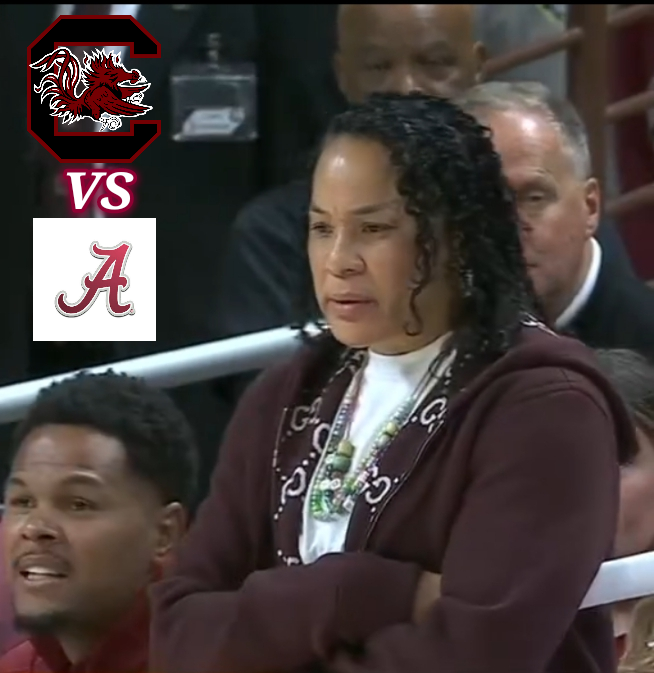
Columbia, SC — As No. 3 South Carolina prepares to tip off SEC competition against Alabama on New Year’s Day, head coach Dawn Staley’s squad enters conference play with both encouraging strengths and concerning question marks. Here’s a comprehensive examination of where the Gamecocks stand heading into the most critical phase of their season.
The Good: South Carolina’s Strengths
Defensive Dominance in the Second Half
While South Carolina has shown some early-game inconsistency, their ability to make halftime adjustments and lock down opponents has been exceptional. Against Providence in their final nonconference game, the Gamecocks exemplified this strength by surrendering just 21 points on 23.3% shooting in the second half after allowing 34 first-half points.
This defensive intensity reflects Staley’s championship DNA and her staff’s ability to identify and exploit opponent weaknesses. The Gamecocks’ second-half defensive performances suggest that once they settle into games and establish their identity, few teams can match their pressure, athleticism, and execution.
Interior Dominance and Rebounding
Madina Okot has been a revelation as South Carolina’s starting center, recording 10 double-doubles through the nonconference schedule. Her 18-point, 13-rebound performance against Providence showcased her ability to control the paint on both ends. Okot’s combination of size, skill, and motor gives South Carolina a significant advantage against most opponents.
The Gamecocks’ frontcourt depth extends beyond Okot, with players like Joyce Edwards providing versatile scoring and Agot Makeer returning from injury to contribute a double-double in her first game back. This size advantage allows South Carolina to dominate the glass, generate second-chance opportunities, and protect the rim defensively.
Against Providence, the Gamecocks outrebounded their opponent significantly in the second half and held the Friars to minimal second-chance points after intermission—exactly the kind of physical dominance that wins SEC games.
Balanced Scoring Attack
South Carolina doesn’t rely on a single player to carry the offensive load, making them difficult to game-plan against. In the Providence victory, Tessa Johnson and Okot both scored 18 points, while Edwards added 14 and Raven Johnson contributed 10 with six assists. This distribution forces opponents to defend all five positions and prevents defenses from loading up on any single player.
The balanced approach also provides resilience when individual players struggle or face foul trouble. If one scoring option has an off night, multiple others can step up to fill the void.
Elite Transition Game
When healthy and firing on all cylinders, South Carolina’s fast-break attack is among the nation’s best. The Gamecocks excel at converting defense into offense, using their defensive pressure to create turnovers and pushing the pace before opponents can establish their half-court defense.
This transition excellence stems from multiple factors: elite conditioning that allows sustained high-tempo play, athletes capable of making plays in the open court, and guards who make sound decisions at full speed. The fast-break game also energizes Colonial Life Arena crowds and can demoralize opponents.
Championship Experience and Culture
Perhaps South Carolina’s greatest intangible strength is the championship culture Staley has built. The program’s recent national title, consistent Final Four appearances, and sustained excellence create expectations and standards that permeate every aspect of the team.
Players understand what championship-level preparation, execution, and mental toughness look like. This institutional knowledge becomes invaluable in close games and high-pressure situations where less experienced programs might falter.
Coaching Excellence
Dawn Staley’s ability to make adjustments, manage personalities and egos, develop players, and prepare teams for big moments gives South Carolina a significant advantage. Her track record speaks for itself, and her players consistently credit her with their development both as basketball players and as people.
The coaching staff’s game-planning, in-game adjustments, and player development have proven elite year after year, providing confidence that even when things go wrong, solutions will be found.
The Bad: Areas of Concern
Ta’Niya Latson’s Injury and Uncertain Status
The most pressing concern facing South Carolina is the lower leg injury that forced senior guard Ta’Niya Latson from the Providence game in the second quarter. Latson had been exceptional before the injury, averaging 16.9 points, 4.0 assists, 3.5 rebounds, and 1.6 steals while shooting career-best percentages of 51.9% from the field and 41.7% from three-point range.
Staley described the injury as “an ankle sprain, for right now. Knock on wood,” with Latson scheduled for Monday reevaluation. The uncertainty surrounding her availability for the Alabama game and potentially beyond creates multiple challenges:
Scoring Void: Replacing Latson’s nearly 17 points per game of efficient scoring won’t be easy, particularly against SEC defenses.
Playmaking Loss: With 4.0 assists per game, Latson serves as a crucial secondary ball-handler and creator, taking pressure off Raven Johnson.
Transition Impact: Latson excels in South Carolina’s fast-break system, and her absence could slow the tempo that makes the Gamecocks most dangerous.
Depth Tested: While players like Makeer can step into larger roles, the rotation becomes less flexible without Latson’s versatility.
The timing—right before SEC play begins—makes this injury particularly problematic, as South Carolina needs all available weapons to navigate the nation’s toughest conference.
First-Half Defensive Inconsistency
Despite their second-half excellence, South Carolina has shown troubling defensive lapses early in games. Against Providence, the Gamecocks allowed 19 first-quarter points on 47.4% shooting, with defensive breakdowns stemming from:
- Lack of discipline in rotations and help-side defense
- Excessive reaching and fouling rather than moving feet
- Communication breakdowns leading to open shots
- Insufficient urgency matching opponent intensity
Staley acknowledged these issues postgame: “We were a little undisciplined. Sometimes when we face teams like that, we get their very best, and when you get somebody’s very best you just have to ride the wave.”
While riding early waves works against Providence, SEC opponents will capitalize more effectively on defensive mistakes. South Carolina cannot afford to spot quality conference teams early leads and rely on second-half comebacks.
Post-Holiday Rust and Slow Starts
The Providence game exemplified a pattern where South Carolina needs time to find rhythm after breaks. After scoring 29 first-quarter points on scorching shooting, the Gamecocks managed just 41% shooting in the second quarter and extended their lead by only two points.
This inconsistency—whether due to fatigue, loss of focus, or natural offensive variance—becomes problematic in SEC play where opponents maintain intensity for 40 minutes and capitalize on any lulls.
Three-Point Shooting Consistency
While South Carolina hit 12-of-29 three-pointers against Providence (41.4%, a season high), their perimeter shooting has been inconsistent throughout the season. Against teams that pack the paint to limit interior scoring, the Gamecocks must knock down open threes to keep defenses honest.
Players like Ayla McDowell (37.1% from three) provide shooting, but other rotation players have struggled with consistency. If SEC opponents successfully force South Carolina into perimeter-oriented offense, shooting efficiency becomes critical.
Free Throw Execution
Converting just 12-of-19 free throws (63.2%) against Providence falls below championship standards. Close SEC games often come down to free throw shooting in the final minutes, and 60-65% isn’t good enough to consistently win tight contests.
Improving free throw shooting requires individual skill work and mental preparation—areas that should improve as the season progresses but remain concerning in the meantime.
Rotation Uncertainty
Beyond Latson’s injury, South Carolina faces rotation questions:
- Agot Makeer showed rust in her return from concussion protocol, though her double-double was encouraging
- Chloe Kitts remains out with an ACL injury, eliminating a skilled frontcourt option
- Alicia Tournebize has yet to arrive from France due to documentation processing
- Madina Okot’s eligibility status for an additional year remains undetermined
These uncertainties make it difficult to establish consistent lineups and rotations, potentially affecting chemistry and execution as SEC play intensifies.
Offensive Breakdown: What’s Working, What’s Not
Offensive Strengths
Paint Scoring: South Carolina’s size advantage allows them to score efficiently around the basket. When they establish interior position and feed the post, they generate high-percentage looks and draw fouls.
Ball Movement: The Gamecocks recorded 24 assists on 36 field goals against Providence, demonstrating excellent ball movement and unselfishness. This sharing creates open looks and prevents defenses from keying on individual players.
Transition Opportunities: Converting defense into offense remains a hallmark, with South Carolina excelling at pushing pace and attacking before defenses set.
Versatile Scorers: Multiple players can create their own shots, providing options when the offense bogs down in half-court sets.
Offensive Concerns
Half-Court Execution: When forced into structured half-court offense against set defenses, South Carolina can become predictable and struggle to generate quality looks.
Perimeter Shooting Variance: Inconsistent three-point shooting makes the offense more one-dimensional and allows opponents to pack the paint.
Turnovers Under Pressure: Against aggressive defensive pressure, ball security can become an issue, particularly if Latson’s absence forces less experienced ball-handlers into larger roles.
Scoring Droughts: Second-quarter struggles against Providence reflected concerning offensive stagnation that cannot persist in SEC competition.
Defensive Breakdown: Strengths and Weaknesses
Defensive Strengths
Second-Half Adjustments: South Carolina’s ability to completely shut down opponents after halftime demonstrates coaching excellence and player responsiveness.
Rim Protection: Size and athleticism allow the Gamecocks to contest shots at the basket and limit opponent paint scoring.
Defensive Rebounding: Limiting opponent second-chance opportunities has been a consistent strength.
Transition Defense: Getting back and preventing easy baskets in transition has generally been solid.
Defensive Concerns
Early-Game Focus: First-quarter and first-half defensive lapses suggest concentration and urgency issues that must be addressed.
Perimeter Defense: Allowing open three-point attempts when helping in the paint remains problematic.
Discipline Issues: Reaching, fouling, and rotation breakdowns reflect execution problems that quality opponents exploit.
Communication: Defensive breakdowns often stem from communication failures rather than individual talent deficiencies.
Looking Ahead: Keys to SEC Success
As conference play begins, South Carolina must address weaknesses while leveraging strengths:
Immediate Priorities
- Determine Latson’s status and adjust rotations accordingly
- Improve first-half defensive intensity to match second-half standards
- Establish consistent three-point shooting to keep defenses honest
- Enhance free throw execution for close-game situations
- Build rotation chemistry with returning and emerging players
Long-Term Goals
- Maintain defensive identity throughout 40 minutes
- Develop reliable half-court offense for tough defensive games
- Integrate Tournebize when she arrives
- Keep players healthy through the grind of SEC play
- Peak at the right time for postseason competition
The Bottom Line
South Carolina enters SEC play as a flawed but dangerous team with championship potential. Their strengths—interior dominance, defensive capability, balanced scoring, and championship culture—position them as conference title contenders. However, concerns about injuries, consistency, and execution in critical areas cannot be ignored.
The good news: Most of South Carolina’s problems are correctable through coaching, practice, and player development. The bad news: SEC play provides little margin for error, and opponents will ruthlessly exploit weaknesses.
For Dawn Staley and the Gamecocks, the challenge is clear: maximize strengths, address weaknesses, navigate injuries, and maintain the standards that define championship programs. The Alabama game will provide the first real test of whether South Carolina is ready for the crucible of conference competition.
As SEC play unfolds, the answers to questions about this team’s true identity and championship credentials will become increasingly clear. For now, South Carolina stands as a talented team with both tremendous upside and legitimate concerns—exactly where many championship teams find themselves at this point in the season.