PHOENIX — Before a single jump ball was tossed inside Mortgage Matchup Center on Friday night, Dawn Staley had already sent a message. Not with words. Not with a pregame speech. With fabric, intention, and the deliberate language of a coach who understands that everything — everything — communicates something.
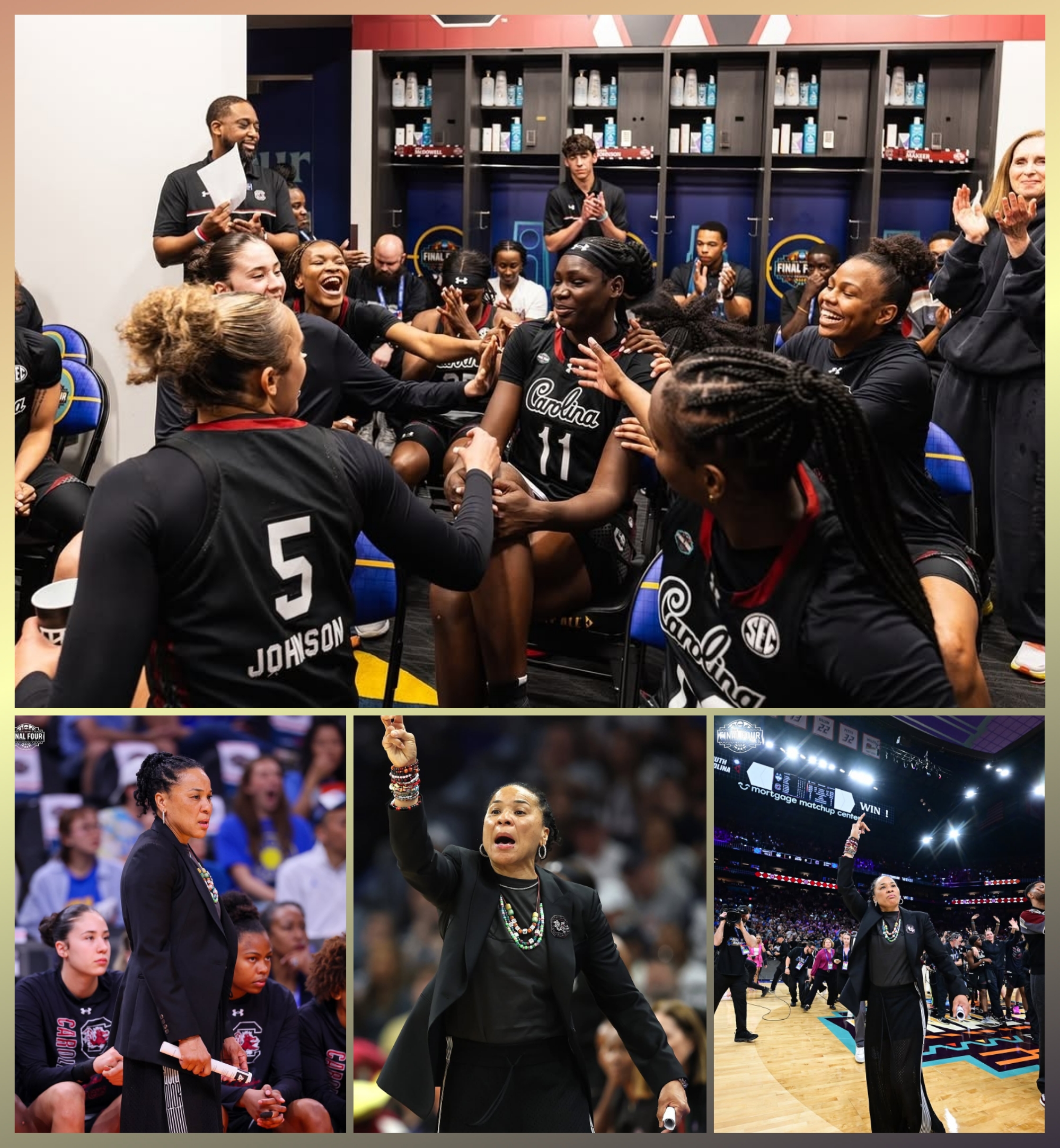
She walked in wearing all black. So did her team.
And when the final buzzer sounded, South Carolina had ended UConn’s perfect season 62-48. The outfit was not a coincidence. It was a declaration.
Black Is Not Just a Color. It Is a Statement.
In the psychology of color, black carries meanings that transcend fashion. It represents power and authority — the visual language of those who do not need to announce their dominance because it is already understood. It represents strength and resilience — the unbreakable spirit of those who have been through difficulty and emerged not diminished but sharpened. And it represents formality and professionalism — the signal that the people wearing it came to work, not to perform.
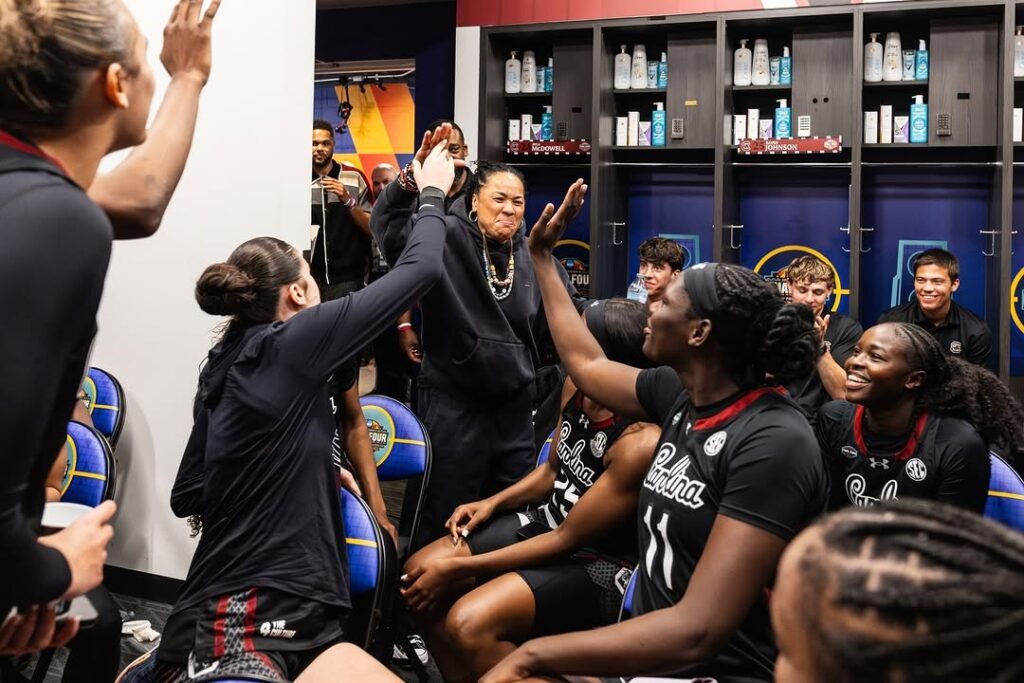
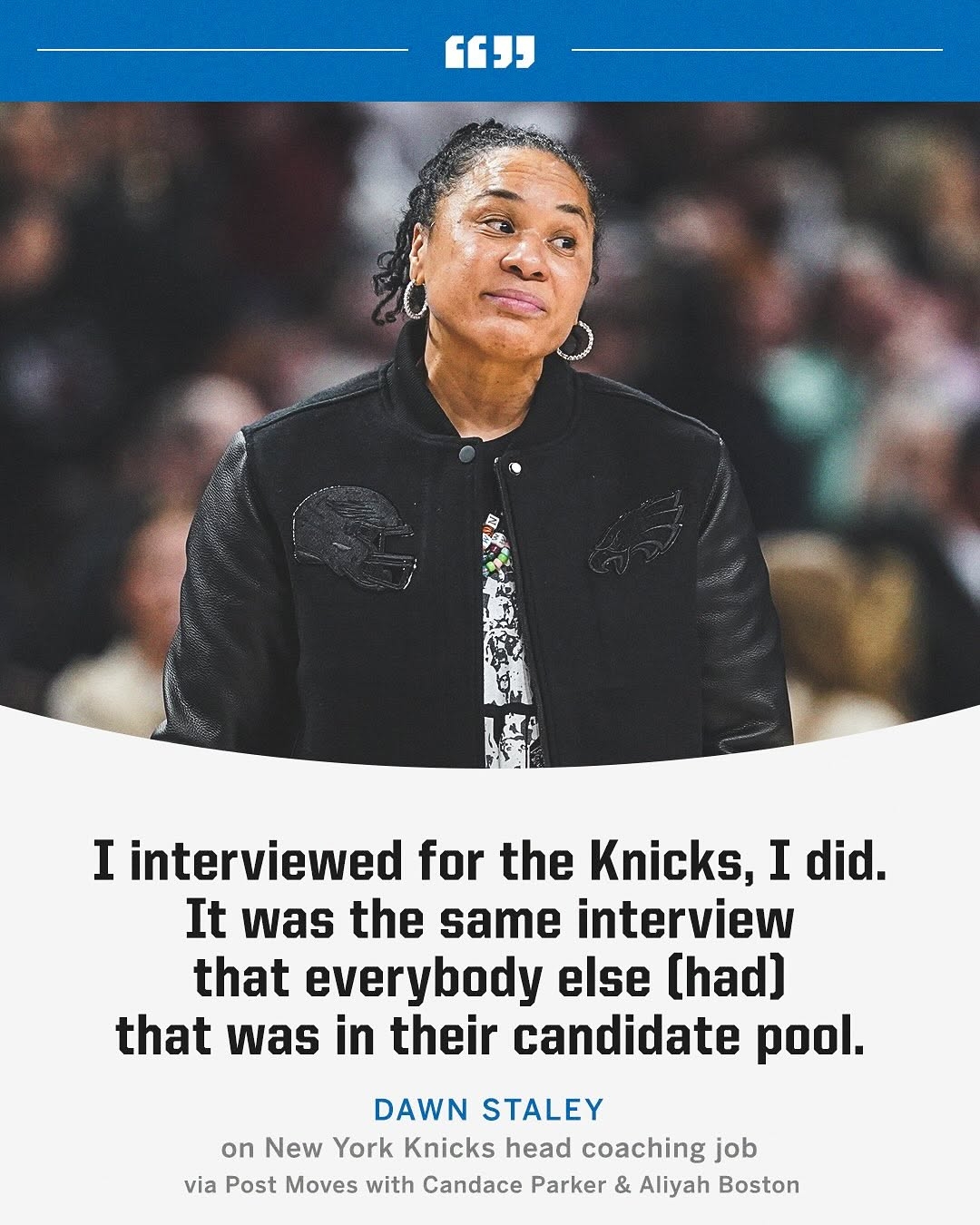
Dawn Staley wore all of that Friday night. Wide leg pants with white side stripes. A black blazer. A black shirt. The same garnet shoes on her feet that she has worn to every NCAA Tournament game this postseason — a through-line of constancy in a season that has demanded it.
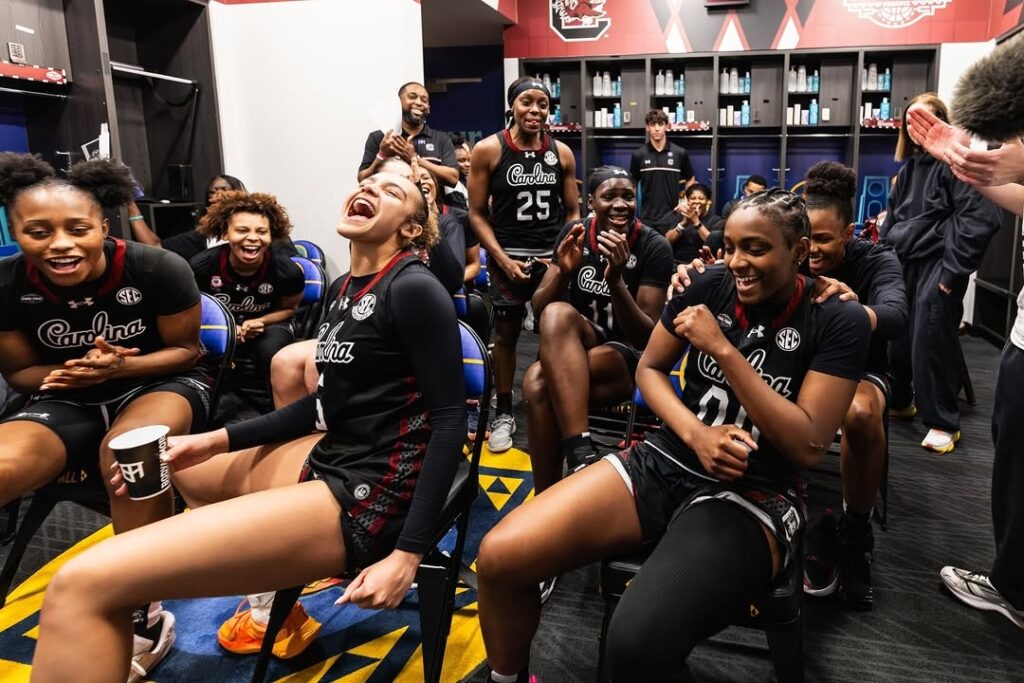
Her team wore black too. Coach and players, dressed as one unit, walking into the biggest game of their season coordinated in the color that says: we are not here to play. We are here to finish this.
The Tournament Wardrobe as a Narrative Arc
To understand what Friday’s outfit meant, you have to trace the journey that led to it.
In the second round against USC, Staley wore Balenciaga — sleek, European, a nod to the designer world she moves through comfortably. For the Sweet 16 win over Oklahoma, she elevated the personal — a Gucci jacket paired with a custom Raven Johnson shirt, blending high fashion with direct tribute to her senior point guard. It was warmth and style in equal measure.
Then came the Elite Eight against TCU, and the temperature changed. Staley arrived in a white blazer adorned with a bedazzled South Carolina logo, garnet pants — full Gamecocks, unapologetic and declarative. The stakes were rising. The outfits reflected it.
And then Friday. UConn. The rematch of last year’s championship game — the one loss on Staley’s title game record, a 23-point defeat in Tampa that she has carried with her every day since.
She wore all black.
Not garnet. Not a designer label playing with color. Black — complete, total, and absolute. The color of authority. The color of resilience. The color of a woman who came to Phoenix not to participate in a basketball game but to reclaim something that was taken from her twelve months ago.
What the Players Wore Said the Same Thing
It was not just Staley. The Gamecocks themselves took the floor in black uniforms — and when coach and team share a color on a night of this magnitude, the coordination stops being aesthetic and starts being psychological.
They were a unit. One color. One purpose. One mission.
South Carolina held UConn — the nation’s most efficient offense, a team averaging 90 points in the tournament — to 48 points. They did not allow a single basket in the final four to five minutes of the game. They outscored the Huskies 38-22 in the second half. They executed a defensive game plan with the kind of locked-in precision that does not happen accidentally.
Black does not do things by accident. Neither does Dawn Staley.
The Nike Chapter and What Comes Next
The wardrobe story is about to enter a new era. South Carolina is transitioning from Under Armour to Nike as its official uniform supplier beginning July 1 — a ten-year, $70 million partnership that finally aligns Staley’s institutional affiliation with the personal brand she has maintained with Nike since her WNBA playing days.
The possibilities expand considerably. But the most compelling element of the new contract is not about Staley’s sideline looks — it is about A’ja Wilson, and what her presence in a university apparel agreement signals about South Carolina’s cultural gravity.
Wilson won a national championship under Staley in 2017. She became the WNBA’s first four-time MVP. She launched her own Nike signature shoe and clothing line. And now, written explicitly into the terms of South Carolina’s contract, Nike will provide the women’s basketball program with A’ja Wilson signature sneakers — the A’Two — in USC-specific colorways for use on the court.
A dynasty so established that its alumni’s signature shoes are contractually guaranteed to its current players. That is not a program building toward something. That is a program that has already arrived.
The Intention Behind the Outfit
Staley’s fashion choices have never been incidental. They are part of a carefully constructed public identity — one that communicates authority, creativity, and competitive seriousness simultaneously. The way she escalates her wardrobe as the tournament deepens, moving from designer flourishes to pure program colors as the stakes rise, is the visual equivalent of a team tightening its defensive scheme heading into March.
Friday night was the apex of that escalation. No designer logo. No individual statement. Just black — complete and unified — on the coach and on the players, walking into a rematch against the team that handed them their only championship game loss.
“The outfit will change next season. The intention behind it never does.”
Black told the story before tip-off. The final score confirmed it.
South Carolina 62, UConn 48. Dressed in darkness. Built for exactly this.