“I Don’t Remember Nothing” — MiLaysia Fulwiley Faces the Arena She Built, the Coach She Left, and the Ghost of Valentine’s Day
There is perhaps no more loaded setting in all of women’s college basketball on Saturday than the one MiLaysia Fulwiley walked into on Friday afternoon.
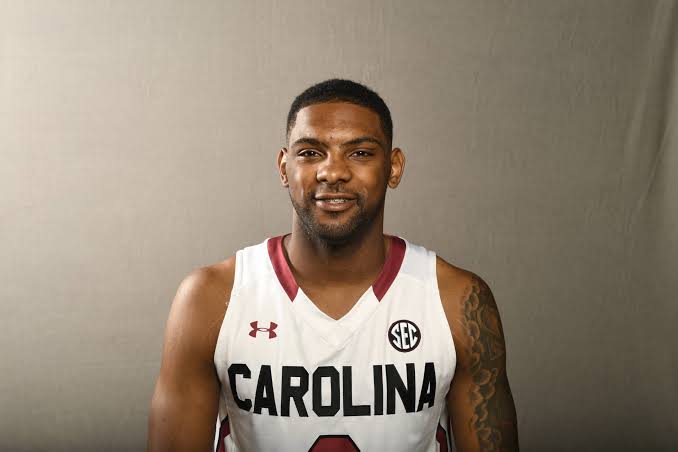
Bon Secours Wellness Arena in Greenville, South Carolina. The same building where she won four state championships with W.J. Keenan High School out of Columbia. The same floor where, as a South Carolina freshman in 2024, she scored 24 points in the SEC Tournament final against LSU to win the MVP award — the very programme she now plays for. The same tournament she won again as a sophomore in 2025 before transferring to Baton Rouge in the spring. The same coach, Dawn Staley, who recruited her in seventh grade, developed her into a two-time SEC champion, an AP All-American, and a 2024 national champion, and who now stands on the opposite sideline.
Fulwiley scored a team-high 22 points with eight assists as No. 6 LSU dismantled No. 7 Oklahoma 112-78 in Friday’s quarterfinal Columbia News — the second-highest single-game point total in SEC Tournament history — to set up exactly the rematch that everyone wanted and one player, specifically, had complicated feelings about. After the game, Fulwiley met the media. She was composed. She was measured. She said most of the right things.
But between the lines of those careful, composed answers, the entire story of one of the most dramatic personnel decisions in recent women’s college basketball history sat quietly, waiting for Saturday night to tell it the only way sport ever does — on the floor.
“It Feels Good Coming Back Here”
The first question opened the wound gently, asking Fulwiley what it felt like to be back in Greenville. She answered it with warmth and without hesitation.
“It feels good coming back here. I played here in high school, and it meant a lot to me. I won a lot of games here; it’s just great to be here in South Carolina.”
This is the uncomplicated truth. Fulwiley is Keenan High School’s all-time leading scorer, having amassed over 3,000 career points across six varsity seasons, winning four state titles in that time — including helping the team to a state championship as a seventh grader. She grew up in Columbia. She won state championships in this building before she was old enough to drive. She won the SEC Tournament MVP on this same floor in 2024, scoring 24 points against LSU — the programme she now represents — in one of the more improbable full-circle storylines the sport has produced in years .
Her statement, then, is entirely sincere — but it is also doing significant emotional work. By leading with the high school connection, Fulwiley grounds her relationship with this place in something that predates South Carolina, predates the transfer, predates the complicated year that followed. This building belonged to her before it belonged to the Gamecocks narrative. That framing matters, even if it is unstated. It gives her a legitimate claim to comfort in an environment that might otherwise carry nothing but the weight of everything that changed.
“It’s the Next Game” — The Art of Downplaying What Cannot Be Downplayed
Then came the real question. What does it mean to face Dawn Staley? To face her former teammates? To play against the programme that made her who she is, in the city where she grew up, in the tournament she won for them?
Fulwiley downplayed it, as expected. She is too good a competitor and too self-aware a person to say otherwise. But the very precision of her deflection is worth examining.
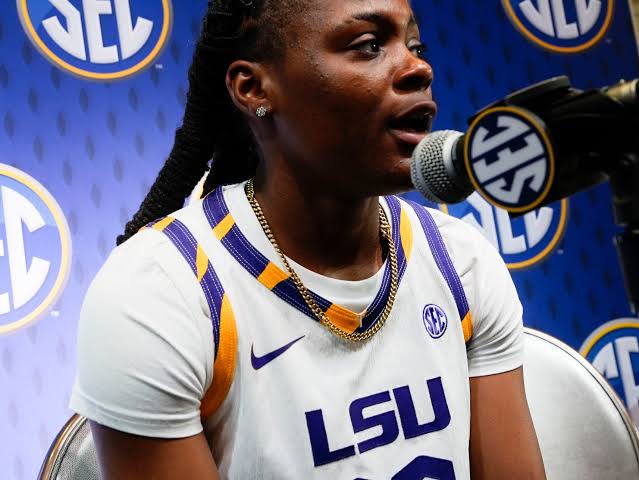
“It’s the next game. It’s a new game for us. We’ve got the same mindset, and we’ve got to go out there and do what we need to do.”
The phrase “the next game” is the oldest phrase in elite sport. It is the language of selective amnesia — a deliberate refusal to let the narrative dimension of a matchup distort the preparation required for it. Every elite athlete learns to speak this language because the alternative — engaging fully with what the game means — opens the door to the kind of emotional volatility that loses basketball games.
But the conspicuous absence of specific acknowledgment makes the specifics more present, not less. Fulwiley does not say Dawn Staley’s name. She does not name her former teammates. She uses “us” and “we” exclusively — asserting her Tiger identity with a completeness that feels, under the circumstances, slightly deliberate. She is telling herself as much as she is telling the room: you are an LSU Tiger now. Act like one.
Kim Mulkey confirmed the approach from her end, saying she has no intention of sitting Fulwiley down for an emotional check-in: “You don’t have to talk to Lay. Lay is going to make a spectacular play and then she might have you pulling your hair out the next minute. But you let her play. This is not one of those where you think you have to calm her down.”
Mulkey’s confidence is revealing. She is not worried about Fulwiley’s emotional state. She is worried about South Carolina’s defence.
Valentine’s Day — The Game She Says She Doesn’t Remember
The sharpest exchange in Fulwiley’s media session came when the conversation turned to the February 14 regular season meeting — a 79-72 South Carolina win in which Fulwiley, playing against her former teammates and former coach for the first time, was nearly invisible.
She finished with just six points on 1-of-8 shooting, four steals, four rebounds, and three turnovers in LSU’s loss Columbia News . She missed all her three-point attempts. For a player averaging 14.1 points per game for the Tigers and coming off a run of form that had made her one of the most dynamic guards in the SEC, it was a performance so unlike her that it required no analysis — only context. She had tried to do too much. Or too little. Or both at once. The moment had swallowed her.
She was asked about it directly. Her answer was brief and absolute.
“I don’t remember nothing. I’m a new player with a new mindset right now. I’m ready.”
The phrase “I don’t remember nothing” is athlete shorthand for something real and specific: the active, deliberate choice to refuse the weight of a past performance. It is not, at face value, literally true — Fulwiley clearly remembers the game, knows the exact shape of her struggles, and has spent the weeks since processing it. Since that loss, she has averaged 20.8 points, 5.8 rebounds, 4.2 assists, 2.8 blocks, and 2.0 steals over her last five games, shooting 54% from the field and 46% from three. That run of form is not the product of amnesia. It is the product of a player who looked at what Valentine’s Day revealed about her, worked to address it, and then buried the source material.
“I’m a new player with a new mindset right now” is the key sentence — and it is more complex than it sounds. It is not the protestation of someone pretending a thing didn’t happen. It is a declaration of revision. She is not claiming the February 14 performance didn’t occur. She is claiming she is no longer the player who produced it. That distinction is what separates elite competitive psychology from simple denial.
“I’m ready” is the period. Three syllables. No elaboration requested, and none offered. It is the most confident thing she says in the entire media session, and the shortest.
The Homecoming Nobody Planned
What makes the Fulwiley storyline so dramatically rich is that it contains contradictions that cannot be resolved — only played out.
She was recruited by Dawn Staley in the seventh grade. She won a national championship under Staley in 2024. She earned SEC Sixth Woman of the Year in 2025. She reached the national championship game again that spring, losing to UConn. And then, in one of the most stunning transfer portal decisions of the modern era, she left — joining the programme that Staley had beaten in the 2024 SEC Tournament final on the back of Fulwiley’s own 24-point MVP performance.
The transfer was described as “a rare instance of coach Dawn Staley losing one of her best players in the transfer portal era” Columbia News — a sentence that carries its own quiet weight when you consider how Staley has managed roster continuity while other programmes have been decimated by portal exits.
None of that surfaces in Fulwiley’s media session on Friday, because she is too disciplined and too professional to let it. But it is the subtext of every answer she gives. When she says “it feels good to be back in South Carolina,” she is talking about the building. She is not talking, yet, about the relationship — the one between a player and the programme that shaped her, now separated by conference rivalry and a decision that will be dissected for years regardless of how Saturday ends.
What she does say about her role for the Tigers ahead of the game is characteristically practical: “I don’t start, so that will give me time to calm my nerves. I just have to remind myself that I just have to go out there and help my team.” Yahoo Sports And when asked whether her familiarity with the arena and the opponent gives LSU any tactical advantage: “I will just kind of remind my teammates that it’s not that serious — it’s literally not that serious. I’m just have to remind them of who we are and just focus on us and not focus on anybody else.”
It is the right thing to say. It is also the hardest thing to actually do, when the arena is your home state, the opponent is your former coach, and the building itself holds trophies you won in garnet and black.
What Saturday Holds
LSU enters Saturday’s semifinal having lost 18 consecutive games to South Carolina wach . The Valentine’s Day result was the most recent entry in that streak — a game in which Fulwiley went 1-of-8 and LSU’s other primary scorer, Mikaylah Williams, managed just 11 points on 5-of-12 shooting. Williams said Friday that her shot is “finally falling, and it’s the right time to be falling too” wach — another echo of the confidence that seems to have spread through the LSU roster after their 112-point quarterfinal destruction of Oklahoma.
But South Carolina is not Oklahoma. And Dawn Staley, who recruited Fulwiley as a seventh grader and coached her for two years, knows every dimension of her game, every habit, every tendency, every tell. Whatever LSU has prepared, Staley has a version of it mapped on her whiteboard.
What nobody can prepare for is the player Fulwiley has become in the last three weeks — the one posting 20+ points five times in five games, shooting 54% from the floor, and staring down South Carolina fans from the baseline mid-run. That player is not the one who went 1-of-8 on Valentine’s Day. Whether she is the one who shows up on Saturday — whether the “new player with a new mindset” is real, sustained, and armoured against the unique pressure of this specific night — is the question the sport is gathering to answer.
She says she doesn’t remember anything about last time.
The building might have other ideas.
MiLaysia Fulwiley media session | 2026 SEC Tournament Quarterfinal day | March 6, 2026
LSU (27-4, No. 6) vs. South Carolina (30-2, No. 3) | SEC Tournament Semifinal | March 7, 2026 | 3:30 p.m. EST | ESPN2 | Bon Secours Wellness Arena, Greenville, S.C.
| Stat | Feb. 14 (at South Carolina) | Last 5 Games |
|---|---|---|
| Points | 6 | 20.8 avg |
| FG% | 1-of-8 (12.5%) | 54% |
| 3PT% | 0-of-3 (0%) | 46% |
| Assists | 3 | 4.2 avg |
| Steals | 4 | 2.0 avg |
| Blocks | 0 | 2.8 avg |
| Result | Loss, 79-72 | 5-game win streak |