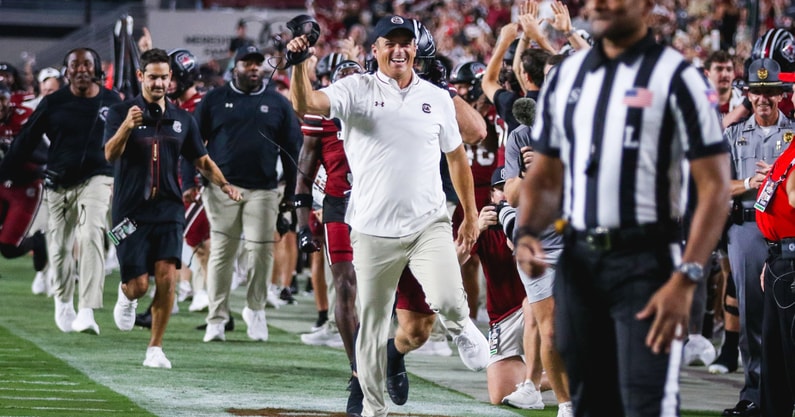
Columbia, SC — As South Carolina football navigates the critical offseason following a disappointing 2025 campaign, national analysts and industry experts are weighing in on the financial realities facing the Gamecocks in the increasingly expensive transfer portal marketplace. Their assessments paint a challenging picture of what it will cost Shane Beamer’s program to acquire the quality players necessary to bounce back and compete in the SEC.
The Transfer Portal Economic Reality
The modern college football landscape has fundamentally transformed with the advent of Name, Image, and Likeness (NIL) compensation and the liberalized transfer portal that allows players to move between programs with minimal restrictions. What was once primarily about recruiting high school players and developing them over multiple years has evolved into an annual free agency period where established college players can auction their services to the highest bidder.
This new reality has created a tiered marketplace where player value is increasingly quantified in specific dollar figures, and programs must allocate substantial resources to both retain their own talent and acquire impact players from other schools.
What National Sources Are Reporting
According to national college football analysts and NIL industry experts tracking the transfer portal market, South Carolina faces significant financial requirements to address their roster needs and return to competitive relevance in the SEC.
Position-Specific Price Tags
Premium Positions Command Premium Prices:
National sources indicate that quality transfer portal players at premium positions—quarterback, offensive line, edge rusher, and cornerback—command the highest compensation packages in the current market.
Quarterback: Elite quarterback transfers with starting experience at Power Four programs can command NIL packages ranging from $1-3 million annually, with the top-tier prospects potentially exceeding these figures. Even quality backup quarterbacks with developmental upside require six-figure commitments.
Offensive Line: Starting-caliber offensive linemen with multiple years of Power Four experience typically require $300,000-$800,000 annually, with All-Conference performers commanding seven-figure deals in competitive bidding situations.
Edge Rushers/Defensive Line: Impact pass rushers and defensive linemen with proven production metrics (sacks, tackles for loss, pressures) generally require $400,000-$1 million depending on experience and production levels.
Cornerbacks/Secondary: Quality cornerbacks with starting experience at major programs typically command $250,000-$600,000, with elite lockdown corners exceeding these figures.
Skill Positions: Running backs, receivers, and linebackers generally fall in the $150,000-$500,000 range depending on production, experience, and perceived upside.
The “Shopping List” Cost Analysis
National analysts examining South Carolina’s specific roster needs following the 2025 season have projected the financial investment required to adequately address deficiencies through the transfer portal.
Estimated Total Investment Required: Sources suggest South Carolina needs to invest approximately $5-8 million in transfer portal acquisitions to adequately address roster deficiencies and return to SEC competitiveness, though this figure could vary based on specific targets and market competition.
Number of Impact Transfers Needed: Industry experts estimate South Carolina requires 8-12 quality transfer additions across multiple position groups, with 3-5 of those being immediate impact starters and the remainder providing quality depth and competition.
Priority Investment Areas: National sources identify South Carolina’s greatest financial investment needs at quarterback (if seeking an upgrade or competition), offensive line (multiple starting-caliber additions), edge rusher (proven pass rush production), and secondary (experienced cornerback depth).
Comparative SEC Spending Analysis
National reports examining NIL spending across the SEC provide sobering context for South Carolina’s financial challenge.
The Upper Tier
Programs like Georgia, Alabama, Texas, LSU, and Texas A&M reportedly operate with annual NIL budgets exceeding $15-20 million when combining roster retention and transfer portal acquisitions. These programs can afford to pay top dollar for elite transfers while simultaneously retaining their best players against outside offers.
The Middle Tier
Programs like Ole Miss, Missouri, Tennessee, and Oklahoma operate in the $10-15 million range, providing sufficient resources to compete for quality transfers and retain most of their roster while making strategic investments in key positions.
The Competitive Tier
South Carolina reportedly falls into a category with programs like Arkansas, Auburn, and Kentucky that operate with more constrained NIL budgets in the $7-12 million range. These programs must be more strategic and selective, identifying undervalued players and making targeted investments rather than competing in bidding wars for the highest-profile transfers.
The Resource Gap Reality
National analysts note that South Carolina faces a competitive disadvantage in pure financial resources compared to the SEC’s elite programs. While the Gamecocks can compete for certain players, they cannot consistently outbid the conference’s wealthiest programs when multiple schools pursue the same high-profile transfer.
This reality requires South Carolina to adopt a more nuanced strategy: identifying players who fit specific scheme needs, targeting players from non-Power Four programs who can step up in competition, finding undervalued prospects that bigger programs overlook, and leveraging coaching relationships and development track records when pure financial offers fall short.
The Roster Retention Factor
National sources emphasize that transfer portal spending isn’t just about acquiring new players—it’s equally about retaining existing talent who might be targeted by wealthier programs.
Preventing Roster Exodus
Following disappointing seasons, programs face heightened risk of losing quality players to the portal as they seek better situations or more lucrative NIL opportunities. South Carolina must allocate significant resources to:
Retaining Key Contributors: Preventing starting-caliber players from leaving requires competitive retention packages that match or exceed what other programs might offer.
Securing Developing Players: Young players with upside who haven’t yet started become attractive targets for other programs. Retaining them requires investment before they hit the portal.
Maintaining Depth: Even backup and reserve players have value in the portal market. Programs must ensure their depth doesn’t get poached by offering competitive packages throughout the roster.
National experts estimate that roster retention costs can equal or exceed new acquisition expenses, meaning South Carolina’s total NIL investment must cover both bringing in new players and keeping existing ones.
The Competitive Bidding Environment
National sources describe the current transfer portal as an increasingly competitive marketplace where South Carolina faces challenges on multiple fronts.
Multi-School Bidding Wars
When South Carolina identifies a quality transfer target, they rarely pursue that player in isolation. Most impactful transfers generate interest from 5-15 programs, creating bidding war dynamics where:
- Financial offers escalate rapidly as schools compete
- Players and their representatives leverage multiple offers to drive up compensation
- Schools with deeper resources can simply outbid competitors in final negotiations
- Programs must decide when to walk away rather than overpay relative to budget constraints
The Urgency Premium
Players who enter the portal early in the window command premium prices as desperate programs compete for limited supply. National analysts note that South Carolina, needing significant roster improvement following 2025’s struggles, faces pressure to act quickly and decisively—often at higher cost than more patient approaches might allow.
The “Program Reputation” Discount Challenge
Elite programs with recent championship success, consistent NFL development, and winning cultures can sometimes acquire players at relative discounts because those programs offer intangible benefits beyond pure financial compensation. South Carolina, coming off a disappointing season, lacks this advantage and must compensate with more aggressive financial offers to overcome perceptions about program trajectory.
Creative Financial Structuring
National NIL experts describe various strategies programs employ to maximize limited resources and compete with wealthier programs.
Multi-Year Guarantees
Rather than offering the highest single-year package, some programs structure multi-year NIL deals that provide security and total compensation advantages even if annual figures seem lower.
Performance Incentives
Building incentive-based compensation into NIL packages allows programs to offer potentially higher total packages while managing risk if players don’t perform as expected.
Market-Based Opportunities
Programs with strong local business communities and engaged boosters can offer marketing and business development opportunities that provide value beyond pure cash payments.
Educational and Development Benefits
Emphasizing academic programs, career development resources, and post-football planning can appeal to players considering factors beyond immediate financial maximization.
The Timing Challenge
National sources note that South Carolina faces timing pressures that complicate their transfer portal strategy and potentially increase costs.
Early Portal Period
The primary transfer portal window opens in December, with peak activity in the initial weeks. Programs must move quickly to identify and pursue targets, often making decisions and offers with incomplete information about the full market.
Spring Portal Window
A secondary portal window opens in spring, providing another acquisition opportunity. However, the best players typically move during the winter window, meaning spring additions often represent lower-tier talent or players with specific circumstances that delayed their decisions.
Coaching Staff Timing
Shane Beamer’s staff must evaluate the roster, identify needs, scout potential transfers, establish contact, and make compelling offers—all while potentially dealing with staff changes, recruiting high school prospects, and managing existing roster retention.
This compressed timeline can lead to rushed decisions and potentially overpaying for players as programs feel urgency to address needs before quality options disappear.
The Risk-Reward Calculation
National analysts emphasize that transfer portal spending involves significant risk that complicates investment decisions.
Performance Uncertainty
Unlike high school recruits who provide 3-5 years of development runway, transfers typically provide 1-2 years of contribution. If they don’t perform as expected, the program has limited time to recoup the investment before the player exhausts eligibility.
Injury Risk
Transferring proven college players rather than projecting high school prospects theoretically reduces uncertainty, but injuries can quickly devastate expensive acquisitions.
Cultural Fit Questions
Players who transfer once may transfer again if situations don’t meet expectations. Programs invest substantial resources in players who might leave after a single season if better opportunities emerge.
Academic and Eligibility Issues
Transfer credit evaluations, academic progress requirements, and eligibility complications can derail expensive acquisitions after resources have been committed.
These risks mean that South Carolina’s projected $5-8 million transfer portal investment represents not just acquisition cost but also risk capital that might not generate expected returns.
Fan and Booster Implications
National sources note that modern NIL-driven recruiting places unprecedented demands on fan bases and booster communities.
The Collective Model
Most programs operate through NIL collectives—organizations that pool donor resources to fund player compensation. South Carolina’s competitive positioning depends heavily on the Garnet Trust and similar organizations’ ability to generate sufficient resources.
Donor Fatigue Concerns
The perpetual fundraising required to compete in the portal creates potential donor fatigue, particularly after disappointing seasons when enthusiasm naturally wanes. South Carolina must maintain and grow NIL funding precisely when fan frustration might reduce giving.
Transparency and Accountability
Donors increasingly demand transparency about how their contributions are utilized and what return on investment they’re generating. Programs must balance confidentiality about specific player deals with donors’ desire to understand resource allocation.
National Perspective on South Carolina’s Challenge
Experts analyzing South Carolina’s specific situation note several factors that complicate their transfer portal positioning:
Recent Performance: The disappointing 2025 season reduces South Carolina’s appeal to top transfers who want to join winning programs.
SEC Competition: Operating in college football’s most competitive conference means South Carolina competes with the nation’s wealthiest programs for the same transfer targets.
Facilities and Resources: While South Carolina has made significant facility investments, they still trail SEC leaders in overall resource allocation.
Coaching Staff Stability: Questions about staff continuity can make players hesitant to commit without certainty about who will be coaching them.
Development Track Record: South Carolina must demonstrate consistent player development and NFL placement to appeal to transfers weighing multiple offers.
The Path Forward
National analysts examining South Carolina’s situation generally agree on several strategic imperatives:
Targeted Investment: Rather than spreading resources thin across many players, focus on 3-5 impact transfers who can immediately upgrade the roster at critical positions.
Smart Scouting: Identify undervalued players from Group of Five programs or players in Power Four programs who haven’t yet maximized their potential.
Leverage Coaching Relationships: Utilize staff connections and recruiting relationships to gain advantages in specific recruitment battles.
Develop Existing Talent: Balance expensive portal additions with continued development of current roster players and high school recruits.
Build Sustainable Model: Create NIL infrastructure and fundraising capacity that can sustain multi-year competitive spending rather than one-time emergency investments.
Conclusion
The financial realities outlined by national sources paint a challenging but navigable picture for South Carolina football. The estimated $5-8 million investment required to adequately address roster needs through the transfer portal represents significant resources but falls within the realm of possibility for a program with South Carolina’s size, history, and fan base.
However, this investment must be made strategically and sustainably. Shane Beamer and his staff cannot simply buy their way to competitiveness but must combine judicious financial investment with smart evaluation, player development, and scheme optimization to maximize limited resources.
The coming months will reveal whether South Carolina can mobilize the necessary financial resources, identify the right transfer targets, and successfully navigate the complex and expensive modern college football marketplace. The program’s trajectory—whether toward recovery and renewed competitiveness or continued struggle—may ultimately depend as much on financial capacity and strategic spending as on coaching and player development.
For South Carolina fans and stakeholders, the message from national experts is clear: competing in modern college football requires substantial, sustained financial investment in player acquisition and retention. Whether the Gamecocks can meet this challenge will significantly determine their future in an increasingly expensive and competitive landscape.