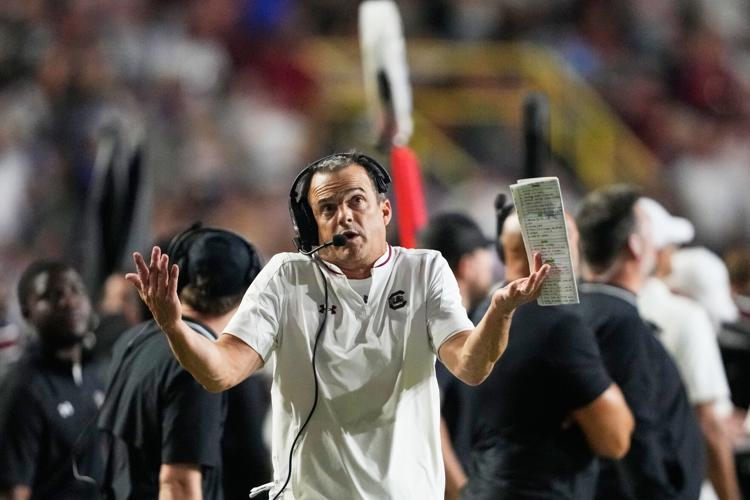
There is a moment from February 14th, 2026 that the college basketball world has not forgotten — and one that Kim Mulkey would probably prefer it had. Valentine’s Day in Baton Rouge. South Carolina visiting a top-10 LSU side in the Pete Maravich Assembly Center. The game tight, the crowd loud, the stakes genuine. And then Tessa Johnson, South Carolina’s junior guard from Minnesota, simply refusing to miss.
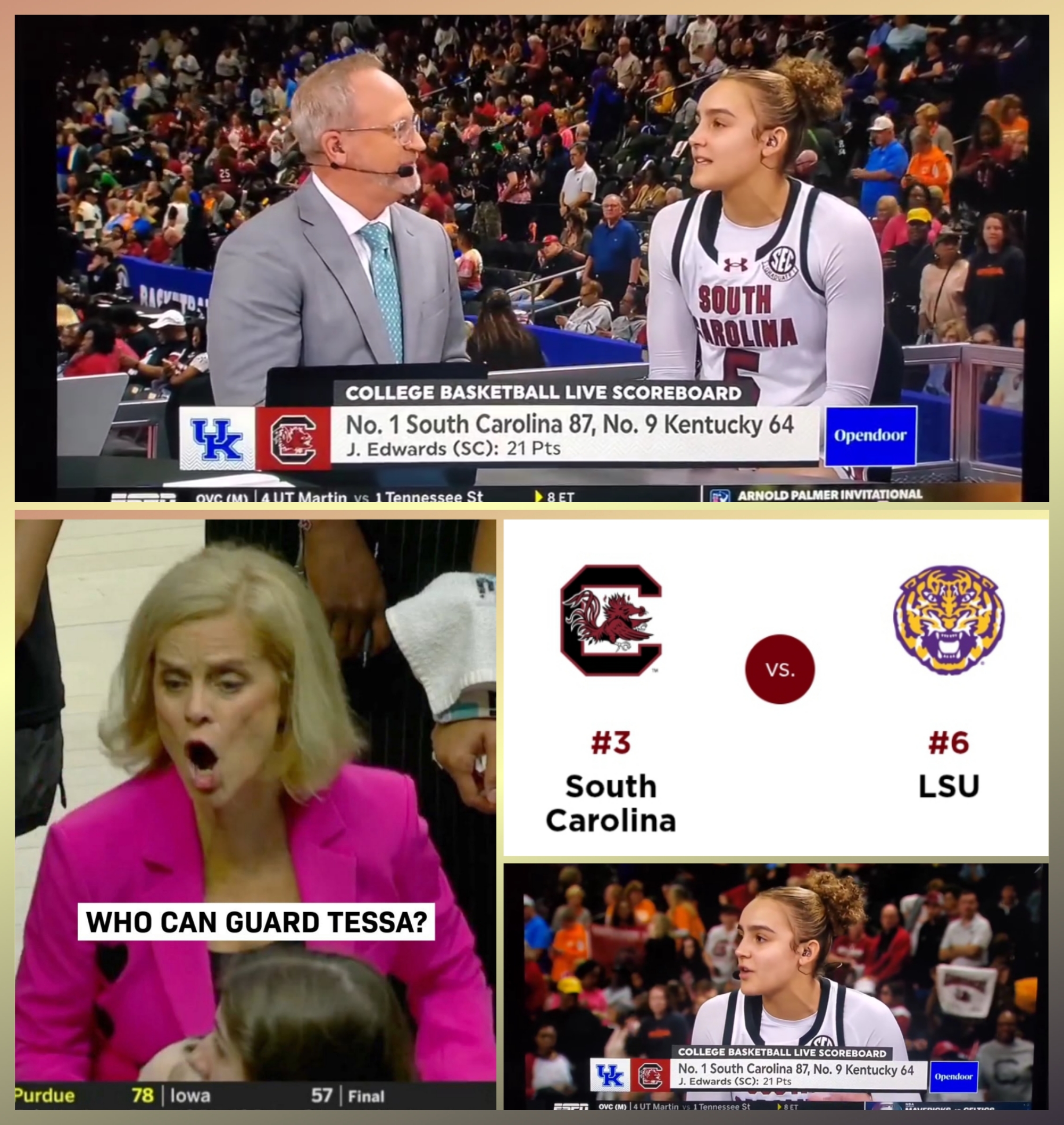
With 5:15 left in the third quarter and Johnson having already put up 21 points on 8-of-13 shooting, Mulkey called timeout. She turned to her bench and, with the desperation audible across the arena, repeated the question that would soon be everywhere: “Who can guard Tessa?!”
LSU had no answers. Johnson became the only South Carolina player since Aliyah Boston in the 2019-20 season to score 20+ points in consecutive games against AP Top-10 opponents. The Gamecocks won 79-72. A tribute song was written. The phrase became a meme. And the nickname that Johnson had spent her junior season trying to retire — Tournament Tessa — found itself renewed, retrofitted, and attached to a new question that the entire SEC is now asking heading into Saturday’s semifinal rematch.
Now, less than three weeks later, they are about to do it again. And after Friday’s 87-64 demolition of Kentucky — in which Tessa Johnson delivered a personal 10-0 second-quarter run that broke the game open — Head Coach Dawn Staley addressed the media with the kind of measured, layered commentary that told you everything you needed to know about what is coming for LSU.
The Slump Nobody Was Allowed to Forget — Until Friday
Staley did not open with praise. She opened with honesty, which in her press conferences is always the more interesting choice.
“I mean, Tessa has been in somewhat of a slump, as far as shooting the ball. So it’s good to see her actually see the ball go in, especially those 3s. I thought she did a great job at mixing it up, driving it at the basket, pulling up, getting to the free-throw line because her skill set speaks to all of those things.”
This matters more in context. In the regular season finale against Kentucky on March 1 — the same Kentucky team South Carolina just dispatched by 23 — Johnson had shot 5-of-15 from the field and 2-of-10 from three, finishing with a modest 12 points in a game that nearly became a serious scare. That performance sat uneasily alongside the Valentine’s Day LSU masterpiece. Was she injured? Fatigued? Had opponents cracked the code after studying the film of Baton Rouge?
Friday answered those questions with authority. Johnson’s 10-0 second-quarter run was not just points — it was a statement about the range and texture of her offensive game. She made threes. She drove. She drew fouls and converted at the line. What Staley captured in her phrase “her skill set speaks to all of those things” is not a compliment so much as a reminder: this player does not need a single mechanism to score. She has five. And when they are all operating together, the slump looks like what it probably was — a temporary dimming, not an extinction.
The tactical implication for LSU is uncomfortable. Bella Hines, the freshman who raised her hand on Valentine’s Day and held Johnson to 0-of-2 in six minutes, was identified by Mulkey as the solution. Mulkey said after that game “I need to play her more” and praised Hines’ fierceness in locking Johnson down The Next . But a Johnson who is driving to the basket, pulling up from mid-range, and converting at the free-throw line is a significantly more complex problem than a Johnson simply standing in the corner waiting for a kick-out three. If Friday was any indication, what is arriving in Greenville on Saturday night is the complete version.
Minnesota to March — The Full Scope of Who She Is
Staley’s second statement did something that coaches rarely do in postgame press conferences: it provided genuine biographical context for a player’s performance.
“I know she’s known for shooting 3s. But, I mean, she’s really good at scoring the basketball. I mean, she scored a lot of points in the state of Minnesota. It was good to see her get back to doing a lot of things that she’s capable of doing.”
The Minnesota reference is not an aside. Tessa Johnson arrived at South Carolina as one of the most decorated scorers the state of Minnesota had produced, winning a state championship at Saint Michael-Albertville and doing so not as a long-range specialist but as an all-court offensive threat — someone who could create off the dribble, attack closeouts, manufacture points in traffic, and yes, hit threes when they were there. The college game, and the specific demands of playing alongside multiple All-SEC guards on a team with shared offensive responsibilities, had narrowed the public perception of what she was: the shooter, the corner threat, Tournament Tessa who woke up in big moments and disappeared in others.
What Staley is gently correcting, in front of the media, the night before a rematch with LSU, is that perception. “She’s really good at scoring the basketball” is a sentence that would read as obvious praise if it weren’t specifically positioned after “I know she’s known for shooting 3s.” Staley is drawing a distinction between the caricature and the player. The caricature is a three-point specialist. The player is a scorer — full stop — who happens to shoot threes at an elite rate.
For Kim Mulkey and LSU’s coaching staff preparing a game plan tonight, this is the most challenging part of Staley’s press conference. You cannot guard Tournament Tessa by taking away the three-pointer. If you take away the three, she drives. If you load the paint, she pulls up. If you go under screens, she is releasing before you recover. The Friday run against Kentucky demonstrated all of it in real time, in two minutes of basketball, against a defence that had spent a full week preparing for her.
“I Actually Like the Name Tournament Tessa”
And then Staley, having delivered her tactical portrait of a complete offensive player, smiled.
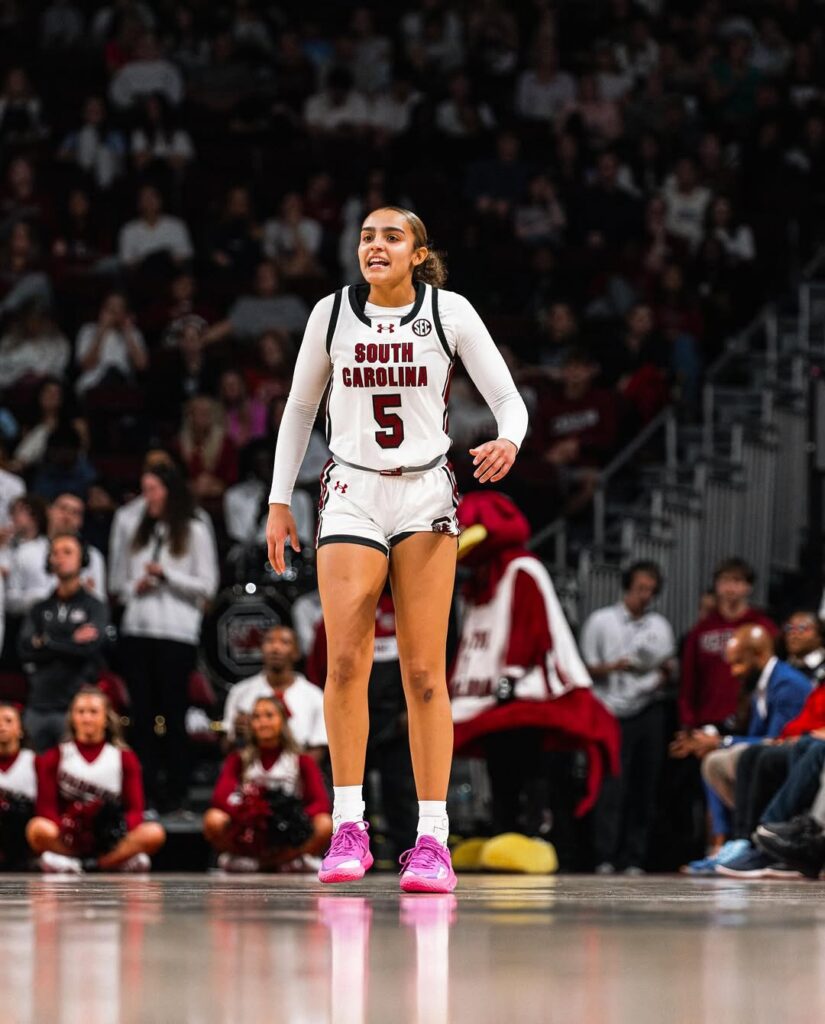
“And I actually like the name Tournament Tessa. And it is funny to hear her say she likes something that brings attention to her, because she doesn’t really like a lot of attention brought to her. So it’s cool that she embraced the nickname.”
This is the paragraph of a coach who knows her player completely. Johnson had spent the preseason and early regular season publicly trying to retire the Tournament Tessa label — not out of arrogance, but out of the specific kind of introversion that makes a player deeply uncomfortable being the subject of a story, any story, even a flattering one. She wanted to be known for daily consistency, not postseason peaks. She wanted the nickname to become unnecessary because she would be Tessa Johnson every game, not just in March.
Then Valentine’s Day happened. Then Kim Mulkey screamed “Who can guard Tessa?!” into a timeout huddle and the cameras caught it and the entire women’s basketball world heard it. A South Carolina alum wrote and produced a tribute song called “Who Can Guard Tessa?” within 24 hours, with lyrics like “When she shoot three from the logo, she don’t need screens — step back, jumpin’, cuttin’ up dreams” Columbia News . The nickname didn’t die. It got louder. It got a soundtrack.
And now, with a rematch imminent and a 10-point personal run against Kentucky on the evening’s résumé, Johnson has apparently made her peace with it. Staley’s amusement in reporting this — “it is funny to hear her say she likes something that brings attention to her” — is the warmth of a coach watching a young player grow into her own story rather than away from it. The embrace of the nickname is not vanity. It is acceptance. It is a player who has stopped fighting the narrative and started writing it.
The Rematch: What LSU Cannot Afford
South Carolina has now won 18 consecutive games against LSU, with Staley going 7-2 all-time against Mulkey, including 6-0 when the game is played in Baton Rouge On3 . Saturday’s semifinal is the rubber match of the season — the third chapter of a series that has already produced a Valentine’s Day epic, a viral coaching meltdown, a tribute song, and a nickname that has now formally been embraced by its subject.
Mulkey will have answers ready. Hines will likely start or see significant early minutes. LSU will have studied the Kentucky game tape frame by frame, trying to decode the second-quarter run that broke the contest open. They will know what they are getting.
The question is whether knowing is enough. Because what Staley communicated on Friday night, with three measured paragraphs about a slump, a skill set, and a nickname, is that the player LSU faced on Valentine’s Day — the one who produced 21 points, made Mulkey call timeout, and generated a song — was not even the full version.
The full version, apparently, mixes it up.
Dawn Staley postgame press conference | 2026 SEC Tournament Quarterfinal
South Carolina 87, Kentucky 64 | Bon Secours Wellness Arena, Greenville, S.C. | March 6, 2026
South Carolina advances to SEC Tournament Semifinal vs. LSU | March 7, 2026
Tessa Johnson — Game Stats vs. Kentucky (March 6, 2026)
| Category | Figure |
|---|---|
| Points | 15 |
| 3-Pointers Made | 3-of-4 (75%) |
| Personal second-quarter run | 10-0 |
| Previous LSU meeting (Feb. 14) | 21 pts, 8-of-13 FG, 4-of-5 from three |
| Kim Mulkey’s response, Feb. 14 | “Who can guard Tessa?!” |
| LSU’s answer on Saturday | TBD |
Source: on3