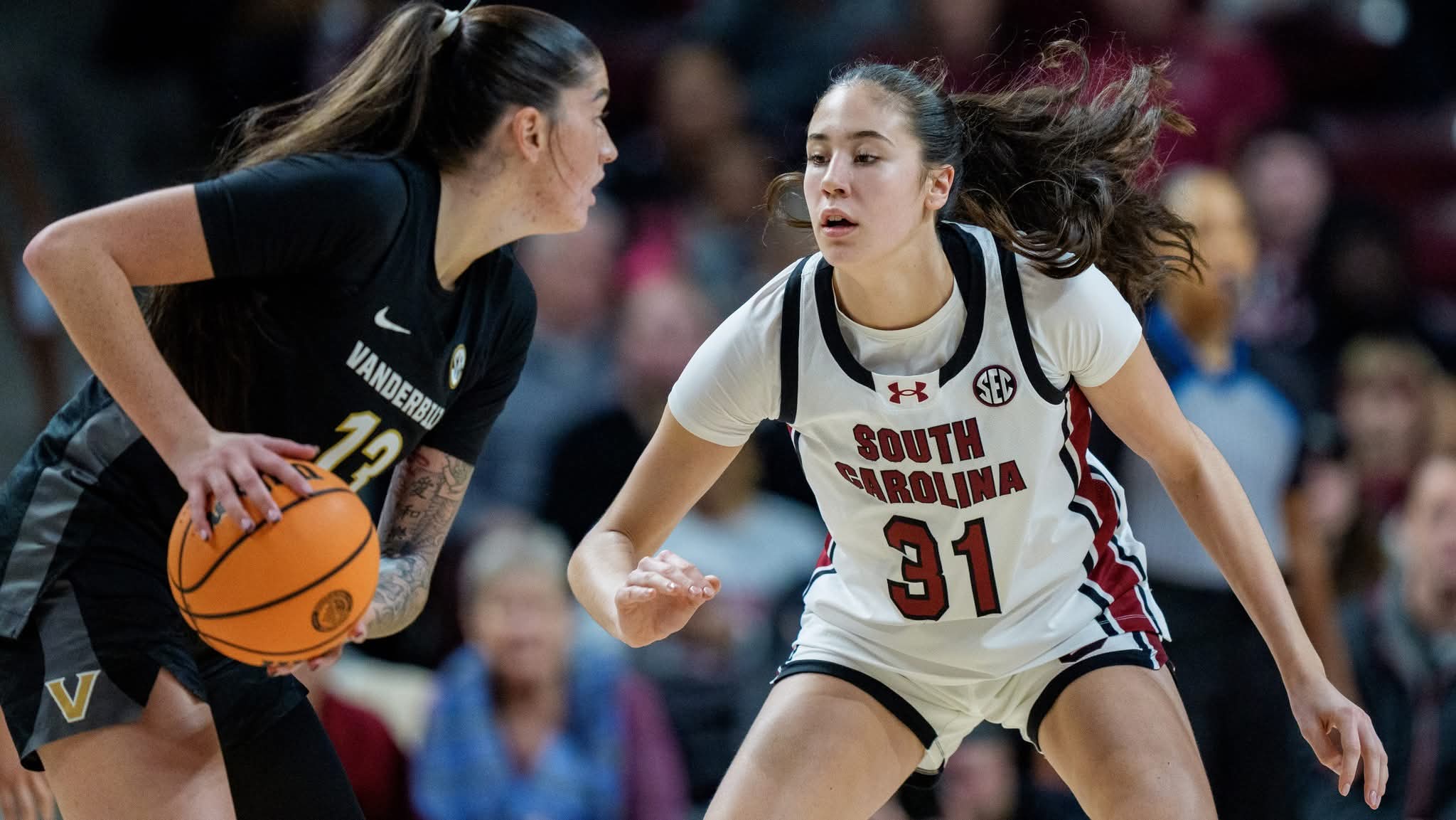
Following their dominant 103-74 dismantling of No. 5 Vanderbilt, South Carolina finds itself at a crossroads. The convincing win erased memories of the disappointing overtime loss to Oklahoma, but it also raised important questions about sustainability and role player development that will determine whether the Gamecocks can capture another SEC championship.
1. Was This a One-Game Fix or Lasting Improvement?
The Context:
South Carolina’s loss to Oklahoma exposed numerous weaknesses—poor defensive rotations, careless turnovers, and a lack of offensive discipline that contributed to the 94-82 defeat. Against Vanderbilt, the Gamecocks corrected nearly every mistake, executing coach Dawn Staley’s game plan with precision on both ends of the floor.
The Question:
Can South Carolina maintain this level of play consistently, or was the Vanderbilt performance simply an inspired bounce-back effort fueled by playing at home in front of their fans?
Why It Matters:
The Oklahoma loss eliminated South Carolina’s margin for error in the SEC championship race. At 6-1 in conference play, the Gamecocks cannot afford another slip-up against elite competition. The SEC is loaded with ranked opponents, and inconsistent performances will cost them dearly.
Playing with the intensity, discipline, and execution shown against Vanderbilt needs to become the standard, not the exception. The Gamecocks demonstrated they can fix their problems—pressuring ball handlers, moving the ball efficiently on offense, and maintaining defensive focus for 40 minutes. Now they must prove they can sustain that level against Tennessee, LSU, Texas, and other championship contenders.
The Verdict:
This is the defining question of South Carolina’s season. Championship teams don’t just respond well after losses—they maintain excellence consistently. The road ahead will reveal whether the Gamecocks learned a one-time lesson or underwent a fundamental transformation.
2. Can Alicia Tournebize Become South Carolina’s X-Factor?
The Context:
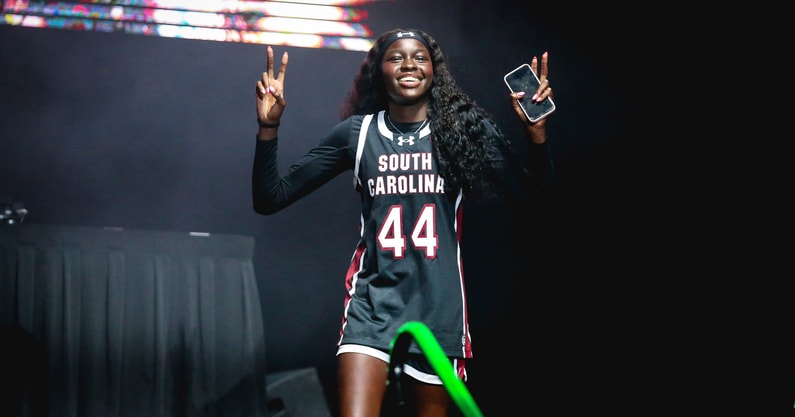
Freshman forward Alicia Tournebize showed tremendous promise against Oklahoma, contributing nine points, three rebounds, and providing South Carolina’s best defensive effort against Oklahoma’s Raegan Beers. Her performance suggested she could emerge as a difference-maker off the bench.
Against Vanderbilt, however, Tournebize went scoreless in 12 minutes of action.
The Question:
Can Tournebize develop into the kind of impact player who makes crucial contributions even when scoring opportunities are limited—similar to how MiLaysia Fulwiley has impacted games over the past two seasons?
The Nuance:
Tournebize’s scoreless performance against Vanderbilt deserves context. Four teammates—Ta’Niya Latson, Tessa Johnson, Madina Okot, and Joyce Edwards—combined for 74 points, leaving few scoring opportunities for others. More importantly, Tournebize didn’t look lost or overwhelmed on the court despite not scoring. Her defensive presence and court awareness remained evident.
Why It Matters:
South Carolina needs an x-factor beyond its primary scorers—someone who can provide unexpected production in critical moments, particularly in tournament play. Fulwiley filled this role beautifully the past two seasons, delivering game-changing performances even when her stat lines weren’t always eye-popping.
For Tournebize to reach that level, she must find ways to impact games beyond scoring. That means contributing defensively, crashing the boards, making smart passes, and being ready when her number is called offensively.
The Potential:
Tournebize’s ceiling remains exceptionally high. Her athletic ability was on full display when she knocked down a spectacular three-pointer against Vanderbilt—back rim, three and a half feet in the air, front rim, and somehow still finding the bottom of the net. That shot showcased why coaches and teammates believe in her potential.
The Verdict:
Tournebize doesn’t need to score 15 points every game to be South Carolina’s x-factor. But she does need to find ways to make consistent positive impacts—whether through defense, energy, or timely baskets—even on nights when scoring opportunities are scarce. The difference between being a promising freshman and being a game-changer lies in learning to contribute meaningfully regardless of circumstances.
Looking Ahead
These two questions are intrinsically connected. If South Carolina has truly learned to play with sustained excellence, players like Tournebize will have more opportunities to develop into impact performers within a winning system. Conversely, if the Gamecocks struggle with consistency, they’ll need their bench players to provide crucial lifts in challenging moments.
The Vanderbilt victory proved South Carolina can reach elite levels of performance. Now comes the harder part: proving they can stay there. The answers to these burning questions will determine whether the Gamecocks are merely a very good team or a championship-caliber program ready to compete for another national title.