
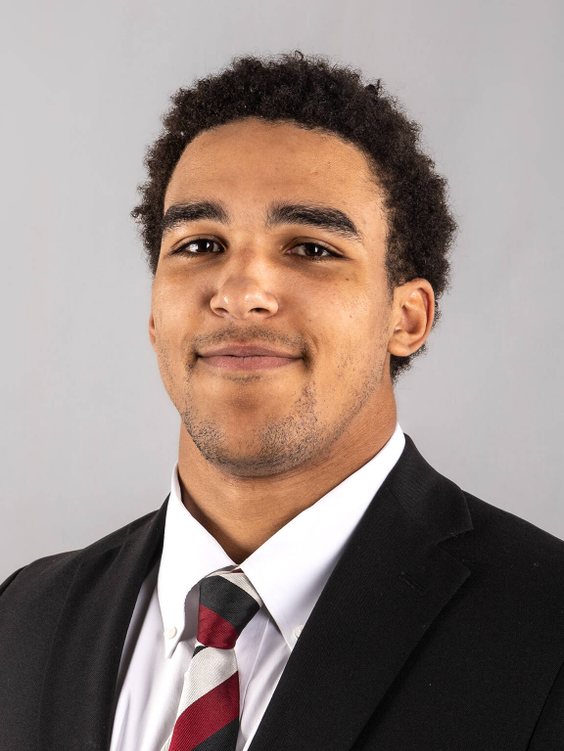
Columbia, SC — In a significant boost for South Carolina football’s defensive future, starting defender Justin Okoronkwo has announced his intention to return to the Gamecocks for the 2026 season, providing crucial continuity and leadership for a unit looking to rebound from a challenging 2025 campaign.
A Major Retention Victory
Okoronkwo’s decision to return represents an important win for head coach Shane Beamer and his staff during a critical period of roster management. In the modern college football landscape, where the transfer portal creates constant roster turnover and players regularly explore opportunities elsewhere, retaining quality starters—particularly on defense—has become essential to program stability and success.
The announcement comes at a time when South Carolina is working to reshape its roster and culture following what many characterized as a disappointing 2025 season. Having an experienced, proven defender like Okoronkwo commit to returning provides a foundation upon which the coaching staff can build their defensive reconstruction.
Okoronkwo’s Impact and Value
As a defensive starter, Okoronkwo has established himself as a reliable contributor whose presence on the field makes South Carolina’s defense more effective. While specific statistical achievements would provide fuller context of his impact, his status as a starter in the nation’s premier conference demonstrates his ability to compete at the highest level of college football.
On-Field Contributions
Okoronkwo’s game presumably features:
Defensive Versatility: Modern college football increasingly demands defenders who can handle multiple responsibilities and adjust to various offensive schemes. Okoronkwo’s ability to start in the SEC suggests he possesses this adaptability.
Consistency: Maintaining a starting role requires week-to-week reliability in execution, assignment discipline, and physical performance against elite competition.
Physical Tools: Competing effectively in SEC games demands exceptional athleticism, strength, and football intelligence—qualities Okoronkwo has demonstrated throughout his tenure.
Big-Game Experience: Having played meaningful snaps in high-pressure conference games, Okoronkwo brings invaluable experience that younger players lack.
Leadership and Mentorship
Beyond his on-field performance, Okoronkwo’s return provides intangible benefits:
Veteran Presence: Experienced players help establish practice standards, communicate defensive concepts to younger teammates, and model professional preparation habits.
System Continuity: Players who’ve been in the program understand defensive coordinator expectations, terminology, and adjustments that take newcomers time to master.
Recruitment Tool: Current defensive starters who choose to return send positive signals to recruits about program direction and culture.
Locker Room Stability: In times of transition or challenge, having respected veterans commit to the program helps maintain positive team dynamics.
The Decision-Making Process
Okoronkwo’s choice to return for 2026 likely involved careful consideration of multiple factors that ultimately led him to conclude South Carolina offered his best path forward.
Evaluating NFL Prospects
For defensive players with starting experience in the SEC, the question of turning professional always looms. Okoronkwo’s decision to return suggests either:
- NFL draft evaluations indicated he would benefit from another season of development and film
- He values completing his education before pursuing professional opportunities
- He believes South Carolina’s coaching and scheme can showcase his abilities more effectively in 2026
- Personal readiness factors suggested another collegiate year serves his long-term interests
Transfer Portal Considerations
The transfer portal offers experienced players opportunities to explore different programs, potentially seeking:
- Different defensive schemes that better fit their skill sets
- More prominent roles or playing time
- Geographic preferences or family considerations
- Programs with better perceived championship prospects
Okoronkwo’s decision to stay indicates satisfaction with his role, belief in South Carolina’s direction, and trust in the coaching staff’s ability to develop him further.
Academic and Personal Factors
College football decisions extend beyond the field:
- Pursuing specific academic programs or degree completion
- Maintaining established relationships and comfort within the program
- Family proximity and support systems
- Financial considerations including NIL opportunities
- Long-term career planning beyond football
Implications for South Carolina’s Defense
Okoronkwo’s return carries significant strategic implications for defensive coordinator planning and overall unit development.
Defensive Scheme Continuity
Having an experienced starter return allows coaches to:
Build Around Known Quantities: Defensive game planning becomes easier when you can count on proven players in key positions rather than projecting how newcomers will perform.
Maintain Defensive Identity: Systems work best when players understand and execute them consistently. Veteran players help preserve scheme integrity year-over-year.
Accelerate Installation: Returning starters can help teach defensive concepts to younger players, speeding up the learning curve for the entire unit.
Adjust With Confidence: Coaches can implement more complex adjustments and variations when they trust players’ understanding and execution abilities.
Depth Chart Stability
Okoronkwo’s return provides:
Positional Security: One fewer starting spot requiring replacement through recruiting, transfer portal, or player development
Competition Dynamics: Younger players now compete to earn backup roles or push Okoronkwo for starting time, elevating practice intensity
Flexibility: Coaches can focus recruiting and portal efforts on other positional needs rather than scrambling to replace unexpected departures
Emergency Depth: Even if younger players eventually win starting roles, having Okoronkwo’s experience available provides security against injuries
Recruiting Impact
Current and prospective recruits notice when:
Veterans Stay: Players choosing to return suggests positive program culture and development opportunities
Playing Time Paths: Elite defensive recruits evaluate realistic timelines for seeing the field and contributing meaningfully
System Success: Returning starters indicate belief in defensive scheme effectiveness and coaching quality
Winning Potential: Players commit to programs where they believe in building toward championship contention
The 2026 Outlook
Okoronkwo’s return helps shape expectations and planning for South Carolina’s 2026 season.
Defensive Improvement Goals
Following a challenging 2025, South Carolina’s defense will aim to:
Reduce Explosive Plays: Limiting opponent big plays requires experienced defenders who understand leverage, gap integrity, and communication
Improve Third-Down Efficiency: Getting off the field on third down demands execution and adjustment ability that veteran players provide
Create More Turnovers: Ball disruption often comes from players who’ve mastered technique and anticipate offensive patterns through experience
Enhance Red Zone Defense: Preventing touchdowns in condensed spaces requires discipline and trust that develop over time
Okoronkwo’s continued presence helps address all these objectives.
Spring Practice Significance
With Okoronkwo committed to returning, spring practice becomes crucial for:
- Establishing 2026 depth chart hierarchy
- Integrating new additions from recruiting and transfer portal
- Installing any defensive scheme adjustments or innovations
- Developing younger players who’ll compete for playing time
- Building chemistry and communication among the defensive unit
Summer Development Focus
The offseason provides Okoronkwo opportunities to:
- Refine technical skills and address any mechanical issues identified from film study
- Develop additional physical tools through strength and conditioning work
- Study opponent tendencies and prepare mentally for 2026 challenges
- Take on enhanced leadership responsibilities preparing teammates
Context Within the Program
Okoronkwo’s return fits within South Carolina’s broader efforts to build continuity and culture following recent challenges.
Roster Management Success
Retaining quality starters represents crucial staff work in:
Relationship Building: Players stay where they feel valued, developed, and connected to coaches and teammates
Development Track Record: Demonstrating ability to improve players’ skills and prepare them for next-level opportunities
Competitive Environment: Creating culture where players want to compete and believe in collective goals
NIL Strategy: Providing financial support that makes staying competitive with outside opportunities
Setting the Tone
Okoronkwo’s announcement potentially creates momentum for:
- Additional retention announcements from other key players
- Positive recruiting conversations with prospects impressed by veteran leadership
- Fan optimism about program direction and 2026 potential
- Locker room confidence in staff vision and team-building approach
Fan and Community Response
South Carolina’s passionate fanbase likely welcomed Okoronkwo’s return announcement enthusiastically, viewing it as evidence of:
Program Belief: Players who stay believe in the coaching staff and future direction
Competitive Roster: Retaining starters helps maintain the talent level necessary to compete in the SEC
Culture Strength: Player loyalty suggests positive team environment and relationships
2026 Hope: Each positive roster development builds optimism about bouncing back from 2025 disappointments
The Path Forward
Okoronkwo now faces the challenge of building on his previous success while helping lead South Carolina’s defensive resurgence. His 2026 season goals likely include:
Individual Excellence: Improving statistics, making more impact plays, and showcasing abilities for potential professional opportunities
Team Success: Contributing to improved defensive performance and overall team win-loss record
Leadership Growth: Mentoring younger teammates and helping establish defensive culture and standards
Legacy Building: Leaving South Carolina having contributed to the program’s competitive return and positive trajectory
Broader Implications
In the evolving landscape of college football, where player movement has accelerated dramatically, retention announcements like Okoronkwo’s carry increasing significance. Programs that successfully retain their best players while strategically adding talent through recruiting and the transfer portal position themselves for sustained success.
South Carolina’s ability to keep Okoronkwo in the fold demonstrates staff competence in:
- Building relationships that transcend wins and losses
- Selling vision for program improvement and player development
- Competing in the NIL marketplace
- Creating culture where players want to stay and compete together
Conclusion
Justin Okoronkwo’s decision to return to South Carolina for the 2026 season provides the Gamecocks with a critical building block for defensive improvement and overall program recovery. His experience, production, and leadership will prove invaluable as South Carolina works to rebound from 2025’s disappointments and reestablish itself as a competitive force in the SEC.
For Okoronkwo, the decision represents confidence in his continued development path at South Carolina and belief that another season in Columbia serves his football and personal goals. For the Gamecocks, his return offers stability, veteran presence, and a foundation upon which to build a more successful 2026 campaign.
As South Carolina continues navigating the offseason—addressing roster needs, integrating new additions, and preparing for the challenges ahead—Okoronkwo’s commitment provides both practical benefits and symbolic significance. His choice to stay signals that players who know the program best believe in where it’s headed, offering hope that better days lie ahead for Gamecock football.
The coming months will reveal whether Okoronkwo’s faith in South Carolina’s direction proves justified, but his decision to return represents an important first step in the program’s efforts to write a more successful chapter in 2026.