Who Guards Who in South Carolina vs Oklahoma: Breaking Down the Critical Defensive Matchups
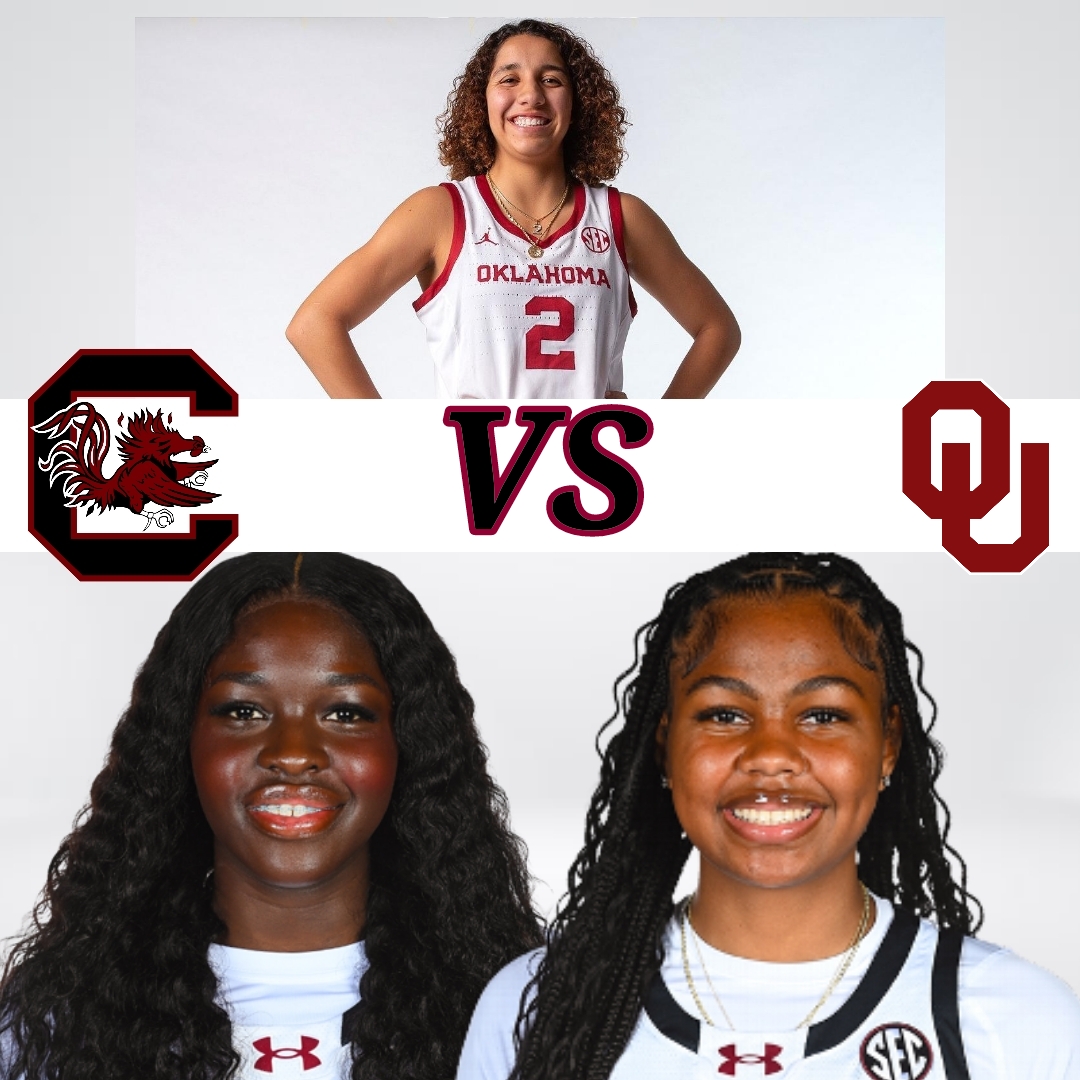
A Tactical Preview of Wednesday’s High-Stakes SEC Showdown
As No. 1 South Carolina prepares to face Oklahoma in what promises to be one of the SEC’s most explosive matchups of the season, defensive assignments and strategic adjustments will determine the outcome. With both teams ranking in the top five nationally in scoring offense, this contest features compelling individual battles that could swing the game’s momentum.
The Chavez Dilemma: Who Guards Oklahoma’s Freshman Phenom?
The most pressing question facing South Carolina’s coaching staff centers on containing Aaliyah Chavez, Oklahoma’s dynamic freshman guard who has taken the college basketball world by storm. The No. 3 recruit in the Class of 2025 has wasted no time making her mark, leading the Sooners with an impressive 18.8 points per game—a remarkable achievement for a first-year player thrust into a leading role.
Dissecting Chavez’s Game
However, Chavez’s scoring average tells only part of the story. Her efficiency numbers reveal both opportunity and vulnerability for South Carolina’s defense:
- Volume shooter: Chavez attempts 17 field goals per game, among the highest rates in the SEC
- Shooting percentage: Converting just 33.8% of her attempts (6.7 makes per 17 attempts)
- Playmaking ability: Averaging 4.1 assists per game, demonstrating she’s not solely a scorer
- Pace pusher: Possesses elite speed and excels in transition opportunities
The statistical profile suggests Chavez thrives on volume and tempo—she’ll take difficult shots and create offense through sheer aggression and athleticism. This presents South Carolina with a clear defensive blueprint: slow her down, force her into halfcourt sets, and limit transition opportunities where her speed becomes a weapon.
The Agot Makeer vs Ayla Debate
South Carolina has two primary defensive options to counter Chavez, each bringing distinct advantages:
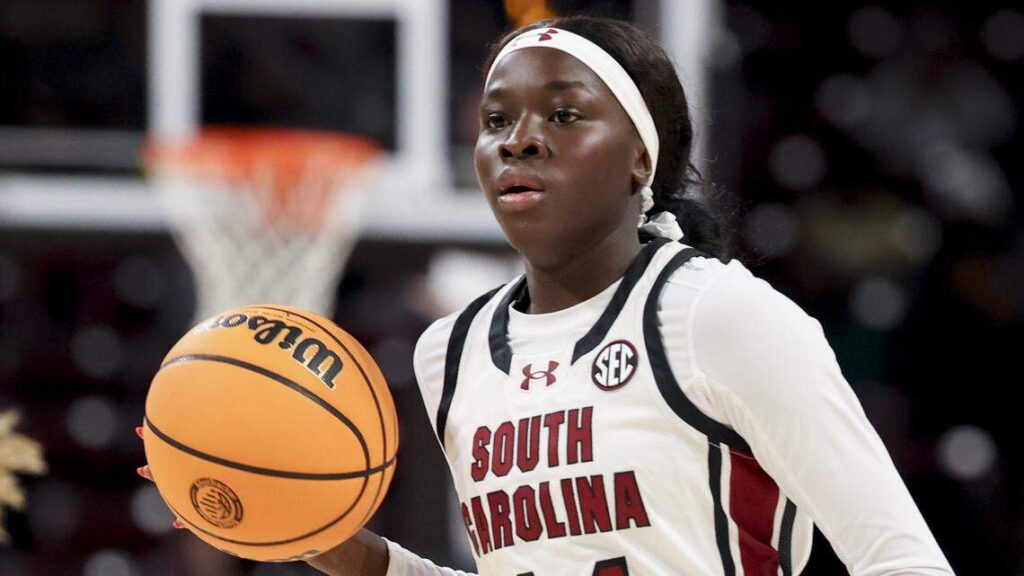
Agot Makeer brings:
- Length and athleticism: Her physical tools can match Chavez’s speed and contest shots
- On-ball pressure: Makeer’s ability to pressure ball handlers could disrupt Chavez’s rhythm
- Transition defense: Speed to track back and prevent the fast-break points Chavez seeks
Ayla McDowell offers:
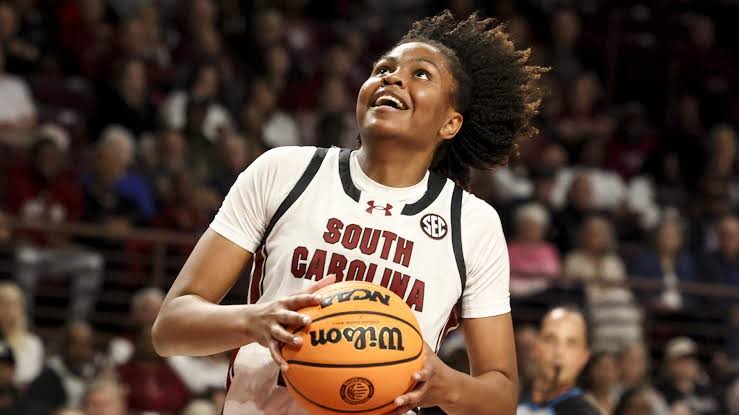
- Defensive IQ: Superior understanding of angles and positioning
- Discipline: Less likely to bite on fakes or gamble for steals
- Physical strength: Could body Chavez and prevent her from getting comfortable catches
- Experience: Better equipped to handle the mental chess match of guarding a primary scorer
The Strategic Recommendation
Given Chavez’s shooting inefficiency (33.8%), the optimal approach may involve Ayla McDowell as the primary defender with Makeer providing situational help. Here’s why:
The goal isn’t necessarily to shut down Chavez’s scoring—her 17 attempts per game will likely continue regardless—but rather to force her into contested, low-percentage looks while preventing her from orchestrating Oklahoma’s transition game. McDowell’s disciplined approach and positioning can channel Chavez toward South Carolina’s help defense, while her physicality can slow Chavez’s drives and reduce her effectiveness as a facilitator.
“Stopping her in transition will be big for South Carolina, forcing her to run a halfcourt offense where the defense can work her into a low-percentage shot,” as scouting reports emphasize. This philosophy perfectly aligns with Mathis’s strengths.
Makeer should remain ready to switch onto Chavez in transition scenarios where her speed advantage becomes critical, but Mathis provides the steady, fundamental defense needed to grind out a halfcourt game.
The Paint Battle: Beers vs Edwards/Okot
While the perimeter matchup draws headlines, the interior battle between Oklahoma’s Reagan Beers and South Carolina’s frontcourt duo of Joyce Edwards and Madina Okot may ultimately decide the game’s outcome.
Reagan Beers: A Double-Double Machine
Oklahoma’s 6-4 center has been remarkably consistent, averaging:
- 16.7 points per game
- 11.2 rebounds per game
- A proven track record against South Carolina’s defense with contrasting results
The tale of two games against South Carolina tells the story: Beers managed only seven points in their March meeting but exploded for 23 points in January. The differential suggests South Carolina has found defensive answers for Beers, but those solutions require precise execution.
The Edwards-Okot Partnership
The defensive strategy for containing Beers appears straightforward in theory but demands coordination in practice:
- Primary defender assignment: Whether Joyce Edwards or Madina Okot draws the matchup, individual defense on Beers is only part of the equation
- Boxing out is non-negotiable: With Oklahoma ranking No. 12 nationally in offensive rebounds (16.4 per game), preventing second-chance points becomes paramount—especially after Chavez’s high-volume, low-percentage attempts create long rebounds
- The tag-team approach: “If Okot has the matchup, it will likely be Edwards grabbing the rebound while Okot backs Beers out of the lane”—this tactical detail reveals South Carolina’s likely game plan of using Okot’s physicality to deny position while Edwards uses her instincts and athleticism to secure the board
- Setting the tone early: Edwards and Okot must establish physical dominance from the opening tip, making every Beers touch contested and every rebound a battle
Why This Matchup Matters
Beers’s ability to generate second-chance points directly correlates with Oklahoma’s offensive efficiency. When she’s controlling the glass and converting put-backs, the Sooners become extremely difficult to contain. Conversely, limiting her to one shot per possession forces Oklahoma to rely on their perimeter shooting—an area where South Carolina’s length and athleticism provide significant advantages.
The Bigger Picture: Contrasting Offensive Philosophies
This matchup features two of the nation’s premier offensive teams approaching scoring from different angles:
By the Numbers
- Oklahoma: No. 2 nationally in scoring offense (89.9 ppg)
- South Carolina: No. 5 nationally in scoring offense (88.6 ppg)
These statistics suggest a potential shootout, but defensive metrics paint a more complex picture:
- South Carolina’s opponents: Averaging just 53.8 ppg (8th nationally in scoring defense)
- Oklahoma’s opponents: Averaging 62.3 ppg (141st nationally in scoring defense)
The disparity reveals that South Carolina has faced and dominated superior competition defensively, while Oklahoma’s offensive numbers may be somewhat inflated by defensive struggles.
Oklahoma’s Defensive Rebounding Edge
One area where Oklahoma holds a decisive advantage: defensive rebounding, leading the SEC at 34.9 per game. This statistic carries enormous implications for South Carolina’s offensive approach.
The Gamecocks cannot afford to settle for poor-percentage shots, knowing Oklahoma will likely limit them to single possessions. This becomes especially critical considering South Carolina’s recent shooting struggles—they’ve shot 44% or less from the field in three SEC games.
The Transition Battle
If South Carolina experiences another shooting slump, transition defense becomes absolutely critical. “They have to sprint back to defend in transition if Oklahoma grabs the miss and pushes the ball”—this simple statement captures the game’s potential defining dynamic.
Oklahoma’s identity centers on pace and transition offense. Chavez’s speed, combined with Beers’s rebounding prowess, creates a dangerous fast-break attack. Every South Carolina miss could trigger a numbers advantage for Oklahoma if the Gamecocks don’t immediately commit to getting back defensively.
Keys to Victory for South Carolina
Based on this tactical breakdown, South Carolina’s path to victory requires:
- Controlling Chavez in transition: Deploy Ayla Mathis as primary defender with emphasis on preventing fast breaks; force halfcourt offense where South Carolina’s defensive structure can limit efficiency
- Dominating the glass: Edwards and Okot must establish physical dominance against Beers, eliminating second-chance opportunities that fuel Oklahoma’s offense
- Shot selection discipline: With Oklahoma’s defensive rebounding prowess, South Carolina cannot afford low-percentage attempts; work for quality looks knowing second chances will be limited
- Transition defense commitment: Every player must sprint back after missed shots to prevent Oklahoma from generating easy baskets in the open court
- Exploiting defensive disparities: South Carolina’s vastly superior defensive metrics (53.8 ppg allowed vs Oklahoma’s 62.3) suggest they can win a halfcourt defensive battle; impose that pace rather than getting dragged into Oklahoma’s preferred tempo
The X-Factor: Adjustments and Depth
While individual matchups provide the framework, coaching adjustments and bench contributions will likely determine the outcome of a close game. Dawn Staley’s track record of in-game tactical adjustments gives South Carolina an advantage, particularly if the initial defensive assignments aren’t working.
The contrasting results from the two previous meetings (holding Beers to seven points in March versus allowing 23 in January) demonstrate that South Carolina has cracked the code on defending Oklahoma’s strengths—but execution remains everything.
Final Analysis
This matchup presents a fascinating contrast: Oklahoma’s explosive offense and transition game against South Carolina’s suffocating defense and championship pedigree. While both teams can score prolifically, South Carolina’s defensive identity and tactical discipline should provide the margin of victory in what promises to be a high-level, intensely competitive game.
The Chavez matchup will generate headlines, but the Beers-Edwards-Okot battle in the paint may ultimately determine which team advances with a signature SEC victory. South Carolina’s ability to impose their defensive will while maintaining shot selection discipline should prove decisive.
Prediction: South Carolina’s defensive superiority and championship experience prevails in a closer-than-expected contest, with Mathis’s steady defense on Chavez and Edwards-Okot’s dominance on the glass providing the difference.
About The Author