
“The SECRET Weapon Behind South Carolina’s Championships That Nobody Talks About — Meet The Unsung Heroes Who Keep Dawn Staley’s Gamecocks UNBREAKABLE”
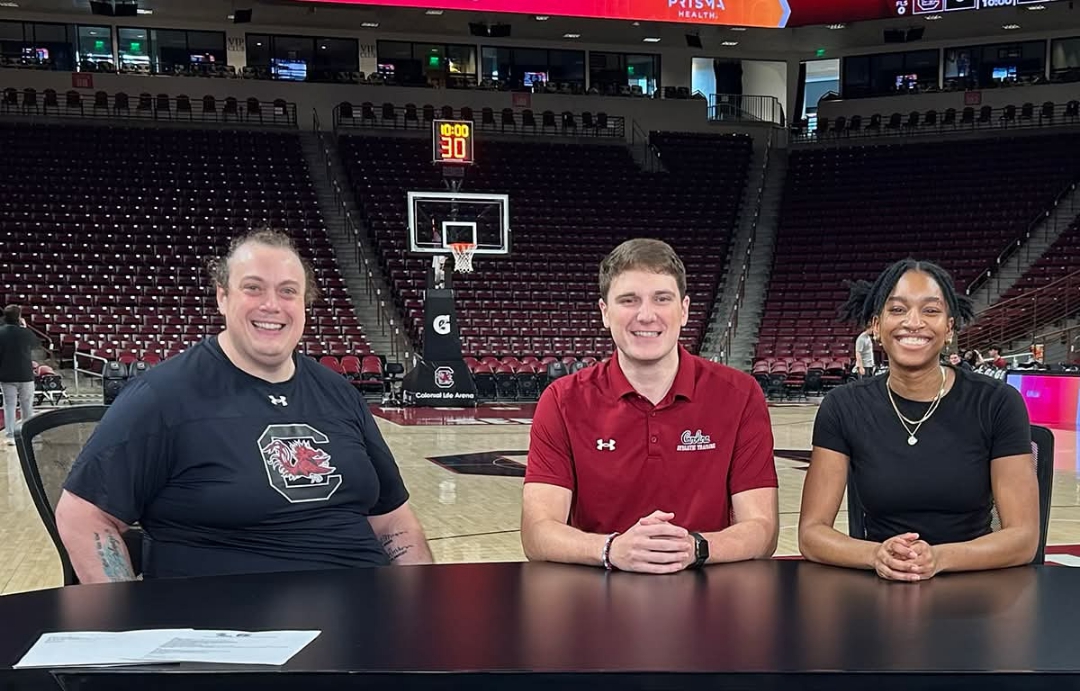
The Unsung Heroes Behind Every Gamecock Championship: Inside South Carolina’s Athletic Training Staff
Every time South Carolina women’s basketball takes the floor — every comeback, every championship run, every moment Raven Johnson drops a clutch three or Joyce Edwards explodes for 18 points — there are people whose names never appear in a box score but whose work made it all possible. March is National Athletic Training Month, and for Gamecock Nation, this is a moment to acknowledge the people who are truly first ones there and last ones to leave.
More Than Tape and Ice
The public image of athletic trainers has never matched the reality of what they do. Senior Associate Athletics Director for Sports Medicine John Kasik, a certified athletic trainer for more than 40 years, is direct about the scope of the role: “An athletic trainer’s job is to prevent and treat injuries. That has become broader in some ways. When athletes have an off day, that doesn’t include treatment. Athletic trainers are usually the first ones there and the last ones to leave.”
For South Carolina women’s basketball specifically, the person in that role is Craig Oates, who has worked with the Gamecocks since 2009. “In the college setting, we are the middleman to everything,” Oates said. “We are the gatekeeper for all things healthcare for the student-athletes.”
That role extends far beyond physical injuries. “We become their therapist and confidant,” Oates explained. “It’s the safe space where they can come and open up about things when they don’t always have people to open up to. We see these kids more than almost anybody in their lives when they are here, outside of their teammates and some of their coaches.“
Consider what that means in the context of this season alone. Tessa Johnson managing a left knee issue through the SEC Tournament. Chloe Kitts rebuilding from ACL surgery. Raven Johnson reconstructing her entire shooting mechanics following her own knee injury. Behind every one of those stories, Oates and his staff were present — before the sun came up, often long after everyone else had gone home.
The Journey, Not Just the Injury
Jennifer Herod, who works with South Carolina volleyball and beach volleyball and has been in athletic training for more than three decades, captures the emotional depth of the profession in a way that resonates deeply for anyone who has watched a Gamecock player fight back from injury. “It’s really about seeing them on their journey,” Herod said. “They come in as freshmen and leave as seniors. When they do get that injury or surgery, and you have to take them through that journey of getting them back on the court, that’s the most rewarding and fulfilling thing.” NCAA
That description maps directly onto the Chloe Kitts story — a player who tore her ACL in October, spent every day of this season in the training room, celebrated the milestone of her first jump shot at three months, and is now being described as well on her way to full recovery for next season. The athletic training staff didn’t just treat the injury. They shepherded Kitts through one of the hardest chapters of her athletic life.
The Challenges Nobody Talks About
Oates identified one of the most pressing modern challenges candidly: “One of the challenges in recent years is trying to help the kids balance all of these things and people that are pulling them in different directions. They have so many different people in their ear, obligations, NIL, and academics. As Coach Staley says, you have to meet them where they are.”
Kasik was equally pointed about a persistent misconception: “I think the biggest misconception for people who haven’t worked with an athletic trainer is that we just provide water. Sometimes athletic trainers and strength coaches get a lot of blame for things that have nothing to do with them. A lot of time, I hear announcers on TV say something, and I realize they have no idea what they’re talking about.”
A Culture That Retains Its Best
What sets South Carolina apart isn’t just talent on the court — it’s the institutional culture that surrounds it. Herod put it plainly: “We have a great staff at South Carolina. All of our sports are well taken care of. We have longevity in our staff, which shows what a great place South Carolina is to work at, and it’s just a great place to be.”
Longevity in a support staff is not accidental. It reflects a program that values the people behind the scenes — and the players know it. When Gamecock athletes shout out their athletic trainers publicly, they aren’t being polite. They are acknowledging the people who held them together when games couldn’t.
As South Carolina enters the NCAA Tournament, the championships that follow will belong to the players and coaches. But the hours that make those championships possible belong, in no small part, to the people in the training room — invisible on Selection Sunday, indispensable every other day.
About The Author