Survive and Advance: Why South Carolina’s Mindset — Not Revenge — Is What Makes Them Dangerous Against Oklahoma
The Gamecocks lost to the Sooners in January. They haven’t forgotten. But the way Dawn Staley’s program has processed that loss reveals something far more important than a revenge narrative ever could.
The Rematch Nobody Can Stop Talking About — Except South Carolina
For the second consecutive week, Dawn Staley and the South Carolina Gamecocks will walk into an NCAA Tournament game against a team they have already faced this season. Last week it was Southern Cal — a team the Gamecocks had beaten comfortably in November, dispatched again in the second round without significant drama. This week is different.
This week is Oklahoma.
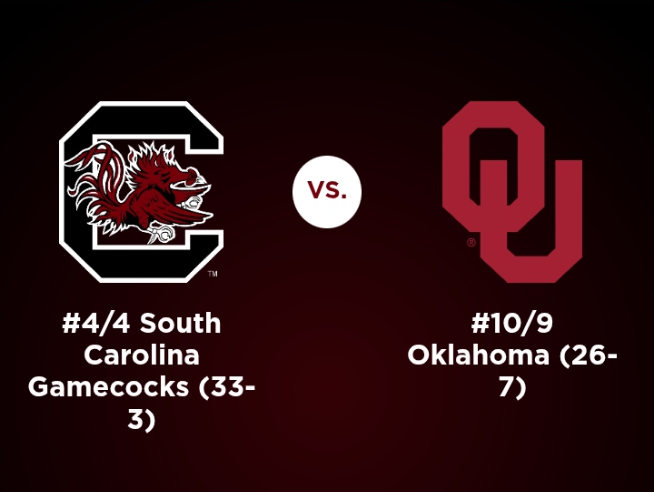
On January 22 in Norman, the Sooners handed South Carolina one of its three losses this season — a 94-82 overtime defeat that remains the most analytically significant result of the Gamecocks’ year. It was the loss that exposed vulnerabilities. The loss that forced adjustments. The loss that, according to the players who lived through it, may have made South Carolina a better team than a victory ever could have.
Now, in the Sweet 16 at Golden 1 Center in Sacramento on Saturday, No. 1 seed South Carolina faces No. 4 seed Oklahoma again — with an Elite Eight berth at stake and an entire offseason’s worth of preparation on both sides.
The revenge narrative writes itself. Staley’s program has spent two months dismantling it.
“Survive and Advance”: The Philosophy Behind the Phrase
When Staley addressed the media on Friday, she was asked — predictably — about the motivation of facing the team that beat her Gamecocks in overtime less than ten weeks ago. Her answer was precise, deliberate, and worth examining in full.
“We’re not motivated by ‘we’re avenging a loss.’ We’re motivated by advancing,” Staley said. “It’s not like, ‘Oh, they beat us last time, let us do this or that.’ It’s survive and advance. It is to have more points than they do at the end of the 40 minutes or however long it takes.”
That framing — survive and advance — is not a deflection. It is a coaching philosophy that has produced three national championships, seven Final Four appearances and fourteen consecutive NCAA Tournament appearances. Elite programs do not chase emotional satisfaction in March. They chase the next round.
The distinction matters because revenge-motivated teams play differently than process-motivated teams. A team chasing revenge can be baited into uncomfortable situations — into pressing when composure is required, into gambling defensively when discipline is the answer, into letting the emotional weight of a previous result distort their execution in the present moment. A team motivated purely by advancement plays the game in front of them, not the game behind them.
Staley’s message has penetrated every corner of the locker room. Veteran point guard Raven Johnson confirmed that what Staley said publicly is precisely what she said in practice.
“We all see it in the same way. Honestly, she told us in practice what she said here,” Johnson said. “I think, you know, it’s not really about getting a lick back. I mean, we just gotta come here and do what we do, play to a standard that we know we can play and bring our practice habits to the game. So I think it’s all about advancing and beating the team that’s in front of you.”
That is not a programmed media answer. That is a player who has internalized her coach’s philosophy completely — which is precisely what leadership looks like in a championship program.
What the Loss Actually Gave South Carolina
Star forward Joyce Edwards offers the most analytically revealing perspective on what the January loss in Norman meant for this team’s development. Edwards had 12 points and five rebounds in that game — a performance below her standard — and her assessment of what the result produced is candid in a way that comfortable winning never forces.
“I feel like we grew so much from that loss that you usually don’t get from wins,” Edwards said. “We really got exposed that game. I feel like we improved so much as a team, we’re way more together. The revenge factor is definitely there, I can definitely see how the people (are) gonna twist it that way. But at the end of the day, it’s just about getting to the next round.”
The phrase “we really got exposed” is the most important admission in that quote. Edwards is not minimizing the January result. She is acknowledging it fully — and then explaining what South Carolina did with the exposure. The Gamecocks entered that game with vulnerabilities in transition defense, rebounding discipline and half-court offensive execution. Oklahoma found every one of them and exploited them across 45 minutes of basketball.
What followed tells the real story. South Carolina has won 31 of 34 games this season. Their first-round tournament performance produced a 103-34 victory over Southern. Their second-round performance produced a 101-61 victory over Southern Cal — more than 100 points in back-to-back games. The team that was exposed in Norman in January has been in a sustained process of improvement ever since.
Freshman guard Agot Makeer, however, was careful not to let the margin of those victories obscure the preparation required for Saturday.
“I think there’s always stuff you can work on, no matter how much you win by,” Makeer said. “I feel like boxing out and rebounding is a big emphasis, because Oklahoma does that very well, and they spread the floor. So I think we got tested in both games, actually, on rebounding.”
That kind of self-awareness from a freshman — acknowledging defensive vulnerability in the middle of a tournament run characterized by dominant victories — reflects the culture Staley has built. No result is so comfortable that the standard gets lowered.
The Tactical Blueprint: What Oklahoma Exposed and What South Carolina Fixed
Guard Maddy McDaniel provided the most tactically specific breakdown of what the January loss revealed and what Saturday’s preparation has targeted.
“The things that we were kind of lapsing; just transition defense and our offense, rebounding the ball, stopping the ball,” McDaniel said. “Being aware of what (Oklahoma is) doing on offense, when they’re shooting, when they’re not, when they’re cutting, and all things like that.”
That scouting framework tells you exactly where Oklahoma hurt South Carolina in January — and exactly where Staley’s staff has spent weeks building countermeasures. Transition defense. Rebounding discipline. Offensive execution in the half court. Recognition of Oklahoma’s cutting actions and shot selection tendencies.
The rebounding number from January is the most glaring data point. Oklahoma out-rebounded South Carolina 54-39 — a margin of plus-15 that is, by Staley’s program standards, genuinely extraordinary. The Gamecocks almost never lose the rebounding battle by double digits. That Oklahoma did it by fifteen speaks to the Sooners’ physicality and the Gamecocks’ vulnerability on that particular night.
If South Carolina cannot correct that rebounding differential on Saturday, the January result becomes a credible template for an upset. If they can — and the evidence from a full season of improvement suggests they have addressed it — the competitive landscape shifts decisively in the Gamecocks’ favor.
The Center Stage: Okot vs. Beers
Every analytical conversation about this rematch eventually arrives at the same place: the battle between South Carolina center Madina Okot and Oklahoma center Raegan Beers. This is the matchup that most directly determines how Saturday’s game unfolds.
In January, it wasn’t close. Beers dominated — finishing with 14 points and 18 rebounds (six offensive) while Okot managed just six points and four rebounds. Oklahoma’s plus-15 rebounding advantage was built largely on that interior mismatch. Okot was benched for three games following that performance as Staley recalibrated her frontcourt approach.
What happened after those three games is the data point that South Carolina will carry into Saturday. Okot finished the regular season with nine double-doubles in her final 12 games — a sustained run of production that suggests a player who absorbed a difficult lesson and responded with elite-level effort and focus. The player who struggled in Norman in January is not the same player who will take the floor in Sacramento on Saturday.
Okot offered her own assessment of what she faces in Beers, with the kind of respect that comes from having been on the wrong end of a dominant performance.
“She is so good around the rim and in the paint, and she’s so good defensively grabbing the ball,” Okot said.
Beers, for her part, is under no illusions about the challenge Okot presents in return. The Oklahoma center offered a scouting report on her counterpart that was detailed, honest, and reflected genuine preparation.
“She is a phenomenal rebounder, offensive rebounder specifically,” Beers said of Okot. “She gets in there, so we have to be able to focus on that, obviously. And then she’s a threat on the block. And that girl can score. So it’s going to be really important obviously, to keep her as far away from the basket as possible tomorrow.”
Beers also placed the broader matchup in its proper historical context, acknowledging exactly what kind of program she is preparing to face.
“They’re one of the standards in women’s basketball,” Beers said. “So I think it’s really cool. And we have the standard at Oklahoma because of the experience we’ve had in the tournament last year and this year. … We’ve got a lot of work to do obviously tomorrow to be able to handle them. But we’re a good team, too.”
That last sentence — “but we’re a good team, too” — is the most important thing Beers said. Because she is right. Oklahoma is a good team. They proved it in January. They proved it by reaching the Sweet 16 in consecutive seasons under Jennie Baranczyk. They proved it by coming back from a halftime deficit to beat Michigan State in the second round.
The Full Picture: What Saturday Actually Is
This is not a revenge game. Staley’s program has been explicit and consistent on that point, from the head coach to the veterans to the freshmen. What Saturday is, analytically, is a second examination — one in which South Carolina arrives better prepared, more physically developed and more mentally clear about what Oklahoma does and how to stop it.
The Gamecocks have scored over 100 points in both tournament games. Their defense has been suffocating. Their depth, despite a season-long injury crisis, has proven sufficient. And in Okot, they have a center who spent the final month of the regular season playing the best basketball of her career — peaking at precisely the right moment for precisely this matchup.
Oklahoma has the blueprint. They have the personnel. They have Beers, one of the most complete centers in the sport. They have a coach in Baranczyk who has already proven she can design a game plan that beats this South Carolina team.
What they don’t have is the last two months of Gamecocks basketball.
“Survive and advance,” Staley said.
Three national championships were built on exactly that philosophy.
Saturday in Sacramento, it gets tested again.
About The Author