“It’s A Game Changer” — Former Gamecock Kamilla Cardoso Is All In On Project B, The Revolutionary League That Could Reshape Women’s Basketball Forever
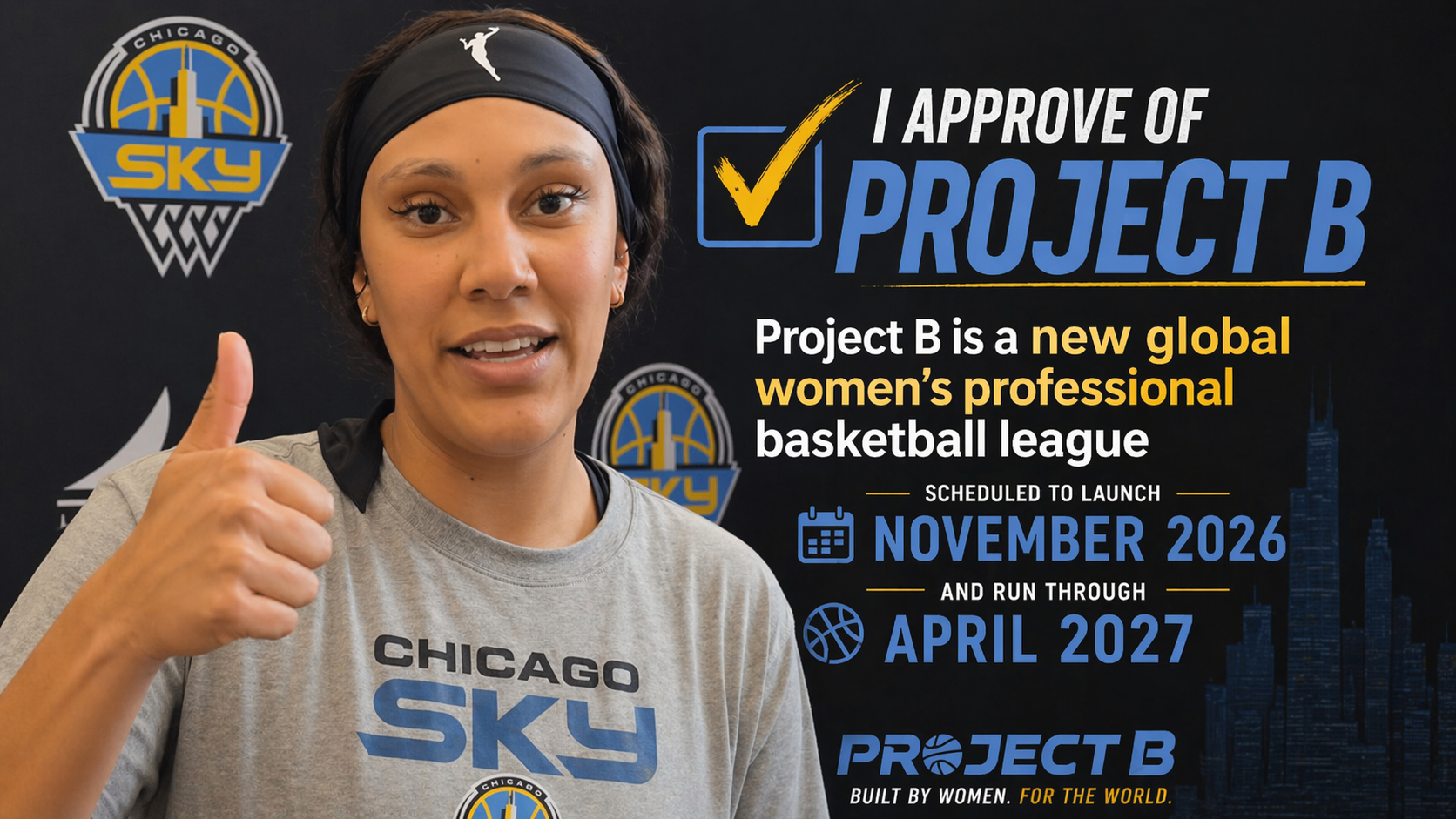
Women’s basketball has spent the last decade fighting for the financial recognition its talent has always deserved. Now, a startup league with Silicon Valley DNA, celebrity investors, and the boldest compensation model in the history of the sport is making moves that could permanently alter the landscape — and former South Carolina Gamecock Kamilla Cardoso is one of its most enthusiastic early believers.
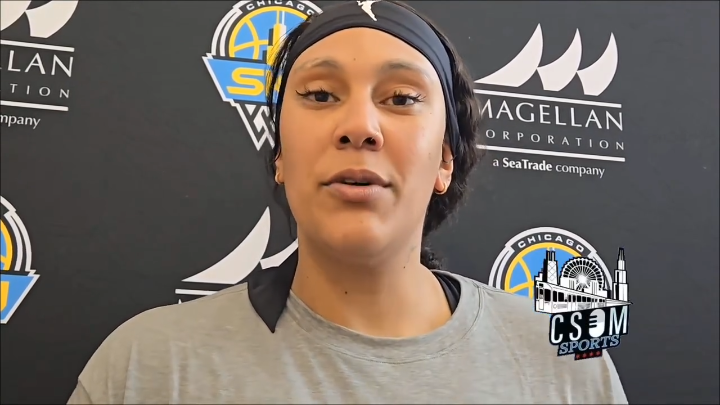
“I think it’s a game changer for players,” Cardoso said when asked about her involvement. “The salary cap is amazing, and I think just being able to travel the world playing basketball — that’s the things I love to do. I love basketball and I love to travel. So just having that together is great. And I think the league is growing, and Project B really came out to grow too, so I’m just excited.”
That is not the cautious, hedged language of a player evaluating an opportunity. That is the genuine enthusiasm of someone who has read the room — and the contract — and understands that what Project B represents for women’s basketball players is unlike anything the sport has previously offered.
What Exactly Is Project B?
To understand why Cardoso’s excitement is both credible and significant, you first have to understand what Project B actually is — and what it is building toward.
Project B is a startup global basketball league founded by former Facebook and Google executive Grady Burnett and Skype co-founder Geoff Prentice. The league will start with a women’s basketball competition featuring six teams playing in a traditional five-on-five format, with each team’s roster consisting of 11 players. The season will take place over seven two-week tournaments throughout Europe, Asia, and Latin America, with the first season beginning in November 2026 and concluding in April 2027.
The investor and advisor list reads like a who’s who of sports and entertainment royalty. Candace Parker, Steve Young, Novak Djokovic, and Sloane Stephens are included as investors and advisors. Wikipedia Alana Beard — the former Duke and WNBA star — serves as Chief Basketball Officer, lending the operation immediate credibility within the basketball community.
The vision, as described by co-founder Burnett, is deliberately ambitious. Project B describes itself as a “Formula 1-style circuit played on a global stage, physically in a location where the fans exist, and digitally available to everybody.” Six teams. Seven tournaments. Four continents. The best players in the world, concentrated into a format where, as Burnett puts it, every game plays at the level of a WNBA Finals.
The Money — Where Project B Changes Everything
The philosophical vision is compelling. The financial structure is transformative.
Project B promises to pay more than the WNBA, which offered $102,249 per season, or Unrivaled, which offered $220,000 per season in 2025. Front Office Sports reported player deals in the women’s league will reach seven figures and start at $2 million annually.
Read that again slowly. Starting salaries of $2 million — nearly 20 times the WNBA’s 2025 base compensation. For players who have spent careers watching their salaries lag laughably behind the commercial value they generate, that number is not just financially significant. It is a statement about what women’s basketball players are actually worth when a league is built around compensating them accordingly.
And the compensation model goes beyond salary. Like Unrivaled, Project B features an asset-light, centrally owned model rather than a more traditional city-based franchise organization, and the entity was set up to give its competitors equity in the league. Players are not just employees of Project B. They are owners — stakeholders in an enterprise whose growth directly translates into financial returns for the athletes who make the product worth watching.
Tennis star Sloane Stephens captured the philosophy perfectly: “I believe athletes deserve real ownership and control over their careers. Project B could serve as a blueprint for other sports, including tennis, to rethink how athletes participate in the value they create.”
The Players Who Have Already Said Yes
Nneka Ogwumike was the first women’s basketball player to sign with Project B. As of December 2025, Alyssa Thomas, Janelle Salaün, Jewell Loyd, Jonquel Jones, Justė Jocytė, Kamilla Cardoso, and Kelsey Mitchell have also signed with the league.
The names attached to Project B are not marginal players seeking opportunities. These are genuine WNBA stars — players who could command roster spots on any team in the league but have chosen to invest in something that offers a different kind of future.
Jewell Loyd, a two-time Olympic gold medalist who helped the Las Vegas Aces win their third championship, articulated her reasoning clearly: “Every step forward in this game is an investment in what’s possible. I believe in where women’s basketball is headed, and the worldwide momentum is real. I’m excited to help shape what comes next for the next generation.”
Jonquel Jones, a former WNBA MVP, said she was excited to “be able to continue to play against the best players in the world, play with the best players in the world and be able to see new parts of the world.”
Most recently, potential WNBA No. 1 draft pick Awa Fam committed to Project B, with chief basketball officer Alana Beard calling her “the potential to be the next global superstar.”
Cardoso’s Voice — Why The Former Gamecock’s Endorsement Matters
Among the names signed to Project B, Kamilla Cardoso’s involvement carries a particular resonance for women’s basketball fans familiar with her journey. The Brazilian center who developed under Dawn Staley’s program at South Carolina before entering the WNBA brings a genuinely global perspective to the Project B conversation — a player who has always existed at the intersection of international basketball and the American professional game.
Her specific framing of what Project B offers — the combination of elite basketball AND global travel — captures something that the pure compensation narrative sometimes misses. This is not simply a player following the money. This is a player whose identity as a global athlete, a Brazilian international, and a competitive professional aligns naturally with a league built on the premise that basketball’s greatest players deserve a global stage worthy of their talent.
“I love basketball and I love to travel. So just having that together is great.”
That simplicity is its own kind of eloquence. Project B isn’t asking Cardoso to compromise. It’s asking her to be fully, completely herself — a world-class basketball player on a world-class global stage.
The Bigger Picture — What Project B Means For The Sport
Burnett’s assessment of the opportunity is direct: “As you look at the numbers, in terms of arenas being filled, viewership, men and women watching the sport, that has totally transformed and really elevated in the last couple of years. We can take that and help elevate that even further, helping to make the players global icons with this platform.”
The timing of Project B’s emergence is not accidental. WNBA players are underpaid relative to the league’s skyrocketing franchise values, and labor strife between the league and the players’ union threatens to undo all the progress the league has made in recent seasons. Into that environment, Project B arrives offering what the WNBA has historically been unable to provide — salaries commensurate with actual market value, equity ownership, and a global platform that matches the international reach of the sport’s biggest stars.
Project B’s inaugural season schedule includes Valencia as a confirmed tour venue from March 12-21, with games in Tokyo scheduled from March 26 to April 4, and five additional stops still to be announced across the full seven-tournament circuit.
The Bottom Line
Project B is not a hypothetical. It is not a concept paper or a press release chasing attention. It is a fully funded, celebrity-backed, star-signed global basketball league that is set to tip off in November 2026 — and former Gamecock Kamilla Cardoso has already planted her flag firmly on its side.
“The league is growing, and Project B really came out to grow too.”
She is right. And if the trajectory of the talent signing on, the compensation being offered, and the global ambition being executed is any indication, the growth has barely begun.
Women’s basketball has spent years asking to be taken seriously as a global product. Project B is the first entity to respond by building a league worthy of exactly that standard — and the players who have chosen to be part of it understand something the rest of the world is still catching up to.
The game changer has arrived. 🌍🏀
About The Author