
A look at The Full List of South Carolina’s WBB history of portal defectors — It’s a Pattern, Not An Accident
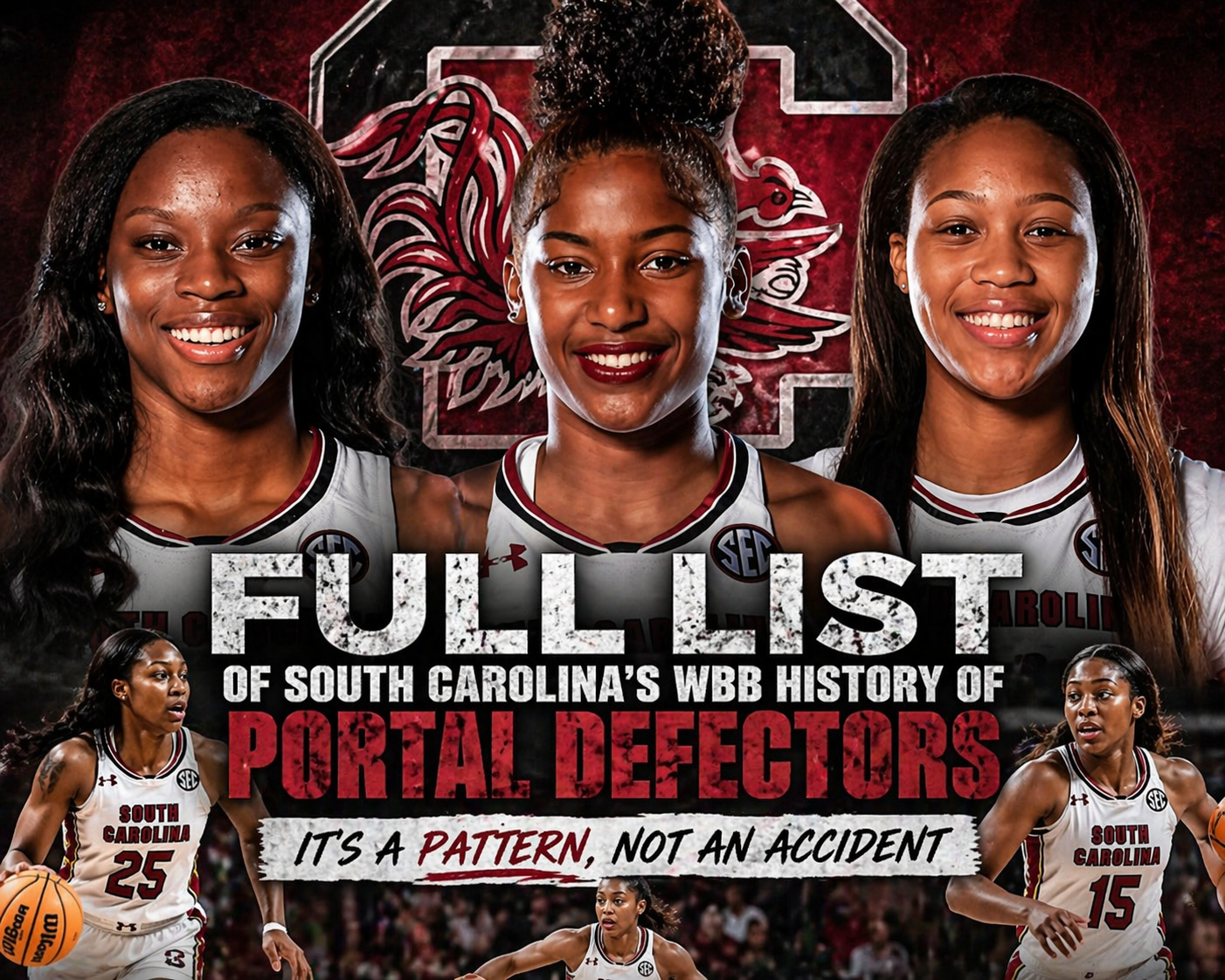
In a transfer portal era that has turned college basketball rosters into revolving doors, one number tells the most important story in women’s college basketball this offseason.
Zero.
Not one South Carolina Gamecock entered the transfer portal this cycle. Not one player packed her bags, updated her portal profile, and chose to seek a new home elsewhere. While programs across the SEC — and the entire country — watched their rosters fracture, splinter, and in some cases nearly disintegrate entirely, Dawn Staley held everything together with the quiet, unshakeable force of a program culture so compelling that leaving it simply isn’t something her players choose to do.
That is not luck. That is not coincidence. That is Uncommon Favor — the exact phrase Staley herself would likely use — made visible in the most concrete way possible.
The SEC Tells The Whole Story
To fully appreciate what South Carolina accomplished this cycle, the SEC transfer portal breakdown tells the story more powerfully than any narrative framing ever could.
Florida leads the conference’s exodus with a staggering 10 players entering the portal. Arkansas and Georgia follow with 9 each. Tennessee, coming off a season that collapsed so dramatically it became a national storyline, is looking at 8 departures and a near-complete roster reconstruction. Alabama lost 7. Mississippi State lost 6. Missouri lost 5.
Even the programs that competed at the highest level this season weren’t immune. LSU and Texas — two of the sport’s most prominent programs — each lost 4 players, numbers that represent significant roster disruption for teams with championship ambitions. Kentucky and Ole Miss lost 3 each. Texas A&M and Vanderbilt lost 2. Even Oklahoma — the only other program with a relatively clean cycle — lost 1.
And then, sitting alone at the very bottom of that list, is South Carolina. Zero.
The visual of that ranking is striking in its completeness. Every single other program in one of the nation’s most competitive conferences lost at least one player. The defending national runner-up, the program that just reached its third consecutive championship game, the program that Dawn Staley has built into the standard of women’s college basketball — lost nobody.
The Historical Record — This Is A Pattern, Not An Accident
What makes the zero-loss cycle even more remarkable is the broader historical context. Since the transfer portal’s creation in 2018, South Carolina has lost an average of just over one player per season — a number so low relative to the national landscape that it barely registers as roster management and instead reads more like a program where players simply don’t want to leave.
This marks the third time since the 2018-19 season that not a single Gamecock has entered the portal. The full historical record is worth examining in its entirety:
2018-19: LaDazhia Williams, Bianca Jackson, and Te’a Cooper departed — three players in the portal’s very first active cycle, when the landscape was still being figured out by everyone.
2019-20: Nobody.
2020-21: Nobody.
2021-22: Four players left — Elysa Wesolek, Eniya Russell, Saniya Rivers, and Destiny Littleton — the most South Carolina has ever lost in a single cycle, and still a number that most programs would celebrate as a successful retention year.
2022-23: One player — Talaysia Cooper.
2023-24: One player — Sahnya Jah.
2024-25: Two players — MiLaysia Fulwiley and Sakima Walker. Fulwiley’s departure to LSU was the biggest South Carolina portal story since the system’s inception, generating national headlines and genuine questions about program retention.
2025-26: Nobody.
Eleven total players over eight seasons. Never more than four in a single year. And three complete cycles with zero departures. For a program operating at the highest level of competition, under the brightest spotlight, with every opponent targeting your best players for recruitment — that record is almost surreal.
Why Players Stay — The Staley Philosophy
The numbers are compelling. But the reason behind them is what makes this story genuinely worth examining.
Staley has been remarkably open about the philosophy that drives her retention record, and it is built on a foundation that deliberately rejects the transactional promises that have destabilized programs across the country. She doesn’t overpromise financially. She doesn’t guarantee starting roles. She doesn’t offer the kind of incentives that attract players quickly but breed resentment when reality doesn’t match the pitch.
What she offers instead is something more durable — a program culture built on genuine communication, shared sacrifice, and the kind of winning environment that develops players into professionals and human beings simultaneously.
“It really is somewhat of a sacrifice coming to South Carolina because you’re going to play basketball for all the right reasons,” Staley said during this past season’s Sweet 16. “It doesn’t mean that it’s ‘My way or the highway.’ It’s not. It’s a collaborative thing. Our players are very comfortable with communicating the things that they like and don’t like.”
That collaborative approach — the willingness to create an environment where players feel heard, valued, and invested in — is the engine behind everything the retention numbers reflect. Players don’t leave South Carolina because South Carolina gives them real, substantive reasons to stay.
The Coaching Change Effect — Context That Makes South Carolina’s Record Even More Impressive
The SEC portal data reveals a pattern that adds important context to South Carolina’s achievement. The programs bleeding the most players this cycle — Florida, Arkansas, Georgia, Alabama — are all navigating coaching changes, which historically trigger the largest waves of roster turnover as incoming staffs rebuild with their own players and existing players seek programs with established systems.
South Carolina has no such variable. Staley is entering her 18th season in Columbia with no uncertainty about the program’s direction, no questions about the staff, and no ambiguity about what playing for the Gamecocks means competitively. That stability is itself a retention tool that no amount of NIL money can fully replicate.
Even accounting for coaching changes, the SEC’s roster exodus this cycle is staggering — 70 combined players across the conference left for new programs, representing one of the most chaotic offseasons in the history of women’s college basketball. The one island of complete stability in that storm is Columbia, South Carolina.
What Zero Losses Actually Builds
Here is the competitive advantage that the zero-loss portal cycle creates beyond the obvious roster stability narrative: South Carolina enters next season with chemistry and institutional knowledge that no other program in the SEC can match.
Every returning player knows the system. Every returner has been through Staley’s preparation, Molly Binetti’s conditioning program, and the specific culture that Colonial Life Arena demands. There is no re-teaching. No re-establishing norms. No managing the friction between players who came from wildly different program environments learning to coexist.
Add Jordan Lee — the No. 2 ranked transfer in the country — as the one significant addition, and what South Carolina has built is a roster that combines the continuity of a returning program with the freshness of an elite new addition. That combination is genuinely difficult to manufacture, and the Gamecocks achieved it in a cycle where most of their SEC rivals were scrambling to fill holes left by mass departures.
The Verdict
Eleven players in eight seasons. Three complete cycles with zero departures. The only SEC program in the 2025-26 portal cycle to retain its entire roster. And this while competing at the absolute highest level of the sport, under the brightest spotlight, against programs throwing every available resource at recruiting the same players.
Dawn Staley calls it Uncommon Favor. The data calls it the most remarkable retention record in modern women’s college basketball.
The rest of the SEC lost a combined 70 players this offseason and is spending the summer rebuilding.
South Carolina lost nobody — and is spending the summer getting ready to win a fourth national championship. 🏀
About The Author