The Addition and The Fit —How Oliviyah Edwards Completes South Carolina’s Most Dangerous Roster Yet
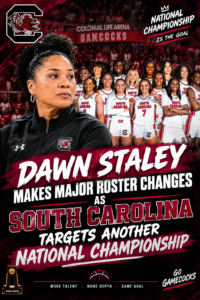
There is a ritual that plays out every summer in Gamecock nation, as reliable as the South Carolina heat. Fans begin to worry. Message boards fill with concern. The question circulates: has Dawn Staley lost her recruiting touch? And then, every single year without exception, South Carolina finishes with a top-five class and the critics go quiet until the following June.
The 2026 cycle didn’t just follow that pattern. It shattered it.
The Patience Play That Always Wins
Staley has never chased recruiting for the sake of optics, and she has been refreshingly blunt about why. Her philosophy — that programs shouldn’t overpay for talent because, as she has quipped, “they’re cheaper the next time around” — isn’t just a clever line about the transfer portal. It’s an organizational ethos that keeps South Carolina from making desperate decisions that compromise roster balance or program culture.
The 2025 cycle illustrated the point perfectly. South Carolina spent most of the recruiting calendar with just one signee in Ayla McDowell. The panic was predictable. Then Agot Makeer committed in the spring, vaulted the class into the top five, and went on to average 14 points per game during March Madness as a freshman — looking, by every measure, like a program cornerstone.
The 2026 cycle followed the same script, but with higher stakes and a more dramatic storyline. South Carolina’s class was already ranked fourth nationally and already featured Jerzy Robinson — a top-six national recruit and the kind of guard-forward hybrid that wins championships in the modern game. Then Oliviyah Edwards committed, and the conversation changed entirely.
South Carolina is now positioned to claim the No. 1 ranked recruiting class in the country. Not a program that panicked. Not a program that overpaid. A program that kept its standards, maintained its relationships, and let the landscape come to it.
The Tennessee Situation: Loyalty, Money, and What It Reveals About Edwards
The full story of Oliviyah Edwards’ recruitment is more instructive than the headline suggests. In the fall, Edwards had scheduled visits with Tennessee, LSU, and South Carolina. According to reports, Tennessee provided a signing bonus to secure Edwards’ commitment during her visit to Knoxville — prompting her to cancel the remaining trips to LSU and South Carolina before they happened.
That detail matters. South Carolina never got its original visit. The relationship that ultimately won Edwards over was built without the benefit of an in-person close. When Tennessee’s program unraveled this spring — all eight returners entering the transfer portal, assistant coaches who recruited Edwards departing for other programs — Edwards asked for her release. She visited Louisville, Texas, and Washington before ultimately returning to the program that had always been there.
Her own words captured it best when she posted on social media: “Sometimes it takes twice to get it right.”
Staley’s philosophy about not burning bridges proved its value in real time. South Carolina didn’t respond to the original rejection with bitterness or withdrawal. It maintained the relationship, kept the door open, and was positioned perfectly when the circumstances changed. That institutional patience is a competitive advantage that no NIL package alone can replicate.
The Honest Scouting Report: Ceiling and Floor
This analysis would be incomplete without an honest assessment of what Edwards is — and what she could become under the right conditions, or fail to become under the wrong ones.
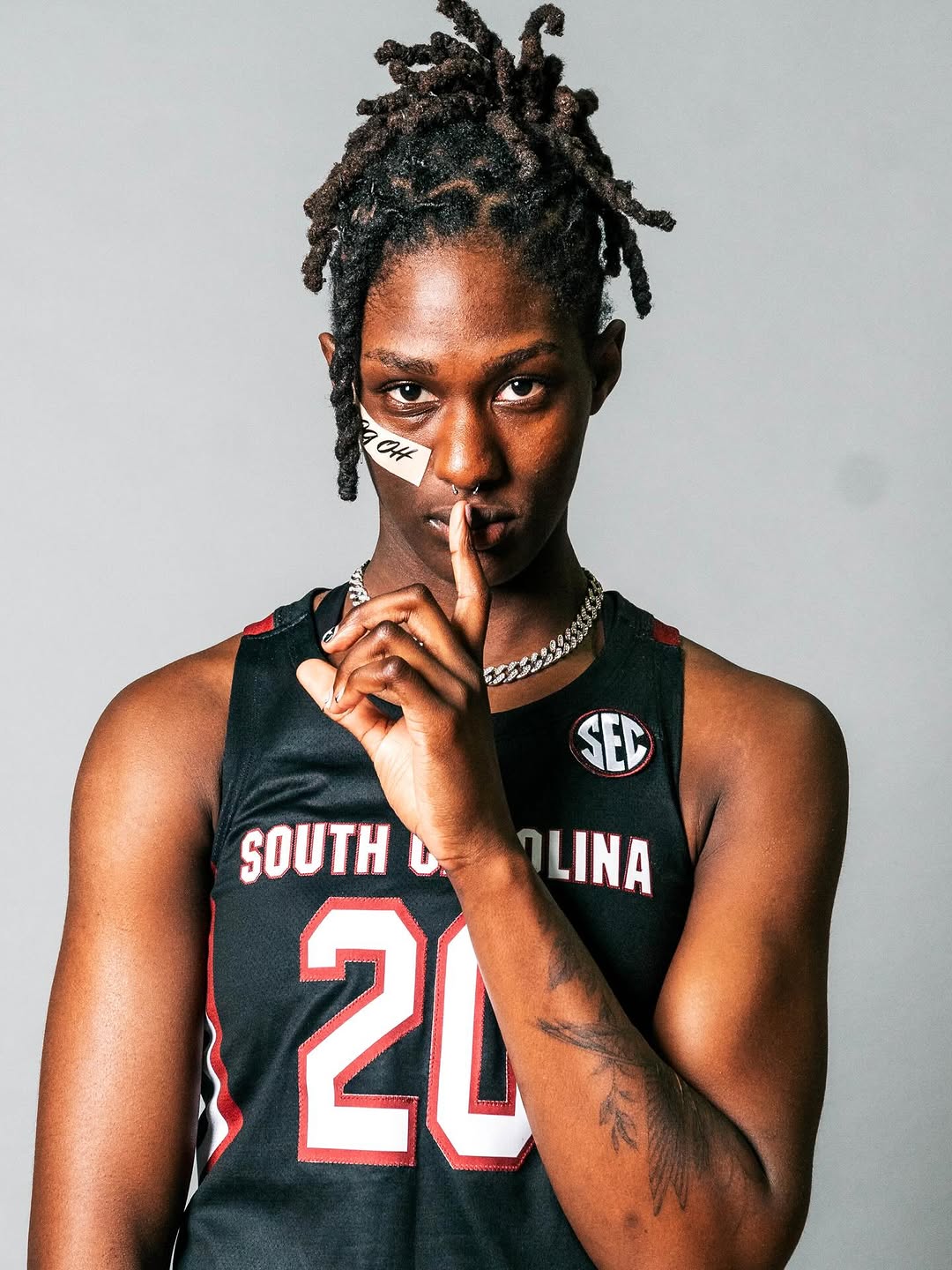
The upside is legitimately special. She is a 6-foot-3 forward who can dunk, run the floor, knock down threes, and play physically in the paint. Her athleticism was described by one observer who watched her in person as genuinely jaw-dropping — the kind of raw physical ability that makes scouts stop taking notes and just watch.
But there is a documented tendency that Staley’s staff will need to address directly. Edwards has shown a habit of operating between the three-point lines — the most contested, least efficient area of the court for a player of her size and profile. For a 6-foot-3 forward with her finishing ability and perimeter range, that tendency represents wasted potential. The best version of Edwards attacks the rim and spaces the floor. The comfortable version of Edwards settles for mid-range real estate where her physical advantages are neutralized.
The comparison points are illuminating in both directions. With a coaching staff that demands accountability and coaches her hard, Edwards has the tools to be the best player in her entire recruiting class. If she is permitted to coast or resists the developmental pressure that Staley’s program is known for — the outcomes become far more modest, closer to the disappointing trajectories seen from other highly-touted recruits who never fully translated their physical gifts into consistent production.
Dawn Staley’s track record of maximizing elite talent is well established. The question is whether Edwards is coachable enough to let it happen.
Positional Fit: The Positionless Revolution Continues
Whether by design or simply by the nature of modern basketball, South Carolina has quietly assembled one of the most positionally fluid rosters in women’s college basketball. Edwards accelerates that trend significantly.
She can play the four or five and would likely argue she belongs at the wing as well. She joins a frontcourt ecosystem that includes Chloe Kitts (three or four), Joyce Edwards (three through five), Agot Makeer (a legitimate one-through-four in today’s game), Jerzy Robinson (one through three), and Alicia Tournebize, whose positional range is arguably the widest on the roster. The result is a group where Staley can deploy mismatches in virtually every direction — small lineups, big lineups, or the kind of fluid positionless combinations that make opposing coaches build entirely new defensive schemes.
Figuring out how to best utilize 14 players of this caliber will be the most complex roster management challenge Staley has faced in years. That is precisely the kind of problem that separates elite programs from everyone else: the difficulty isn’t finding talent, it’s managing abundance. Every other coaching staff in women’s college basketball would accept that headache immediately.
Is South Carolina Done Adding?
With Edwards and Jordan Lee now locked in as the two spring additions, the roster math suggests the Gamecocks are effectively finished for the 2026-27 cycle. At 14 players — assuming Ashlyn Watkins rejoins the team as expected following her missed season — South Carolina is at functional roster capacity.
Technically, one additional spot could still be filled, and the ideal addition would have been a proven point guard to provide competition and depth behind Maddy McDaniel. That remains the one identifiable gap in an otherwise remarkably complete roster. But it’s worth contextualizing: South Carolina also reportedly wants to maintain a scholarship slot for potential midseason additions — players who could enroll in January and contribute immediately if a rotation need emerges or an injury creates an opportunity.
The prudent reading of the situation is that Staley and her staff are satisfied with the group they’ve assembled. The less prudent reading — the one that misses the forest for the trees — would be to fixate on one absent point guard when the surrounding construction is this impressive.
The Full Picture: What This Roster Actually Represents
Step back and look at the 2026-27 South Carolina roster in its entirety:
Seniors: Tessa Johnson, Chloe Kitts, Ashlyn Watkins — proven veterans with championship experience who have something to prove after two straight title game losses.
Juniors: Joyce Edwards (program scoring record holder), Maddy McDaniel, Adhel Tac, Jordan Lee (the portal’s top two-way guard, poached directly from Texas) — a core of players entering their prime years in the most important seasons of their college careers.
Sophomores: Agot Makeer (March Madness breakout star), Ayla McDowell, Alicia Tournebize — a second-year group with tournament experience and developmental momentum.
Freshmen: Jerzy Robinson (top-six nationally), Kelsi Andrews, Kaeli Wynn, Oliviyah Edwards (No. 3 nationally, can dunk) — a signing class that may finish ranked No. 1 in the country.
That is not a roster. That is a declaration.
The Bottom Line
Dawn Staley did not panic when the recruiting calendar looked quiet. She did not overpay when the competition got aggressive. She did not burn bridges when a recruit chose someone else. And she did not chase the transfer portal with desperation when she lost three starters to the WNBA.
She waited. She maintained. She recruited the right way, on her terms, with her standards intact. And on April 23, the No. 3 player in the country announced she was coming to Columbia — for the second time — because in the end, it was always the right place.
South Carolina’s dynasty isn’t fading. Under the weight of two consecutive championship losses, it is being reloaded into something potentially more dangerous than anything Staley has previously put on the floor. The chaos that consumed Tennessee, the roster hemorrhaging that hit program after program this spring — none of it touched the Gamecocks.
Slow and steady doesn’t just win the race in Columbia. It builds empires.
About The Author