ESPN’s Top 50 WNBA List Is Out — And The Gamecocks Should Be Deeply Embarrassed By Where Some Of Their Own Landed
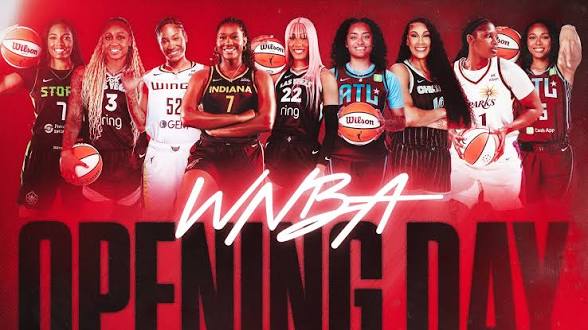
ESPN dropped its much-anticipated list of the top 50 players in the WNBA on Thursday, and while Gamecock Nation rushed to celebrate the presence of four former South Carolina players, a more honest and uncomfortable analysis reveals a story far more troubling than the headlines suggest — a story of underachievement, missed potential, and rankings that expose just how far some of these players still are from truly elite status.
The list, compiled by Charlie Creme, Kendra Andrews, Kareem Copeland, and Hall of Famer Michael Voepel, excluded rookies entirely. And yet, even with that generous filter, the results should sting.
Yes, A’ja Wilson sits at number one. But at this point, that is the basketball equivalent of the sun rising in the east — inevitable, undeniable, and requiring zero analysis. Wilson, the only four-time MVP in league history, having won the last two MVP awards and four of the last six, exists in a category so far beyond her peers that the rankers themselves admitted: “There isn’t enough clickbait in the world to rank someone else first.” Wilson is not a Gamecock story anymore. She is a transcendent, generational phenomenon. Lumping her in with her former teammates to manufacture a feel-good narrative is intellectually dishonest.
Strip Wilson away and the picture darkens considerably.
Allisha Gray at number seven is where the cracks begin to show. On the surface, a top-ten ranking sounds impressive. But seven? For a player who, after years in the league, is only now being recognized as first-team All-WNBA for the very first time? Andrews noted that “Gray had the best statistical season of her career last year, posting career highs in points, rebounds and assists” — which, rather than being a celebration, is actually a quiet indictment. It took Gray this long to reach her ceiling, and she is doing it at an age when the window for elite players begins to narrow. Averaging 18.4 points, 5.3 rebounds, and 3.5 assists is commendable, but a player of her pedigree peaking this late raises serious questions about what the earlier years of her career actually were.
Aliyah Boston at number 14 is the most damning placement on the entire list — and nobody seems willing to say it out loud. The 2023 number one overall pick, a player who recently signed the richest contract in WNBA history, cannot crack the top ten. She sits behind both Caitlin Clark and Kelsey Mitchell on her own Indiana Fever roster. Let that sink in. The woman handed the largest financial investment in league history is not even the best player on her own team by ESPN’s estimation. Copeland’s explanation is generous to a fault: “The 2023 No. 1 pick has been a model of consistency in her three All-Star seasons.” Consistency is a polite word for plateau. Boston averaging 15.0 points, 8.2 rebounds, and 3.7 assists with a second-team All-WNBA designation is the profile of a very good player — not the profile of someone who just cashed in on the richest deal in WNBA history. The contract and the ranking are in violent contradiction with each other.
And then there is Kamilla Cardoso, ranked somewhere in the list’s middle tier, with numbers — 13.6 points, 8.5 rebounds, 1.2 blocks — that tell the story of a player still very much in development. The fact that Chicago felt comfortable trading away Angel Reese to build around Cardoso is either an extraordinary act of faith or a reckless organizational gamble, depending on how Year 3 unfolds. Copeland’s assessment was cautious at best: “The 2024 No. 3 pick took a step forward in her sophomore season and Year 3 could be even better.” Could be. Might be. Perhaps. These are not the words written about franchise cornerstones. These are the words written about players still auditioning for that title.
The broader competitive picture is equally sobering. South Carolina may be the only SEC program with multiple players on the list, and three of the top four centers are former Gamecocks — a talking point that sounds impressive in a press release. But Kentucky’s Rhyne Howard sits at 13, directly ahead of Boston, making the “SEC dominance” narrative far more complicated. LSU’s Angel Reese lands at 22. Tennessee’s Rickea Jackson at 32. Ole Miss’ Shakira Austin at 44.
The uncomfortable truth buried beneath all the celebration is this: outside of A’ja Wilson — who transcended South Carolina the moment she became the greatest player in league history — the Gamecocks’ professional footprint is solid but deeply unspectacular. Gray is peaking late, Boston is dramatically overpaid relative to her ranking, and Cardoso is still a promise rather than a guarantee.
Dawn Staley built a dynasty in Columbia. But dynasties on the college level do not automatically translate to WNBA dominance — and this ESPN list, read honestly and without rose-colored glasses, makes that painfully, undeniably clear.
About The Author