They Slept on Her at No. 20 — Now the WNBA’s Own GMs Are Calling Ta’Niya Latson the Draft’s Biggest Steal
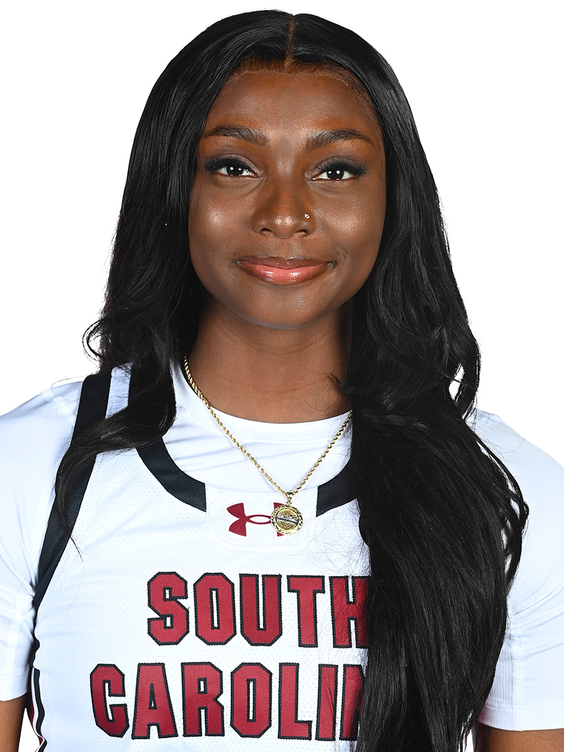
The 2026 WNBA Draft came and went, and somewhere in the second round, the Los Angeles Sparks quietly made what could be the shrewdest move of the entire night. When Ta’Niya Latson’s name finally flashed across the board at pick No. 20, the collective reaction wasn’t excitement — it was disbelief. How did she last that long?
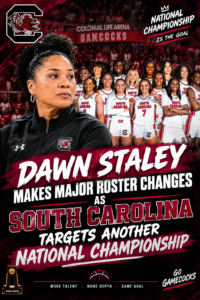
Latson became the third South Carolina product taken in the draft, following point guard Raven Johnson (Indiana Fever, 10th overall) and post player Madina Okot (Atlanta Dream, 13th overall) — a remarkable testament to Dawn Staley’s program and its pipeline to the professional game. But while Johnson and Okot went in the first round as expected, Latson’s fall into the second round raised eyebrows across the basketball world.
The market corrected itself almost immediately. In the WNBA’s annual preseason survey of general managers — the people who know talent evaluation better than anyone — Latson was voted the draft’s biggest steal, tied with Connecticut Sun rookie Nell Angloma, with each receiving 21% of the total votes. That’s not a consolation prize. That’s the entire league’s front office community raising its hand and saying the same thing: someone made a mistake, and the Sparks benefited.
Future Hall of Famer and re-signed Los Angeles star Nneka Ogwumike saw it instantly. “I absolutely love her,” the 10-time All-Star said of her new teammate. “I think she is the biggest steal in the WNBA Draft this year. You can tell who’s somebody that’s locked in, she is someone who does not like to lose, and she’s quite mature for her age.” When a player of Ogwumike’s stature and experience volunteers that kind of assessment unsolicited, it carries real weight. She’s not handing out compliments — she’s making an observation.
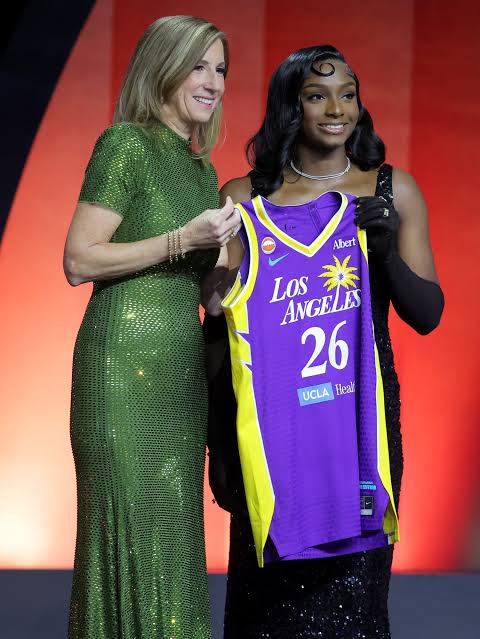
Latson herself acknowledged the sting of sliding, but channeled it with impressive emotional intelligence. “It was shocking to everybody; I mean, I was kind of shocked,” she admitted during her organizational introduction. “It’s about fit, I feel like. Fit over pick. I flipped my mentality immediately when I found out I was going to LA.” That ability to reframe adversity on the spot — and commit to it — is precisely the intangible quality that separates players who thrive from those who spiral. The chip on her shoulder is real, and in this league, that’s a dangerous thing to give a talented player.
The backstory behind that talent makes her trajectory even more compelling. Latson arrived at South Carolina as the nation’s leading scorer at Florida State, a program not exactly known for producing WNBA-ready defenders. The decision to transfer to Columbia was a calculated one — a sacrifice of guaranteed stats for genuine development under one of the greatest coaches in the sport. It paid off. Playing in Staley’s system, Latson became a legitimate two-way threat, sharpening her defensive instincts and cleaning up her offensive efficiency in the process.
The numbers she put up this season with the Gamecocks tell the story of a player who evolved, not just performed. Latson averaged 14.1 points per game on 48.6/32.5/80.3 shooting splits — elite efficiency for a player at her level — while also contributing 3.6 assists, 2.9 rebounds, and 1.7 steals per game, all while managing injuries throughout the season. The steal numbers in particular reflect her defensive growth; this is not the one-dimensional scorer she was in Tallahassee.
And now, early returns from the Sparks’ preseason suggest the transition to the professional game is going smoothly — for Latson and fellow former Gamecock Sania Feagin, who is entering her second year in the league. South Carolina’s culture of preparation and accountability has a way of following its players out the door.
The Sparks may have gotten away with one at pick No. 20. The rest of the WNBA already knows it. The only question now is how quickly Ta’Niya Latson makes everyone else feel the consequences of letting her fall.
About The Author