
Dawn Staley Told Michelle Obama She Has No Team Rules — The Reason Why Is Pure Genius
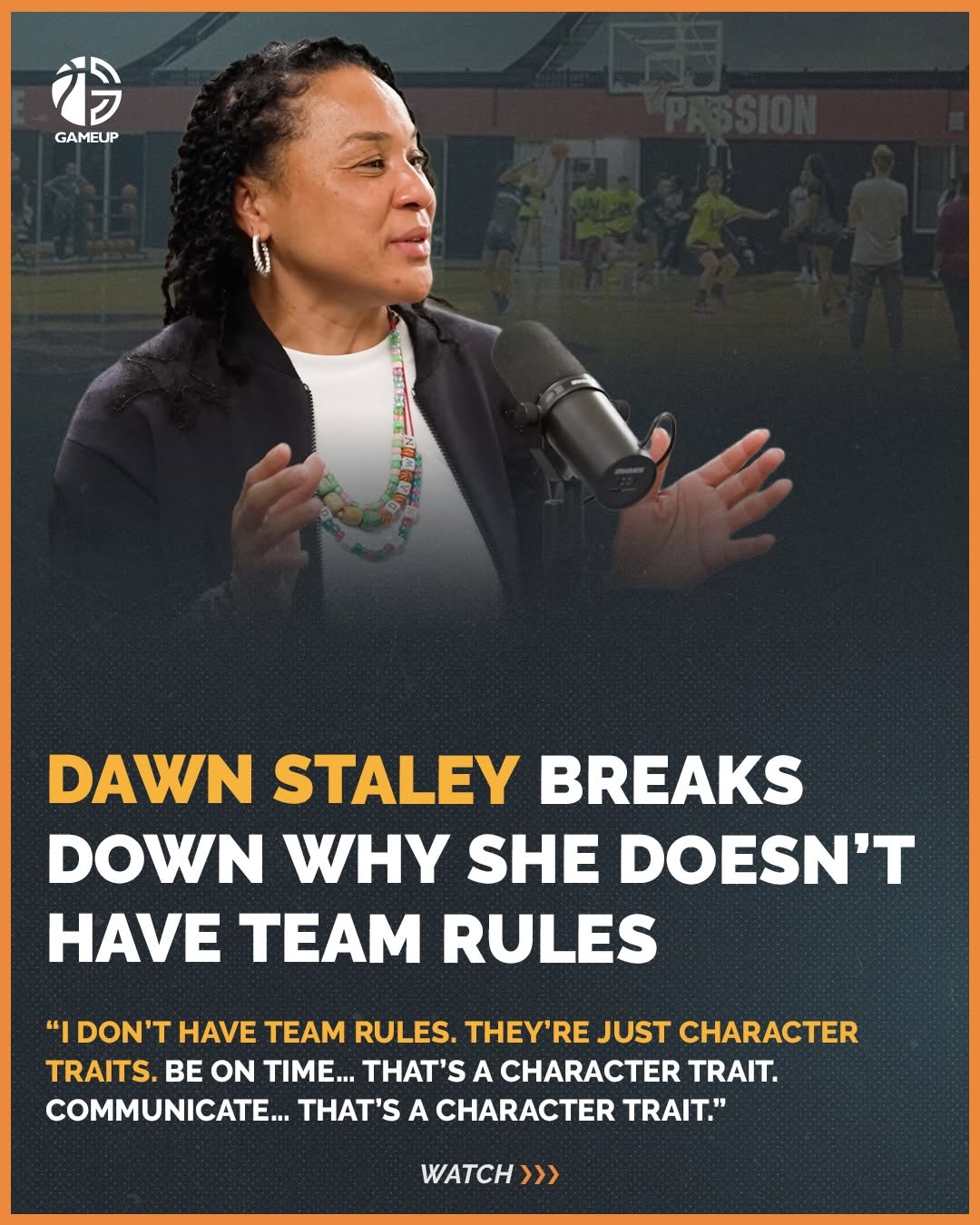
She has won national championships, built one of the most dominant programs in the history of college basketball, and been inducted into the Hall of Fame. And Dawn Staley doesn’t have a single team rule.
That’s not an oversight. That’s the philosophy.
Sitting down with Michelle Obama on the IMO Podcast, Staley pulled back the curtain on the coaching framework that has made South Carolina women’s basketball the standard-bearer of the sport — and the answer is simultaneously simple and profound. After 25 years on the sideline, Staley has concluded that the rulebook was never the point.
Rules vs. Character: A Critical Distinction
The first thing Staley made clear was the language she refuses to use — and why the language matters.
“I don’t have team rules. They’re just character traits. They’re not like rules,” she said. “Like, ‘be on time’ — that’s a character trait. Communicate — that’s a character trait.”
This is not semantics. It is a fundamentally different way of framing expectations, and the distinction shapes everything about how accountability functions within her program.
When punctuality is a rule, a player who arrives late has violated a policy. The conversation that follows is disciplinary — a coach enforcing a standard, a player accepting a consequence. The relationship between the two parties is hierarchical and transactional. When punctuality is a character trait, a player who arrives late has revealed something about who they are. The conversation that follows is developmental — a coach helping a young person understand what their behavior communicates about their values, their respect for others, and their readiness for the world beyond basketball.
“So when they aren’t doing those things, you just check ’em,” Staley explained. “‘Hey, you late today?’ Because it’s their careers, it’s not…”
That trailing thought is the entire philosophy in miniature. It’s not about the coach’s program or the coach’s rules. It’s about the player’s life — the habits, the self-awareness, and the personal standards they are building or failing to build for a future that extends far beyond any basketball court.
Twenty-Five Years of the Same Problems
What makes Staley’s candor with Obama particularly striking is her willingness to name the persistent frustration beneath the polished coaching philosophy.
“I tell young people that I’ve been coaching for twenty-five years and I have yet — like, they’re the same old recycled problems,” she said with characteristic directness. “I want new problems. I want to solve some new problems.”
That line lands differently when you consider the source. This is a Hall of Fame coach who has consistently recruited some of the most elite young athletes in the country — players with world-class talent, high-level competitive experience, and significant personal ambition. And across 25 years and multiple generations of players, the fundamental issues remain unchanged.
The implication is important: the problems Staley encounters are not talent problems. They are not basketball problems. They are human problems — the universal challenges of self-advocacy, communication, and the willingness to address conflict before it becomes crisis. The fact that they persist across decades and roster turnovers suggests that youth culture, not individual player character, is the source. These are gaps in how young people are being prepared to navigate the world — and Staley has positioned herself as someone who fills them.
The Voice as the Most Underused Tool
The most revealing portion of Staley’s conversation with Obama centered on communication — specifically, the cost of staying silent.
“They won’t say anything until it’s too late, or it could have been resolved in a five-minute conversation,” she said. “So I welcome young people to say it, to use their voices, because I know what using your voice does.”
Then she articulated exactly what it does — with the precision of someone who has thought about this deeply for a long time.
“It prevents you from being taken advantage of. It allows you clarity of what you like and what you don’t like.”
This is coaching philosophy operating at a level that transcends basketball entirely. Staley isn’t describing how to run a more efficient practice or build a more cohesive locker room, though those outcomes follow naturally. She is describing the foundational life skill of self-advocacy — the ability to identify what you need, articulate it clearly, and trust that your voice deserves to be heard.
The context of this conversation with Michelle Obama makes the point even sharper. Obama has spent decades encouraging young women — particularly young women of color — to use their voices in spaces that have historically discouraged them from doing so. Staley’s coaching philosophy, at its core, is doing the same work within the specific laboratory of elite athletics.
The Fifty-Year Revelation
Perhaps the most memorable line Staley delivered in the conversation was the most personal — and the most honest.
“I try to get them where most fifty-year-olds are, because when I turned fifty, life cleared up for me,” she said. “Like it’s clear. Like if I don’t like something, I’m gonna let you know. ‘Hey, I don’t like that.'”
There is something genuinely moving about a Hall of Fame coach describing the clarity that came with age and then dedicating her professional energy to giving 18-to-22-year-olds access to that clarity decades earlier. The confidence to name what you don’t like. The self-assurance to set a boundary without apology. The understanding that your comfort and your needs are legitimate and worth communicating — these are things most people spend the first half of their lives learning through painful trial and error.
Staley is trying to shortcut that process. She is using her platform, her credibility, and her relationships with young players to hand them — ahead of schedule — the self-knowledge that typically only comes from living long enough to stop caring what people think.
Video Here 👇

What It Actually Takes to Build a Dynasty
The broader takeaway from Staley’s conversation with Obama is that the South Carolina dynasty was never primarily built on recruiting rankings, offensive schemes, or championship pedigree — though all of those elements matter.
It was built on a coaching philosophy that refuses to separate athletic development from human development. On a framework that holds players to standards not because the rulebook demands it, but because their futures require it. On a head coach who has been asking the same essential questions for 25 years: Who are you becoming? Are you using your voice? Do you know what you need — and are you brave enough to ask for it?
The national championships are the product of that philosophy. They are not the philosophy itself.
Dawn Staley doesn’t have team rules. She has something considerably more powerful — a clear and consistent vision of the kind of people she is trying to send into the world. The basketball, as it turns out, takes care of itself from there.
About The Author