Dawn Staley Has A Roster Problem Most Coaches Would Kill For — But Adhel Tac Deserves Better Than To Get Lost In It
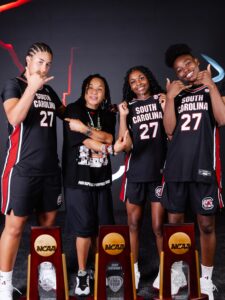
South Carolina women’s basketball enters 2026-27 with the deepest roster Dawn Staley has assembled in years — 15 players, a frontcourt loaded with returning stars and elite freshmen, and more talent per position than most programs have across their entire lineup. It is, by every measure, a good problem to have.
But buried inside that abundance is a player whose story deserves more than a footnote. Adhel Tac — a 6-foot-5 redshirt junior forward who has spent the better part of three years fighting her own body just to get on the floor — is now staring down the most crowded frontcourt rotation in college women’s basketball and trying to carve out a role that justifies everything she’s been through to get here.
The Injury Timeline Is Brutal — And It Matters
To understand where Tac is now, you have to understand where she’s been. The story is not one of underperformance. It’s one of relentless interruption.
She missed her junior year of high school with a foot injury. Then, shortly into her senior season, she suffered a knee injury that ended her year entirely. She graduated early and joined the Gamecocks in January 2024 — just in time to watch from the sidelines as South Carolina won a national championship. Not exactly the arrival anyone imagines.
Her debut season in 2024-25 was hampered by rhythm problems she had no control over. Playing behind Chloe Kitts and Sania Feagin, she averaged just 3.8 minutes per game — not enough time to develop any continuity. She averaged 1.6 points and 1.6 rebounds. The minutes weren’t there. The growth couldn’t follow.
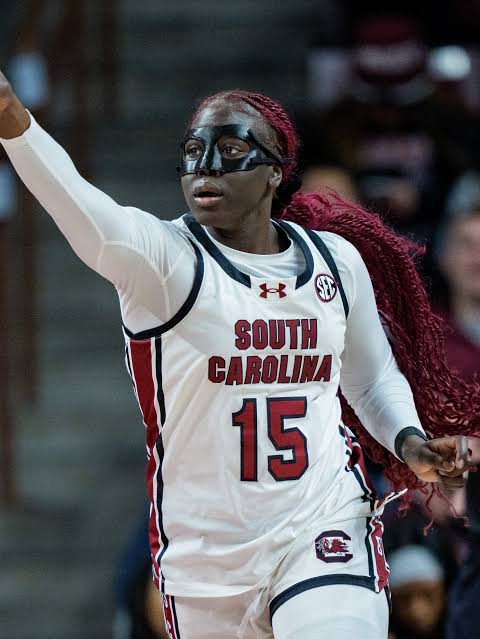
Last season was supposed to be the turning point. For 18 games, it looked like it might be. She averaged 11.8 minutes and 3.1 points, finding her footing in a rotation that finally gave her room to breathe. Then SEC play arrived and so did a nasal injury, requiring a mask upon return. On February 5 against Mississippi State, she played her final game of the season. A lower leg injury — she was seen in a boot and on a medical scooter — ended her year with 15 games still remaining.
In seven of those 15 games she missed, the Gamecocks won by 23 points or more. In the NCAA Tournament opener, they won by 69. The margin of victory tells you the team didn’t suffer. But Tac did — because those were minutes she desperately needed to build momentum heading into the most competitive roster battle of her career.
She finished at 11.2 minutes, 3.1 points, and 3.4 rebounds. The trajectory was real. The interruption was cruel.
The Frontcourt She’s Walking Back Into
This is where Tac’s situation becomes genuinely complicated — not because of anything she did, but because of everything everyone else did.
Chloe Kitts is returning from an ACL tear that ended her season before it started. When healthy, she was a starter and one of the most physically imposing forwards in the SEC. Ashlyn Watkins — a rebounding force — suffered her own ACL injury and sat out last season entirely. She’s back. Joyce Edwards went from 12.7 points per game as a freshman to 19.2 as a sophomore and is now one of the best players in the country. She’s returning for her junior year.
Then add the incoming freshmen. Oliviyah Edwards — ranked No. 3 nationally — brings a 6-foot-3 frame, elite athleticism, and a skill set so complete that Dawn Staley has called her toolbox “deep.” Kelsi Andrews is another 6-foot-3 forward with defensive instincts and perimeter shooting ability. Alicia Tournebize, the 6-foot-7 French forward who joined mid-season last year, hasn’t played a full season yet and is developing into something genuinely interesting.
Tac is competing for minutes against players who were either starters before injury, elite prospects, or both. The honest assessment is that she enters the fall as the sixth or seventh option in a rotation that only has room for three or four posts at any given time.
Where She Can Separate Herself
The path to meaningful minutes exists, but it runs through specificity. Tac cannot out-shoot Tournebize or Oliviyah Edwards on the perimeter. She cannot out-rebound Watkins or match Joyce Edwards’ offensive output. What she can do — what nobody else on this roster does in quite the same way — is anchor the paint as a true center.
With Madina Okot gone, there is a legitimate vacancy at the traditional five spot. Tac’s 6-foot-5 frame, post instincts, and length as a disruptive interior presence fill that role more naturally than any other player on the roster. While Edwards and Tournebize prefer operating away from the basket, Tac is built to live inside it. That differentiation, if developed consistently, is her clearest path to consistent minutes.
The technical areas that need improvement are identifiable and correctable. She averaged the fifth-most free throw attempts on the team but converted at just 53.7% — the second-worst mark on the roster. For a player whose primary production comes from layups and post moves, free throw efficiency is directly tied to playing time. Coaches do not keep low-percentage shooters on the floor in close games. Improving even modestly at the line removes a significant barrier to her minutes.
In six games where she played 15 or more minutes, she averaged just 1.2 points on 2.5 attempts. For a player with a clear height advantage operating primarily on layups, that conversion rate needs to climb. Finishing more consistently through contact — not just drawing fouls but converting them — is the single most practical improvement she can make this offseason.
The Voice That Has To Move From The Bench To The Floor
Here is where Tac’s value becomes hardest to quantify on a box score — and easiest to understand if you’ve watched this team practice.
“A voice I hear all the time is Adhel’s,” Staley said. “If you watch her on the floor, she’s always talking loudly. She sees, she’s aware of everything… you know what she’s doing when you’re playing with her and that is a luxury. If you watch her, listen to her, you know what’s going on. She keeps us organized.”
That quote from Staley is not filler. It is a direct assessment from the best coach in women’s college basketball about a player she trusts to keep her teammates organized — a trait that becomes exponentially more valuable when Raven Johnson is no longer in the building. Johnson was the defensive communicator, the calming presence, the player who kept possessions from unraveling in real time. She’s in the WNBA now. That voice needs to come from somewhere.
Tac has spent years developing that leadership role as compensation for her limited floor time. The challenge now is transferring it from the sideline to an active role on the court — where it compounds with her physical tools rather than substituting for them. A vocal, organized 6-foot-5 center who finishes at the rim and converts free throws at an acceptable rate becomes a genuine rotation piece. A vocal leader stuck on the bench becomes a wonderful teammate and not much else.
What This Season Needs To Be For Her
Tac is a redshirt junior. She has time. But the window for establishing herself as a meaningful contributor inside a program this deep is not unlimited. The freshmen coming in are talented enough to absorb minutes quickly, and Watkins and Kitts return with the track record to reclaim their roles immediately once healthy.
The margin for Tac is real but narrow. A healthy, productive fall could change everything — not because the roster thins, but because Staley has consistently shown a willingness to play the best lineups regardless of recruiting pedigree or class year. Players earn minutes at South Carolina. Tac has spent three years preparing to earn them.
If she stays healthy — genuinely the most important variable in this entire conversation — she has the tools, the role clarity, and the coaching staff to finally show what she’s capable of. That would be the best possible outcome for a player who has given more than she’s received from this sport so far.
She deserves that chance. Now she just has to take it.
About The Author