Helicopter Rides and Fireworks Are Over — Now Kevin Schnall Has to Actually Fix South Carolina Baseball
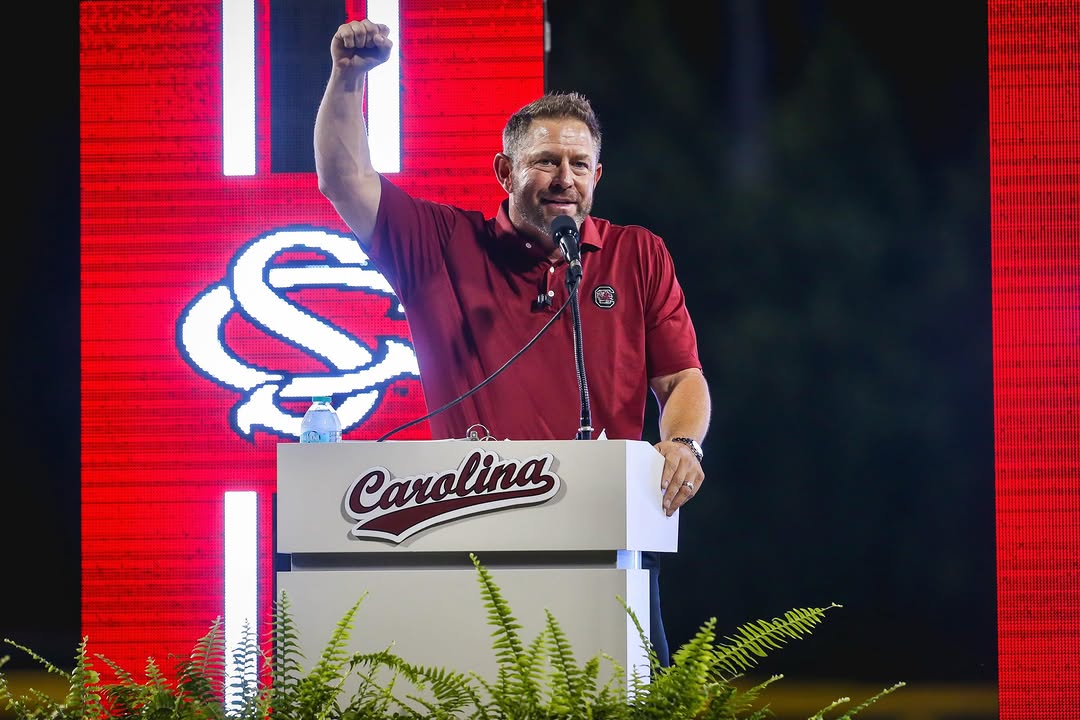
The spectacle was memorable. On June 12, South Carolina introduced Kevin Schnall with a helicopter entrance and a fireworks display — a statement of intent from an athletic department that wanted the fanbase to know it was serious about resurrecting a program that has quietly become a cautionary tale about how fast success can erode.
Now the cameras are gone. The real work begins.
South Carolina is coming off a 22-35 season — a record that would be alarming at most programs but lands with particular weight at a school that won back-to-back national championships in 2010 and 2011 and made three consecutive College World Series appearances. The Gamecocks have missed the NCAA Tournament in back-to-back years and haven’t seen Omaha in 14 seasons. For a program of South Carolina’s historical standing, that is not a slump. That is structural decline.
Schnall has three immediate priorities that will define whether his tenure becomes a genuine resurrection or simply another false start. Here is an honest assessment of each.
Priority One: Build a Staff That Can Actually Recruit and Develop
Schnall’s first public commitment was to his coaching staff, and his language was appropriately ambitious.
“I can assure you that we’re going to have an elaborate staff, and our goal is to, and I believe that we will, we’re going to put together a staff that would rival any coaching staff in the entire country,” Schnall said. “You’re only as good as the people that you surround yourself with. You got to surround yourself with elite people, which we’re going to do, which we’ve done in the past, and we’re going to do that again here, and that’s going to lead us to success.”
The reported hires — Oxendine as assistant, Shewmaker as recruiting coordinator, Peppin as general manager, and Eskew as director of pitching development — have largely signaled their commitments via social media, even as contracts await official finalization. The most analytically significant hire may be pitching coach Williams, who previously served in a similar role at South Carolina under Mark Kingston in 2024 and was named Assistant Coach of the Year by both D1Baseball and the American Baseball Coaches Association in 2025. Retaining a nationally recognized pitching mind who already knows the facility, the culture, and the program’s infrastructure is not a small thing — it provides institutional continuity at the position that matters most.
The staff construction reflects a coherent philosophy: surround yourself with people who have already proven they can win at this level. Whether the contracts get finalized cleanly and the group coheres into a genuine unit will be the first real test of Schnall’s organizational competence.
Priority Two: Rebuild the Roster Without Losing the Plot
This is where the degree of difficulty becomes very real.
South Carolina has lost 23 players to the transfer portal since it opened June 1. That is not a roster adjustment. That is a near-complete deconstruction of a team that finished 22-35 — which raises an important analytical question: how many of those departures represent losses the program should fight to prevent, and how many represent exactly the kind of roster turnover a new coach needs to install his own culture?
Schnall’s answer to that question has been methodical. Rather than publicly chasing every departing player, he has been transparent about the evaluation process.
“As a staff, we’re assessing and evaluating every single position,” Schnall said. “We’ve been in great contact with the players, and ultimately we want to make sure that people want to be here. It’s very important that they want to be at the University of South Carolina, they want to be part of the change, they want to be part of this program moving forward.”
That framing — emphasizing desire and buy-in over raw retention numbers — is the right instinct. A roster full of players who stayed reluctantly or purely for convenience is not a foundation. A smaller roster of players who genuinely believe in the new direction is.
Meanwhile, Schnall has moved aggressively in the portal, landing commitments from 10 players as of this writing. Eight come directly from his former Coastal Carolina program — including left-handed reliever Dominick Carbone, pitcher Hayden Johnson, and infielder Walker Mitchell — while Marshall outfielder Evan Botton and USC Upstate pitcher Max Bianchini round out the haul. The Coastal pipeline reflects genuine trust and loyalty built over Schnall’s tenure with the Chanticleers. These are not strangers taking a chance on a new staff. They are players who have already played for Schnall and chose to follow him — a meaningful vote of confidence that provides immediate cohesion to what is otherwise a roster being rebuilt from scratch.
Priority Three: Reclaim the State of South Carolina
This is the most underappreciated challenge on Schnall’s list, and in some ways the most revealing indicator of how far the program has drifted from its foundation.
The numbers tell a stark story. From 2000 to 2015 — the era that produced national championships and sustained excellence — South Carolina’s roster was composed of approximately 50% in-state players on average. That figure has dropped to 37% in the years since. In 2026, only 11 South Carolina natives were on the roster. The Gamecocks currently have exactly one in-state high school prospect committed to join the team: Easley High pitcher Walker Cox.
One.
A decade ago, that sentence would have been inconceivable. South Carolina was not simply the preferred destination for elite in-state baseball talent — it was the automatic destination. The erosion of that pipeline is both a symptom and a cause of the program’s broader decline. When the best players in your own backyard stop choosing you, it signals something has shifted in how the program is perceived locally — and local perception, once damaged, takes sustained effort to rebuild.
Schnall acknowledged the challenge directly while framing it with appropriate ambition.
“The connectivity in this state is unparalleled, and we’re going to build from inside out,” Schnall said. “But ultimately we’re never going to settle for the next-best player. So if that means we have to expand out, we will do that. The roster last year had 15 different states on it. But our number one priority would be dominating the state of South Carolina and making sure the best players in this state are Gamecocks.”
The balance Schnall is striking here is important. He is not promising to take every in-state prospect regardless of quality — that would be a different kind of mistake. He is promising to make South Carolina the first destination for elite in-state talent, while maintaining the national recruiting reach that sustained Coastal Carolina’s competitiveness. That is the right framework. Whether he can execute it in a landscape where Clemson, NC State, and others have made genuine inroads with Palmetto State prospects will be one of the defining storylines of his early tenure.
The Honest Assessment
South Carolina did not hire Kevin Schnall to be a steady-hand caretaker. The helicopter and fireworks made that clear. The athletic department is signaling urgency — and with good reason. Two consecutive NCAA Tournament misses and 14 years without a College World Series appearance is a trajectory that demands more than incremental improvement.
Schnall arrives with genuine credentials. His Coastal Carolina program was consistently competitive at a mid-major level, and the loyalty his former players have shown by following him to Columbia speaks to his ability to build genuine relationships and culture. The question is whether those skills translate to the resource level, recruiting territory, and competitive expectations of an SEC program with national championship history.
The staff is nearly assembled. The portal class is taking shape. The in-state recruiting conversation has begun.
The spectacle of June 12 was easy. What comes next is not.
About The Author