A Perfect Marriage: What South Carolina’s Switch to Nike Means for Dawn Staley, A’ja Wilson, and the Future of Gamecock Basketball
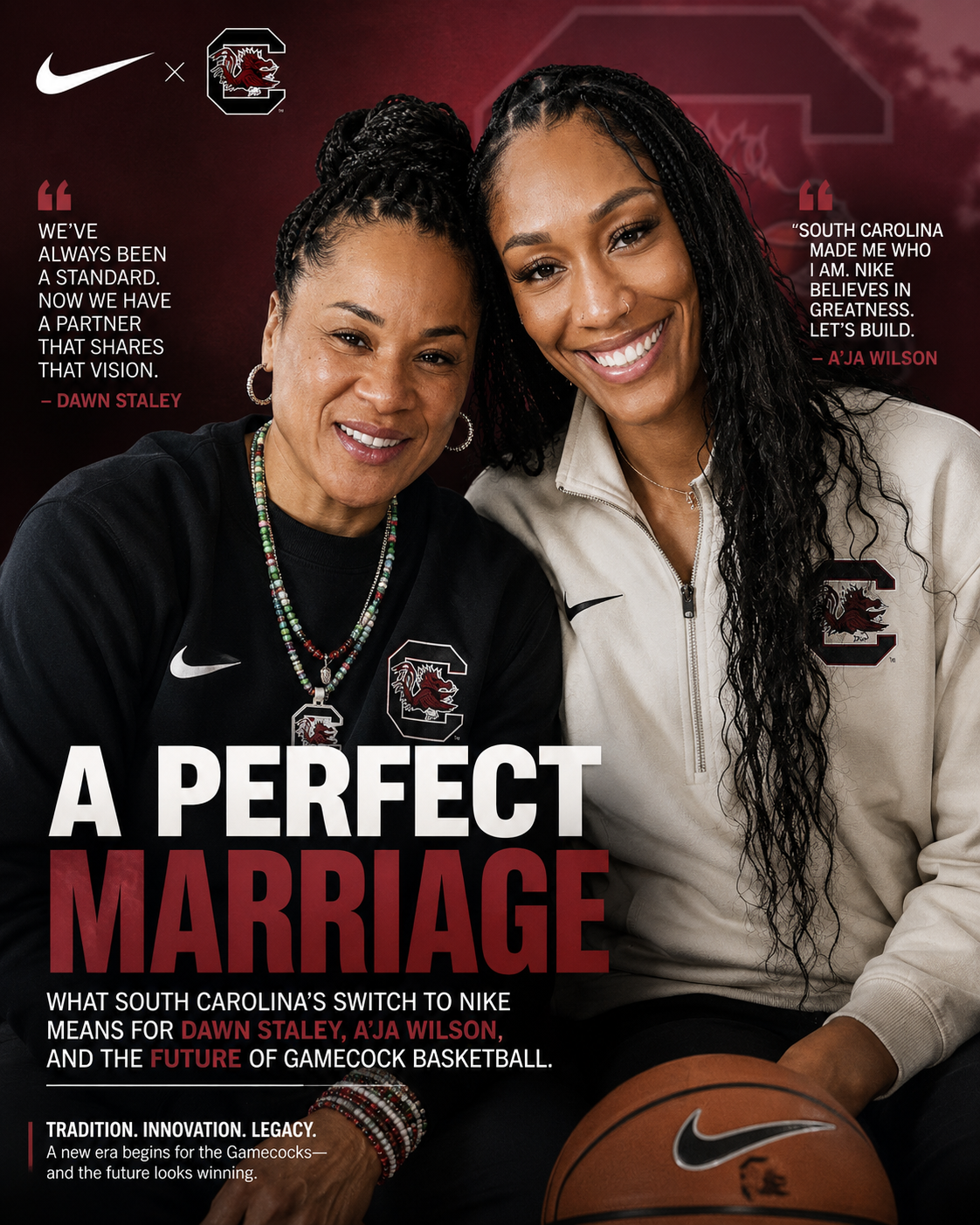
On July 1, the University of South Carolina officially became a Nike school, ending an 18-year partnership with Under Armour that dated back to 2007. The transition is more than a uniform change — it’s a brand alignment that connects two of the most powerful names in women’s basketball history directly to the institution that shaped them both, and sets the stage for a new era of recruiting, visibility, and cultural relevance in Columbia.
418 Days of Limitation — Now Over
Perhaps no single detail captures the significance of this moment better than a simple number. A’ja Wilson’s Nike signature shoe line debuted 419 days before July 1 — and for 418 of those days, her former college program was contractually limited in how it could embrace, display, or promote it. That quiet tension between an Under Armour school and its greatest-ever player wearing a rival brand’s signature shoe was always an awkward footnote to an otherwise extraordinary relationship between Wilson and South Carolina.
That footnote is now gone.
The university’s new contract with Nike, approved by the board of trustees in August 2025, directly addresses Wilson by name. The agreement states that in “Recognizing A’ja Wilson as an iconic USC athlete and ambassador,” Nike would provide South Carolina basketball with branded Wilson signature sneakers — including specific South Carolina colorways — along with other Wilson-related gear. It is an extraordinary clause, one that essentially writes a WNBA superstar’s legacy into a college athletics contract, and it speaks to just how central Wilson remains to South Carolina’s identity even years after her departure.
Athletic director Jeremiah Donati captured the emotional weight of that alignment clearly. “It’s hard to put into words. She’s the greatest women’s basketball player on the planet. We’re so proud and lucky to call her a Gamecock,” he said. “She’s a Nike athlete, so to have her impact filter down to us at the college level, she continues to impact our program in an amazing, in a positive way. We’re really excited about the release of her shoe and just the fact that we can now speak the same language, which is Nike.”
That phrase — “speak the same language” — is more analytically precise than it might first appear. Brand identity in modern college athletics isn’t merely cosmetic. It shapes how recruits perceive a program, how alumni connect with the institution, and how coaches position themselves in a nationally competitive marketplace. South Carolina and A’ja Wilson could always speak the same language emotionally. Now they can do it commercially, visually, and on the court.
Wilson’s Legacy as a Thread Through South Carolina History
To understand why this Nike moment carries such weight, it helps to trace Wilson’s place in the program’s narrative. She was Dawn Staley’s first No. 1 overall high school signee. She won the program’s first national championship in 2017. She became the program’s first No. 1 overall WNBA draft pick in 2018. And in 2025, she became the first athlete from South Carolina to receive her own Nike signature shoe — shortly before claiming her fourth WNBA MVP award, another first.
The consistency of that pattern is remarkable. Wilson hasn’t just succeeded; she has pioneered at every stage of her basketball journey, and South Carolina has been the foundational chapter of that story. The Nike deal completes a circle that has been building for years — the school that launched her career can now wear her shoes on the very floor where that career began.
Dawn Staley: Thirty Years in the Swoosh
While Wilson’s signature shoe gives the Nike transition its most headline-grabbing dimension, the deeper structural significance involves Staley herself. The greatest coach in women’s college basketball has been a Nike athlete for over three decades — and for nearly two of them, she coached at an Under Armour school.
“I’ve been a Nike athlete for over 30 years, so for me personally, it’s helpful,” Staley said when asked about the switch in September. “I got a lot of Nike gear, a lot of Nike shoes. I do think it helps recruiting… it’s Nike, most kids no matter what kind of packages they get, seemed to be attracted to Nike.”
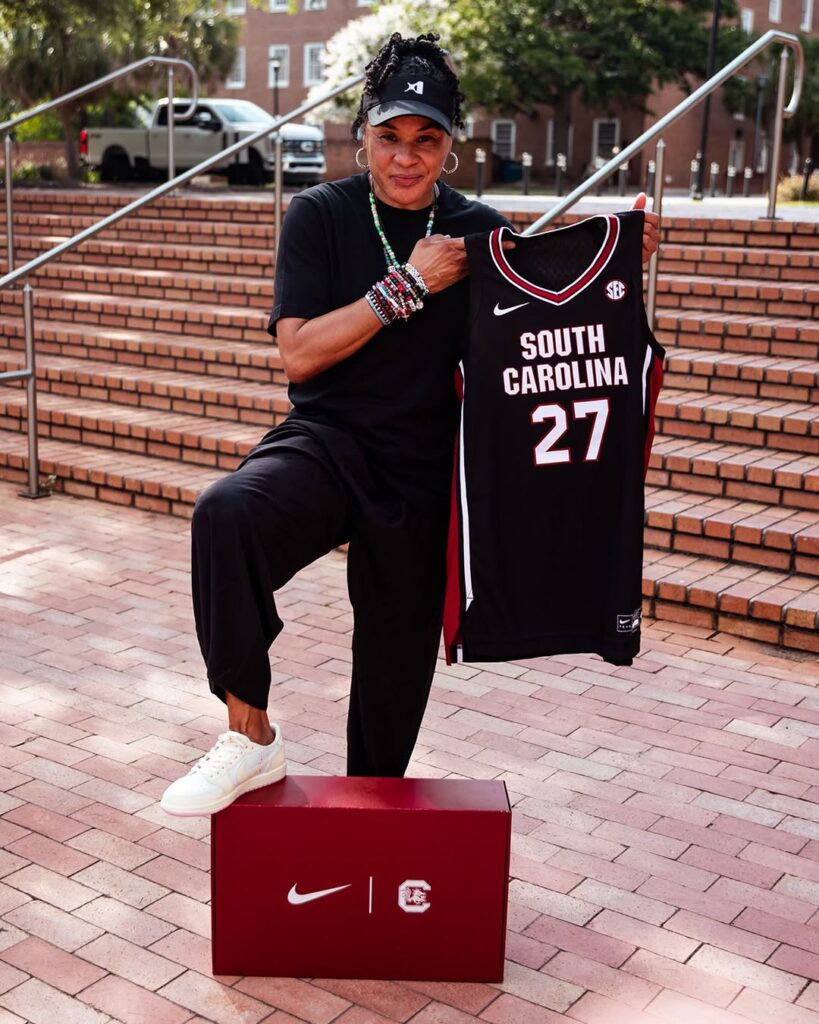
That candor is analytically significant. Staley isn’t just saying Nike is a nice perk — she’s directly connecting the brand switch to recruiting power. In the current college basketball landscape, where NIL deals, brand partnerships, and visibility shape a recruit’s decision-making process alongside coaching and program culture, the ability to offer a Nike affiliation is a genuine competitive advantage. Staley knows this from decades of experience on both sides of the divide.
Donati echoed that assessment with a note of candor about what was essentially lost during the Under Armour years. “It’s amazing that in the 19 years Nike was never able to really capitalize on Dawn and our team’s success from a team standpoint,” he said. “Now we’ll be able to see what that really looks like.” That’s a telling admission — one of the greatest dynasties in women’s college basketball history was built while its head coach and its brand partner were misaligned. The potential ahead, with full Nike resources behind a program of this caliber, is genuinely uncharted territory.
The Recruiting Dividend Is Already Arriving
The most tangible early evidence that the Nike transition is already paying dividends comes in the form of Jerzy Robinson, the No. 6 overall recruit in the Class of 2026. Robinson had already signed her own NIL deal with Nike in 2024 before committing to South Carolina in December — meaning she arrives in Columbia as a Nike athlete joining a Nike school, able to continue a brand partnership on the court rather than in spite of her program affiliation.
Robinson has cited multiple reasons for choosing the Gamecocks that have nothing to do with Nike, and that’s important context — the swoosh didn’t manufacture her commitment. But the alignment removes a potential point of friction and adds a point of continuity that strengthens the overall picture South Carolina can paint for future recruits.
What Comes Next
The University of South Carolina enters the Nike era holding the most decorated women’s basketball program in the country, led by the greatest coach in the sport, with the greatest active women’s basketball player as its most prominent alumna — and now all three share the same brand. The analytical question isn’t whether the Nike partnership matters. It’s how much further South Carolina can go with every element of its identity finally pointing in the same direction.
As Donati put it simply: “Where we sit with one of the premier programs in the country and the greatest coach in the country who is also a Nike athlete, we just feel like it’s a perfect marriage.” On the evidence of everything that has come before July 1, that assessment is hard to argue with.
About The Author