South Carolina’s Point Guard Crisis: Inside the Fallout From Maddy McDaniel’s Absence
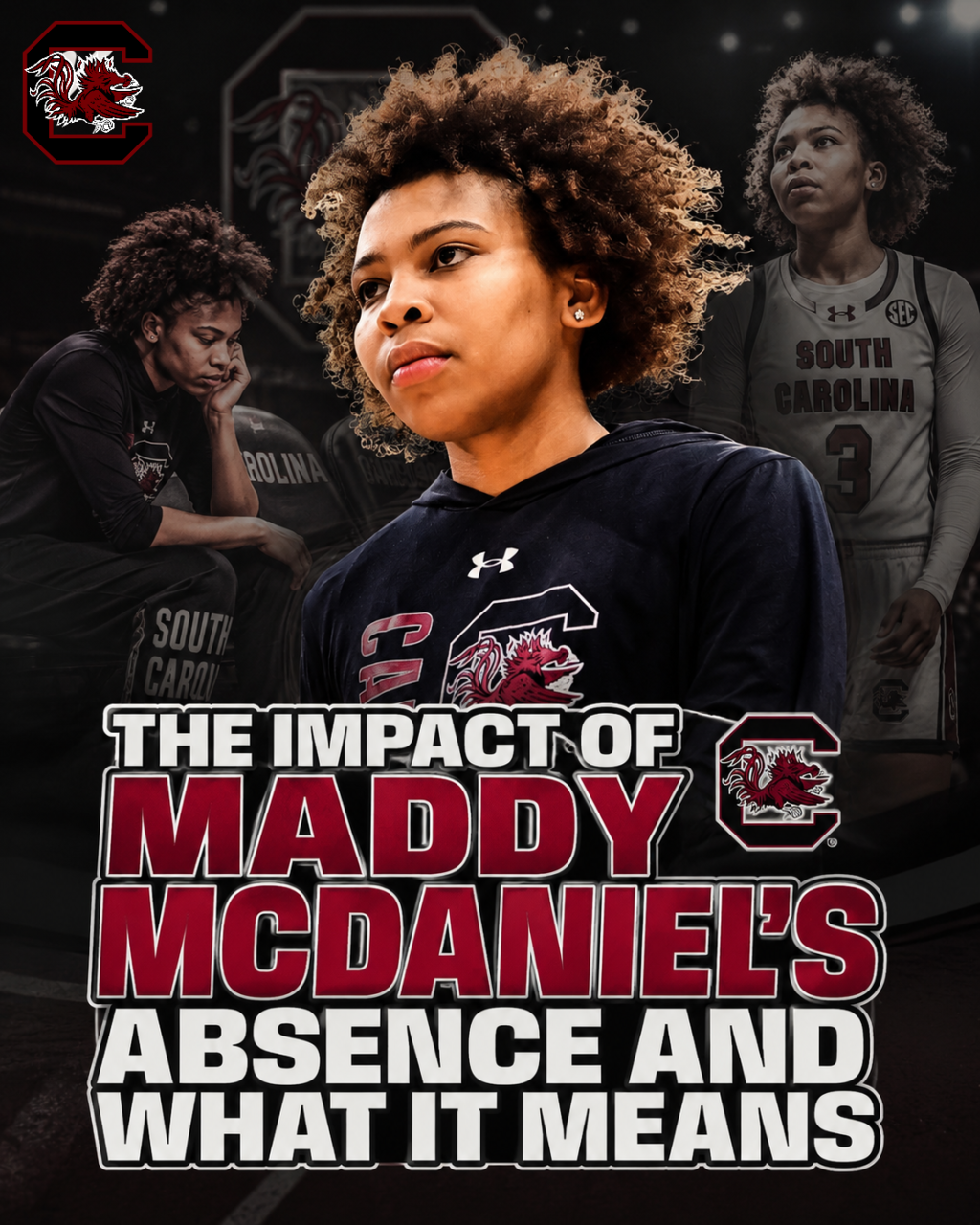
South Carolina and Maddy McDaniel dropped a bombshell Thursday. McDaniel announced she will sit out the 2026-27 season to focus on her mental health — and the ripple effects touch the single most important position on the floor.
The role McDaniel was set to inherit
McDaniel wasn’t just a rotational piece being subtracted; she was the presumptive starting point guard, a junior who had spent two full years being groomed for exactly this moment. That grooming process became official at the Final Four in April, when Raven Johnson publicly handed her the reins. “She’s next up. When I’m gone, she’s going to be the next person to be in that position,” Johnson said. “To play point guard for Coach (Dawn) Staley, it’s hard. You have to be her version of her on the court. Mouse, she learned a lot from me. She’s always asking questions. Whenever her number is called, she’s ready.”
That endorsement matters analytically because it wasn’t hedged — Johnson didn’t describe McDaniel as a candidate or an option; she described her as the successor. And South Carolina’s roster-building decisions backed that up. When the Gamecocks pursued Virginia’s Kymora Johnson in the transfer portal and she chose to stay at Virginia, South Carolina notably didn’t pivot to any other point guard target. That was a vote of confidence in McDaniel at the time — but it also means her departure leaves the program with no natural fallback plan already in place.
Why this loss is different from a typical injury or departure
The scale of the loss is significant, and not just because McDaniel was the presumptive starter. Point guard was already South Carolina’s thinnest position even with her on the roster — in a June roundtable, all three of GamecockCentral’s experts independently flagged point guard as the program’s biggest concern heading into the season, and that assessment came before this news broke. Now that concern has compounded: multiple players will have to operate out of position to cover the gap.
History underscores why that’s such a serious problem. Of the past six national champions, only LSU’s 2023 team won without superior point guard play — and even that team got bailed out by Jasmine Carson’s 22-point outburst. Regardless of scheme, point guard remains the most impactful position on the floor, which means South Carolina’s margin for error just narrowed considerably heading into a title defense.
Why a replacement isn’t a realistic fix
On paper, McDaniel’s departure opens a roster spot — South Carolina was at the 15-player limit with her included. In practice, adding a replacement is highly unlikely. The transfer portal window is closed, meaning barring a coaching change elsewhere, no outside player can simply choose to transfer in now. A handful of unsigned players remain from April’s portal cycle, but none profile as good enough to move the needle for a program with South Carolina’s standards.
That leaves two theoretical paths: convincing a top 2027 point guard to reclassify and enroll early, or finding an international point guard willing to enroll immediately. Both options currently look like non-starters — no top 2027 point guard has indicated interest in or ability to reclassify, and no international prospects appear ready to make an immediate move to the U.S. Even if either path materialized, there’s no guarantee a player parachuting in on short notice could contribute right away.
The silver lining: time
There is a meaningful upside, though, and it’s worth not overlooking. Summer workouts have only been underway for about three weeks, and by making her decision in mid-July, McDaniel effectively hands South Carolina three-and-a-half months to adjust before the games that matter begin. That’s essentially an entire offseason to sort out a new approach — a very different situation than if this news had broken in October.
The point-guard-by-committee approach
With no external fix available, South Carolina’s answer will be internal, and likely collaborative rather than reliant on one player.
Tessa Johnson looks like the most probable starter. She and Ta’Niya Latson served as backup point guards whenever McDaniel was unavailable last season, and Johnson brings three years of experience in South Carolina’s system on top of having run her high school team’s offense — the most proven combination of system familiarity and position experience on the roster.
Agot Makeer represents the next-most-experienced option, despite an unconventional path to the position. She played point guard in high school, and last season — particularly during the NCAA Tournament — she and Raven Johnson often cross-matched, with Makeer handling point guard duties on defense while Johnson ran the offense. That’s a limited sample, but it’s still enough to make her the roster’s second-most experienced point guard, and her ability to defend opposing point guards at an elite level adds real value to that matchup even if her primary role stays elsewhere.
Freshman Jerzy Robinson also enters the conversation. She wasn’t a true point guard in high school so much as the best player tasked with bringing the ball up — a common dynamic in high school basketball — but that still gives her real experience initiating offense, and she’ll have the same three months as everyone else to develop further.
Transfer Jordan Lee is more of a long shot; she has never played point guard at any level, including her time at Texas, though she’ll reportedly get a look at the position given the program’s all-hands-on-deck approach this summer.
The most intriguing wild card is Chloe Kitts. A lead guard in high school and a strong passer, Kitts set herself apart with a 10-assist game against Ole Miss in 2025 — a mark no other Gamecock has matched. She likely won’t play traditional point guard, but she could function as a point forward, initiating offense from a frontcourt position rather than the backcourt.
Who stands to gain
If there’s a clear individual beneficiary in all of this, it’s Robinson. Preseason rotation projections already identified a real problem finding enough minutes for her in a loaded backcourt, with experience typically winning out over potential in tight allocation decisions. McDaniel’s absence likely frees up at least 25 minutes per game — and while that time won’t go to any single player exclusively, Robinson stands to receive a substantial share of it.
That’s a notable break for a player who, despite being ranked below classmate Oliviyah Edwards in pure potential, is considered the most college-ready of this year’s five-freshman class. Robinson’s size, strength, mature offensive game, and rebounding and defensive ability — non-negotiables under Staley — position her well to capitalize. She also arrives more battle-tested than most incoming freshmen, having competed in Southern California’s ultra-competitive high school league and earned MVP honors with USA Basketball.
For South Carolina, the coming months will be less about finding a replacement point guard and more about building a functional system without one — turning what looked like a settled position into the defining variable of next season.
About The Author