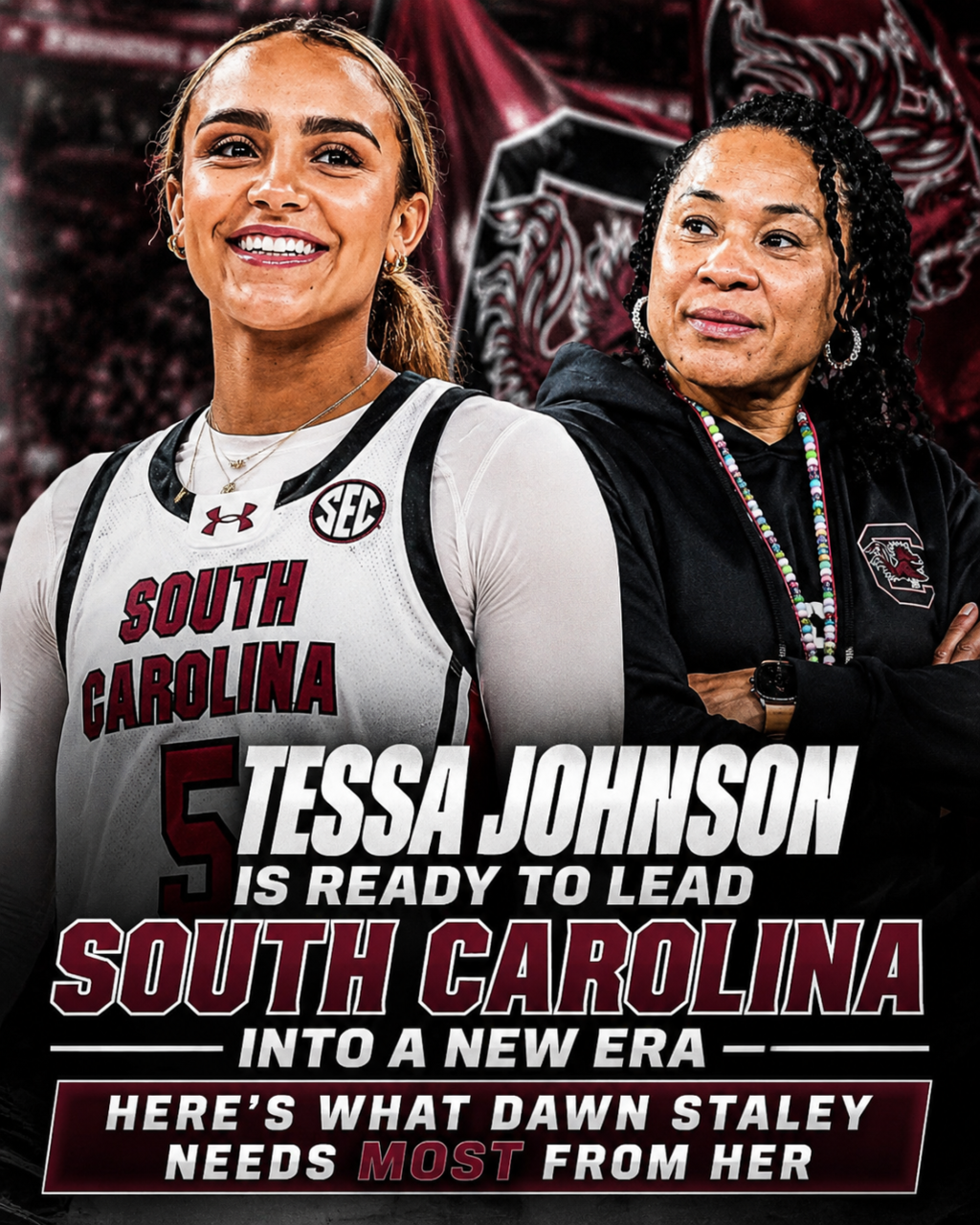
Tessa Johnson Is Ready to Lead South Carolina Into a New Era
South Carolina’s 79-51 loss to UCLA in the national championship game exposed plenty of weaknesses, but it also highlighted one reason for optimism.
While the Gamecocks struggled offensively, shooting just 29 percent from the field, Tessa Johnson remained composed and productive. The junior guard finished with 14 points on 6-of-12 shooting, standing out as one of the few players who consistently found success against UCLA’s defense.
Her performance wasn’t enough to change the outcome, but it offered a glimpse of what South Carolina’s future may look like. As the Gamecocks prepare for a new season filled with fresh faces and new responsibilities, Johnson appears ready to become the program’s next leader.
A Journey Years in the Making
Johnson’s rise didn’t happen overnight.
The Albertville, Minnesota, native arrived in Columbia as the top-ranked player in Minnesota’s 2023 recruiting class after averaging 23.4 points, 5.7 rebounds and 3.9 assists during her junior season. She chose South Carolina over offers from Minnesota and Baylor, believing Dawn Staley’s program was the best place to develop.
Even before Johnson stepped on campus, Staley saw the complete player she could become.
“Tessa is a well-rounded player who uses her perimeter ability and size to play multiple positions,” Staley said when Johnson signed. Staley also described her as a three-level scorer whose versatility would make everyone around her better.
That prediction has become reality.
By the end of last season, Johnson had eclipsed 1,000 career points, becoming just the second Gamecock to reach the milestone alongside Raven Johnson. She also led the SEC in three-point shooting at 44.5 percent, establishing herself as one of the nation’s most dangerous perimeter shooters.
Her offensive growth transformed South Carolina’s attack, giving the Gamecocks a reliable outside scoring threat capable of stretching elite defenses during postseason play.
More Than Just a Scorer
Johnson’s biggest development may not have been reflected in the box score.
Throughout the season, she increasingly took charge during timeouts and on-court huddles, offering direction, encouragement and composure when teammates needed it most. Those moments became especially important as South Carolina leaned on veteran leadership from Raven Johnson, Ta’Niya Latson and Maryam Dauda.
With those experienced players now gone, Johnson is expected to become the team’s primary voice.
Staley has long praised the qualities that make her suited for that responsibility, highlighting both her fearless scoring mentality and her lightning-quick release, which the Hall of Fame coach has previously compared to WNBA legend Diana Taurasi.
Staley also credits Johnson’s relentless work ethic for her development.
“I would say it’s natural. It probably hasn’t always been natural. Her dad did a really great job of coaching her up.”
That quote perfectly captures Johnson’s journey. What appears effortless today is the result of years of disciplined work, helping her evolve from a highly regarded recruit into one of the SEC’s premier guards.
Her reputation as “Tournament Tessa” reflects that growth, as she has repeatedly delivered some of her best performances on college basketball’s biggest stage.
A Talented Roster Still Needs a Leader
South Carolina will once again feature one of the nation’s deepest rosters.
Johnson returns alongside Joyce Edwards, Maddy McDaniel, Agot Makeer, Ayla McDowell, Adhel Tac and Alicia Tournebize. The Gamecocks also welcome back Chloe Kitts and Ashlyn Watkins after both missed last season recovering from ACL injuries.
The incoming recruiting class adds even more talent with five-star forward Oliviyah Edwards, top-20 prospects Kelsi Andrews and Kaeli Wynn, and standout guard Jerzy Robinson.
On paper, the talent is undeniable.
However, championship teams are built on chemistry as much as ability. Integrating elite freshmen while welcoming back players from major injuries will require strong leadership, communication and consistency.
That is where Johnson’s importance becomes even greater.
She has already demonstrated the ability to remain composed under pressure, and now she’ll be asked to help unite one of the country’s most talented—but also most retooled—rosters.
Analysis: Why This Team Will Go as Far as Tessa Johnson Takes It
South Carolina doesn’t lack talent heading into next season. If anything, the Gamecocks may be deeper than ever.
The biggest question isn’t who can score—it’s who will lead.
Raven Johnson leaves behind a leadership void that cannot simply be replaced by statistics. Her ability to organize teammates, steady the offense and control the emotional pace of games was invaluable.
Tessa Johnson now appears to be the natural successor.
She has already proven she can produce when the pressure is highest, and her willingness to speak up on the floor suggests she’s embracing a much larger responsibility. If she successfully balances elite scoring with vocal leadership, South Carolina will have everything it needs to contend for another national championship.
The Gamecocks’ ceiling may ultimately depend less on their impressive collection of talent and more on whether Johnson can become the steady leader who brings every piece together.
That makes next season more than just another chapter for Tessa Johnson—it marks the beginning of her era as the face of South Carolina women’s basketball.
About The Author