Dawn Staley Is Making South Carolina Millions — So Why Is The Program $6 Million In The Red?
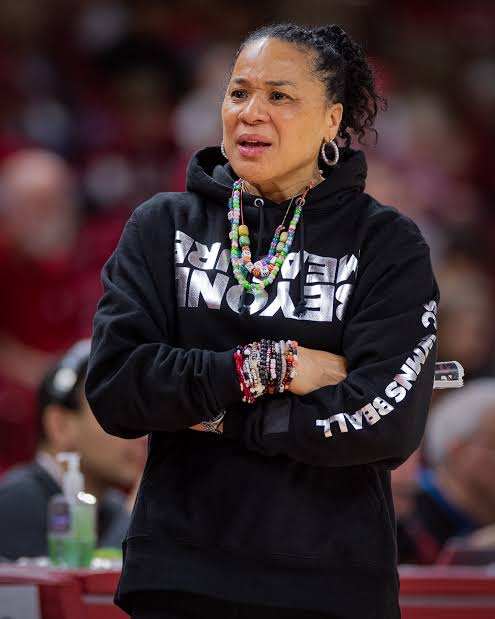
8COLUMBIA, S.C. — She has won three national championships, packed arenas for 16 consecutive winning seasons, and turned South Carolina women’s basketball into arguably the most dominant program in college sports. Yet despite all of it, the Gamecocks’ women’s basketball program is operating at a significant financial loss — and the numbers reveal a glaring, uncomfortable truth about how women’s sports are still valued in America, even at the highest level of success.
The Financial Reality Behind the Dynasty
The optics are striking. In the 2024-25 fiscal year, South Carolina women’s basketball’s expenses exceeded its revenue by more than $6 million, according to the 2025 NCAA AUP Report. For any other program, that number might signal mismanagement or irrelevance. For a program that won a national championship in 2024, reached six consecutive Final Fours, and sells out every single home game, it raises a far more pointed question: if winning at the highest level still can’t make women’s basketball profitable, what will?
The answer, at least partially, lies in how money flows through college athletics — and who controls the pipeline.
To be fair to South Carolina, they are not alone in this financial picture. LSU reported over an $8.5 million loss in women’s basketball last season, and Texas reported a $7.5 million loss. South Carolina’s total expenses exceeded $13 million — the third-highest in the SEC behind LSU at $12.1 million and Texas at $10.9 million, according to reporting by Jordan Kaye at The State newspaper. The outlier in the sport remains UConn, one of the few women’s programs operating in the black, turning an $8.5 million profit in 2024-25. That UConn can do it while South Carolina cannot is worth examining — and likely speaks to the difference in institutional investment structures and legacy media deals rather than any on-court gap between the programs.
The Salary Conversation Everyone Is Having
Dawn Staley’s five-year, $25.25 million contract extension — signed in January 2025 and making her the highest-paid women’s college basketball coach ever — is the headline figure driving much of the budget conversation. The largest expenses in the program include coach salaries, paid by both the university and third parties. Critics will point to that salary as a financial liability. Supporters will correctly argue that you simply cannot put a market value on what Staley has delivered.
Both sides, however, tend to overlook the most revealing comparison sitting right there in plain sight: South Carolina football head coach Shane Beamer earns more than double Staley’s annual salary at $8.15 million per year. Football — a program that has never won an SEC championship and has never appeared in the College Football Playoff — pays its coach more than twice what the university pays the coach of its three-time national championship program.
That single data point encapsulates the broader structural inequity better than any policy paper could.
Revenue Sharing: A Step Forward, But Not Enough
The House v. NCAA settlement’s new 2025-26 revenue-sharing model was supposed to represent progress for women’s athletics. In practical terms, women’s basketball programs are estimated to receive approximately 8% of the total revenue-sharing pool — roughly $1.6 million per school on average. Football is projected to receive approximately 63.8%, or around $13.1 million. Men’s basketball sits at 20.9%, or about $4.3 million.
Staley has been vocal about ensuring women’s basketball isn’t buried under football’s financial dominance as this new era unfolds.
“When this lawsuit came out, it was football, men’s basketball and women’s basketball,” Staley said. “I just hope we don’t lose sight of those three sports that started the lawsuit. And I know when we decide which way that the money’s going to be divvied up, that every school that is receiving the revenue sharing portion will definitely take women’s basketball seriously.”
It is a measured, diplomatic statement — but the urgency underneath it is unmistakable. Women’s basketball helped build the case for change. Staley is determined to make sure it doesn’t get left out of the payout.
The Viewership Gap That Should Not Exist
Perhaps no statistic better illustrates the disconnect between South Carolina women’s basketball’s cultural impact and its financial return than this: in 2024, the women’s NCAA Tournament — highlighted by South Carolina’s iconic win over Iowa — averaged 18.7 million viewers, surpassing the men’s tournament in a historic first. And yet, despite that landmark achievement, the men’s basketball program still generated twice the ticket revenue of the women’s program, according to CT Insider.
Let that sink in. More people watched the women’s championship game than the men’s, yet the financial infrastructure of college athletics continues to channel significantly more money toward men’s programs. The market is sending one signal. The financial structure of college sports is sending another entirely.
Men’s basketball at South Carolina receives more than double the contributions that the women’s team receives — a disparity that exists not because of audience interest but because of decades-old donor pipelines and media rights structures that were built around men’s sports and have been slow to recalibrate.
What Staley Has Built Goes Beyond Basketball
To reduce the South Carolina women’s basketball conversation to a budget line is to fundamentally misunderstand what Dawn Staley has constructed in Columbia. Since arriving in May 2008, she has won three national championships, nine SEC regular-season championships, and established a standard of sustained excellence that few programs in any sport — men’s or women’s — can match.
The Gamecocks hold the SEC record for 57 consecutive league regular-season victories and have maintained 16 consecutive winning seasons. For context, South Carolina football’s longest consecutive winning season streak dates back to 1928-34. The men’s basketball program’s last NCAA Tournament appearance in 2024 ended in a first-round exit. Women’s basketball, meanwhile, has appeared in six straight Final Fours.
The program has sold out all 13,046 season tickets for the 2026 season and has led the nation in average attendance for 10 straight years. These are not the metrics of a program that needs to justify its existence. These are the metrics of a program that deserves to be treated as the crown jewel of South Carolina Athletics — financially and institutionally.
Four-time WNBA MVP and former Gamecock A’ja Wilson captured what Staley means beyond the wins and losses.
“She has really molded me into the player that I am today. She spent countless hours just telling me what I need to do at the pro level,” Wilson said.
That influence extends far beyond Colonial Life Arena. Staley personally called then-South Carolina defensive back Nick Emmanwori on NFL draft night to offer guidance. After blowing out Southern University 103-34 in the NCAA Tournament this past season, Staley gave the opposing team’s players samples of her perfume and offered words of encouragement — a moment that Southern University senior guard D’Shantae Edwards described as transformative.
“I think it shows how good of a person she is. It’s not just about basketball,” Edwards said. “I feel like her coming and giving us words of encouragement meant a lot as a team, and honestly meant a lot to me as a person because it’s bigger than the game for her. It’s about growth as a player. It’s about growth as a person and you can see that when she was talking to us.”
Kentucky women’s basketball head coach Kenny Brooks, one of the most respected voices in the sport, put Staley’s standing in the game simply and powerfully.
“I wanted to stand up and applaud her because she is the face of women’s basketball right now,” Brooks said.
Tennessee Tech coach Kim Rosamond added: “There’s so many things I admire about her. But she is always advancing the game, protecting the game, respecting the game and she does so much for people within the game that doesn’t always get seen or noticed.”
Breaking Ceilings, On and Off the Court
In 2024, Staley received a job interview with the New York Knicks for their then-vacant head coaching position — only the second woman in history, alongside Becky Hammond, to interview for an NBA head coaching role. She went into that room with full awareness of the double standard she was walking into.
“You’re going to be asked questions that you don’t have to be asked if you hire a male coach,” Staley said. “There’s going to be the media, there’s going to be all this stuff that you are going to have to deal with that you didn’t have to deal with, and you don’t have to deal with when you hire a male.”
And on the WNBA’s ongoing fight for fair pay — a fight she watched firsthand during her eight-year playing career — Staley remains one of the sport’s most powerful advocates, reminding her current players of how far the financial landscape has shifted and where it still needs to go.
“When you enter into the league, you’re going to make probably 100 times, 75 times, more than someone 30 years ago, 10 years ago, five years ago,” Staley said. “You’re going to make much more money than the No. 1 pick and we’ve had two of them.”
The Bottom Line
The financial losses in South Carolina women’s basketball are real. The $6 million deficit is a legitimate institutional challenge that the program and athletic department must work to address, particularly as revenue-sharing models evolve under the new NCAA landscape.
But context matters enormously. The program is spending at an elite level because it is operating at an elite level — in a sport where the financial infrastructure has not yet caught up to the cultural moment women’s basketball is clearly having. The crowds are there. The viewership is there. The talent pipeline is there. What lags behind is the willingness of the broader college athletics ecosystem to let the money follow the audience.
Dawn Staley has built something extraordinary in Columbia. The real question isn’t whether the program can afford her. It’s whether college athletics can afford to keep undervaluing what she’s built.
About The Author