Dawn Staley Traces the Roots of “Uncommon Favor” — And Turns the Lesson Into a Call to Give Back
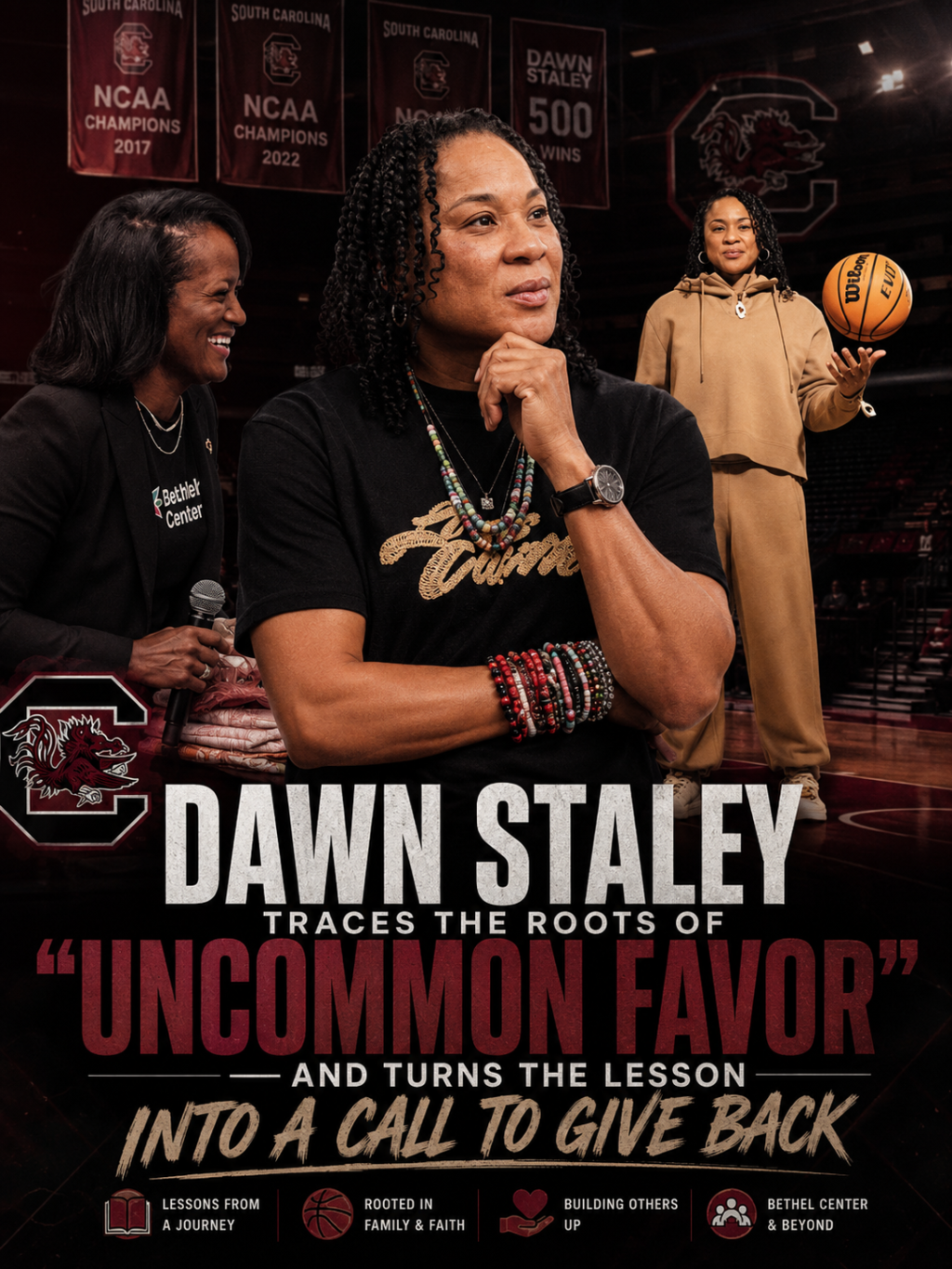
SPARTANBURG — Dawn Staley knows a thing or two about receiving favor. It’s a recurring theme in her memoir, “Uncommon Favor: Basketball, North Philly, My Mother and Life Lessons I Learned from All Three,” released May 20 — and it took center stage during a fireside chat with CFLeads President and CEO Mary Thomas and Spartanburg Fire Chief Pierre Brewton at USC Upstate, held as part of the Bethlehem Center’s Aiming Higher for Community Annual Fundraiser on July 30.
A championship season that started with self-doubt
Staley, who has coached South Carolina since 2008 and won three national championships, chose an unexpected example to illustrate what “uncommon favor” actually means in practice — pointing not to a moment of confidence, but to one of genuine self-questioning.
She recalled the emotional weight of losing star seniors Aliyah Boston, Brea Beal and Zia Cooke after a season that ended in painful fashion. “We had a really good team, and I just really wanted them to win a championship in their last game. We lost in the semifinals, and it’s hurt me to this day,” Staley said. That admission is notable coming from a coach with three national titles — it reveals that even sustained success doesn’t erase the sting of specific losses, particularly ones tied to players she clearly felt a deep responsibility toward.
What followed was even more candid. Staley described entering the next season in a genuine emotional low point, openly questioning her own fit for the job as she worked with a young, still-developing roster that struggled with discipline early on. She said she eventually drew a clear line with the team, telling them enough was enough — and the response was a complete turnaround: an undefeated season culminating in a national championship. That arc — doubt, accountability, and an unexpected reversal — is precisely the kind of “favor” Staley says the book is built around: not favor as effortless luck, but as something that shows up specifically in the moments when things look most uncertain.
Where the title actually came from
Staley traced the book’s title back to a moment of personal reflection. “You know what God said to me?” Staley said. “He said ‘I can show you, better than I can tell you.’ That is where ‘Uncommon Favor’ came from.” That framing reshapes how the championship story should be read — not as evidence that things simply worked out, but as an example of a lesson that had to be lived through and demonstrated before it could be fully understood or articulated.
Her mother’s lasting influence
Staley also credited her late mother, Estelle Staley, as a foundational inspiration behind the New York Times bestseller. “I walk in the path of my mother, who worked so hard in the vineyard,” she said, explaining that the phrase refers to church work and reflecting that her own success traces back to the faith, strength and grounding her mother instilled in her. That connection matters analytically — it reframes Staley’s coaching philosophy and public persona as an extension of values passed down generationally, rather than something developed independently through basketball alone.
Turning the lesson into action
The event itself gave Staley’s message a direct, practical application. The Bethlehem Center is built around community service, supporting local families through childhood education and youth programming — and Staley used the platform to make the case that consistent, hands-on community involvement is one of the most valuable things anyone can offer.
“Show up for your people,” Staley said. “Be consistent in their lives. When you show up for someone every day, you will feel it. If we want to impact young people, we do it with our time. And if we do that, then they’ll keep that type of community going forward. Paying it forward.”
That closing message ties the entire talk together. Staley’s own story — a difficult season, a mother’s foundational influence, and an eventual breakthrough — becomes, in her framing, not just a personal narrative but a template: the same consistency and presence that helped her navigate her lowest coaching moment is what she’s now asking others to offer the next generation through organizations like the Bethlehem Center.
About The Author