
Haters Keep Questioning Dawn Staley, but South Carolina Continues Winning on the Recruiting Trail
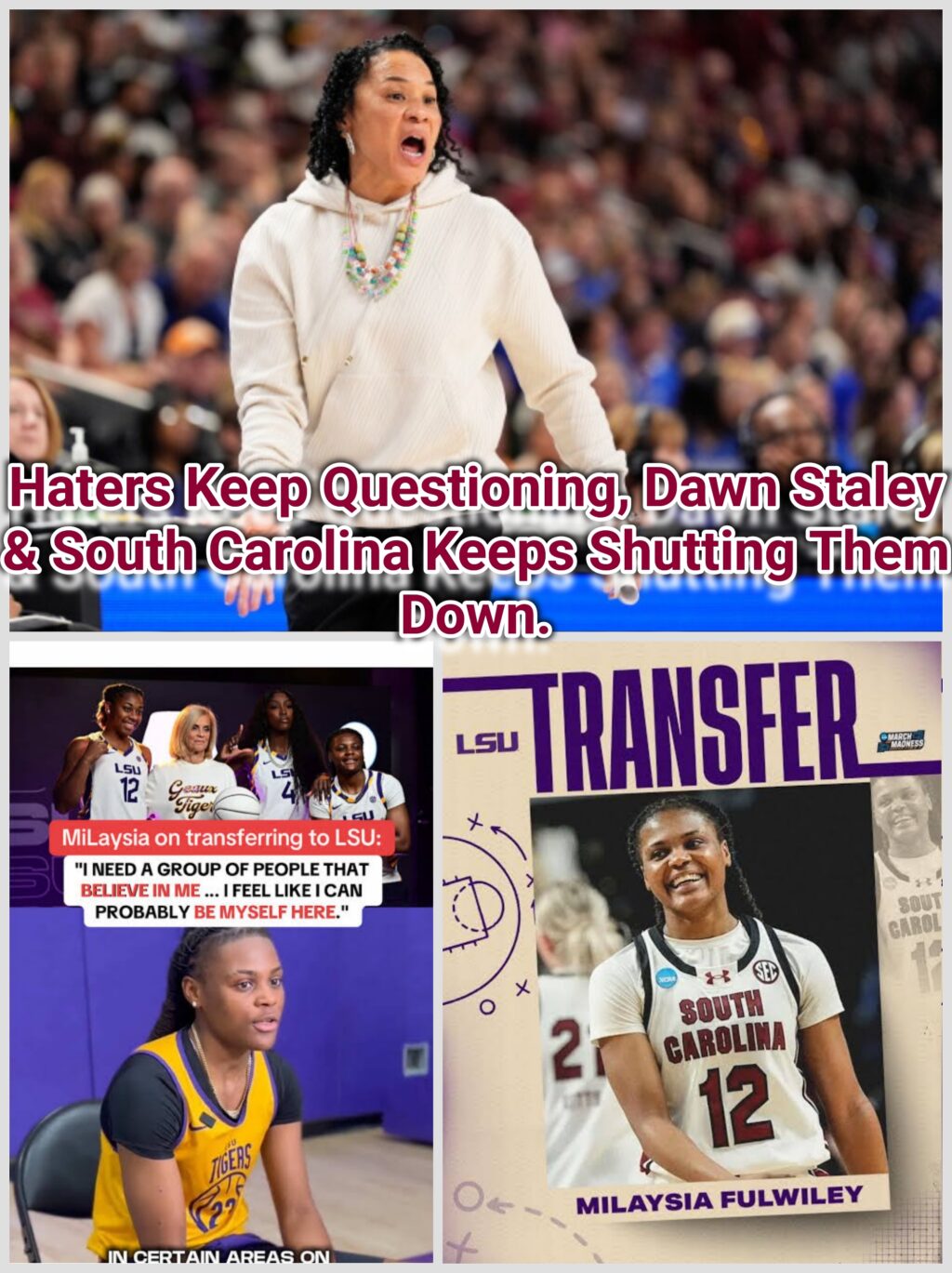
The criticism surrounding Dawn Staley and South Carolina women’s basketball has never completely disappeared, even as the Gamecocks continue to attract elite talent and compete among the nation’s top programs. From questions about playing time to debates about player development and roster management, critics have repeatedly attempted to shape the conversation around Staley’s program. Yet, despite the noise, South Carolina continues to make significant progress on the recruiting trail.
The latest commitments in the 2027 recruiting class provide another reminder that outside criticism has not stopped elite prospects from choosing the Gamecocks.
For Staley, recruiting success is about more than responding to critics. It is about building a program that attracts players who believe in its culture, development opportunities and championship ambitions.
The Narrative Surrounding Dawn Staley
Whenever a successful program experiences roster changes, critics often use those departures to question the coach’s methods. South Carolina has faced similar scrutiny, particularly when players transfer in search of different opportunities.
Playing time has become an increasingly important issue in college basketball, where athletes must balance individual development, competition for minutes and the desire to contribute to winning teams. At a program as talented as South Carolina, earning a consistent role can be difficult, even for highly regarded players.
Critics may interpret those challenges as evidence of problems within the program. However, a player’s decision to transfer does not automatically establish that a coach or program has failed.
Every athlete has individual expectations, career goals and circumstances. Sometimes a change of environment offers a better opportunity to pursue those goals. Other times, a player may decide that remaining in a competitive program is the best path forward.
The broader point is that one player’s experience should not define an entire program, particularly one with a sustained record of success.
MiLaysia Fulwiley’s Transfer to LSU and the Playing-Time Debate
MiLaysia Fulwiley’s departure from South Carolina for LSU added another chapter to the discussion surrounding Staley’s roster management.
Fulwiley brought considerable excitement to Columbia with her creativity, athleticism and ability to produce spectacular plays. Her departure naturally raised questions about her role with the Gamecocks and what she hoped to find elsewhere.
Concerns about playing time have been associated with discussions of her move. For ambitious players, the desire for a larger role can influence decisions about transferring, especially when they believe another program may offer more opportunities to showcase their abilities.
However, it is important to distinguish reported or perceived playing-time concerns from a confirmed, comprehensive explanation of Fulwiley’s decision. Without a definitive statement establishing all the reasons behind her transfer, it would be unfair to suggest that playing time was necessarily the sole factor.
Her move to LSU gave her an opportunity to pursue the next stage of her college career in a different environment. It also created an opportunity for South Carolina to adjust its roster and continue building around the players who remain committed to the program.
Fulwiley’s future success or struggles will ultimately depend on her development, opportunities and team circumstances. Neither her transfer nor the reactions surrounding it can establish whether she will win another national championship.
Recruiting Results Continue to Challenge the Critics
While debates about transfers continue, South Carolina’s recruiting momentum offers a different perspective.
The Gamecocks have continued to attract highly regarded prospects, including members of the 2027 class such as GG Banks, Taylor Brown, Zaniya Johnson and Jordyn Palmer. Palmer, in particular, has been identified in the supplied recruiting announcement as a top-10 prospect nationally.
Securing commitments from multiple elite prospects demonstrates that South Carolina remains an attractive destination for high-level talent.
Players and their families evaluate programs for different reasons, including coaching, development, playing style, academic opportunities, team culture and the possibility of competing for championships. Recruiting decisions are rarely explained by one factor alone.
Staley’s continued ability to bring talented players to Columbia suggests that the Gamecocks’ reputation remains strong despite the criticism circulating online.
Recruiting is also about projecting the future. Staley and her staff must identify players who fit their plans, establish relationships with prospects and build a roster capable of competing against the best teams in the country. Their work continues regardless of the latest social media debate.
Dawn Staley’s Response Is Written on the Court
The strongest response to criticism is not an argument on social media. It is sustained performance, thoughtful roster construction and continued success.
Staley has built South Carolina into a national championship contender, and her recruiting efforts remain an important part of maintaining that standard. Although transfers and playing-time disputes can generate attention, they do not erase the accomplishments of the program or determine what comes next.
The claim that critics can discourage recruits from joining South Carolina is difficult to reconcile with the continued arrival of highly regarded prospects. Every recruiting cycle presents new challenges, but the Gamecocks have demonstrated that they can remain competitive in the battle for elite talent.
Ultimately, Fulwiley has the right to pursue her career at LSU, just as future recruits have the right to decide whether South Carolina is the right fit for them.
One player’s departure does not signal the end of a program’s success, and criticism alone cannot determine the future of Dawn Staley’s dynasty.
The Gamecocks will still have to develop their players, manage their roster and prove themselves on the court. But as long as Staley continues attracting elite talent and building competitive teams, the recruiting trail will remain a powerful part of her answer to the doubters.
The noise will continue. So will the recruiting battles. And South Carolina will have another opportunity to let its results speak for themselves.
About The Author