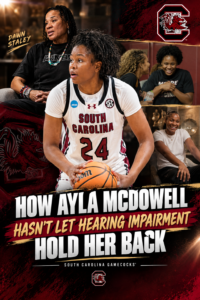
“Hearing Every Word: How Dawn Staley Helped Ayla McDowell Stop Hiding Her Hearing Loss”
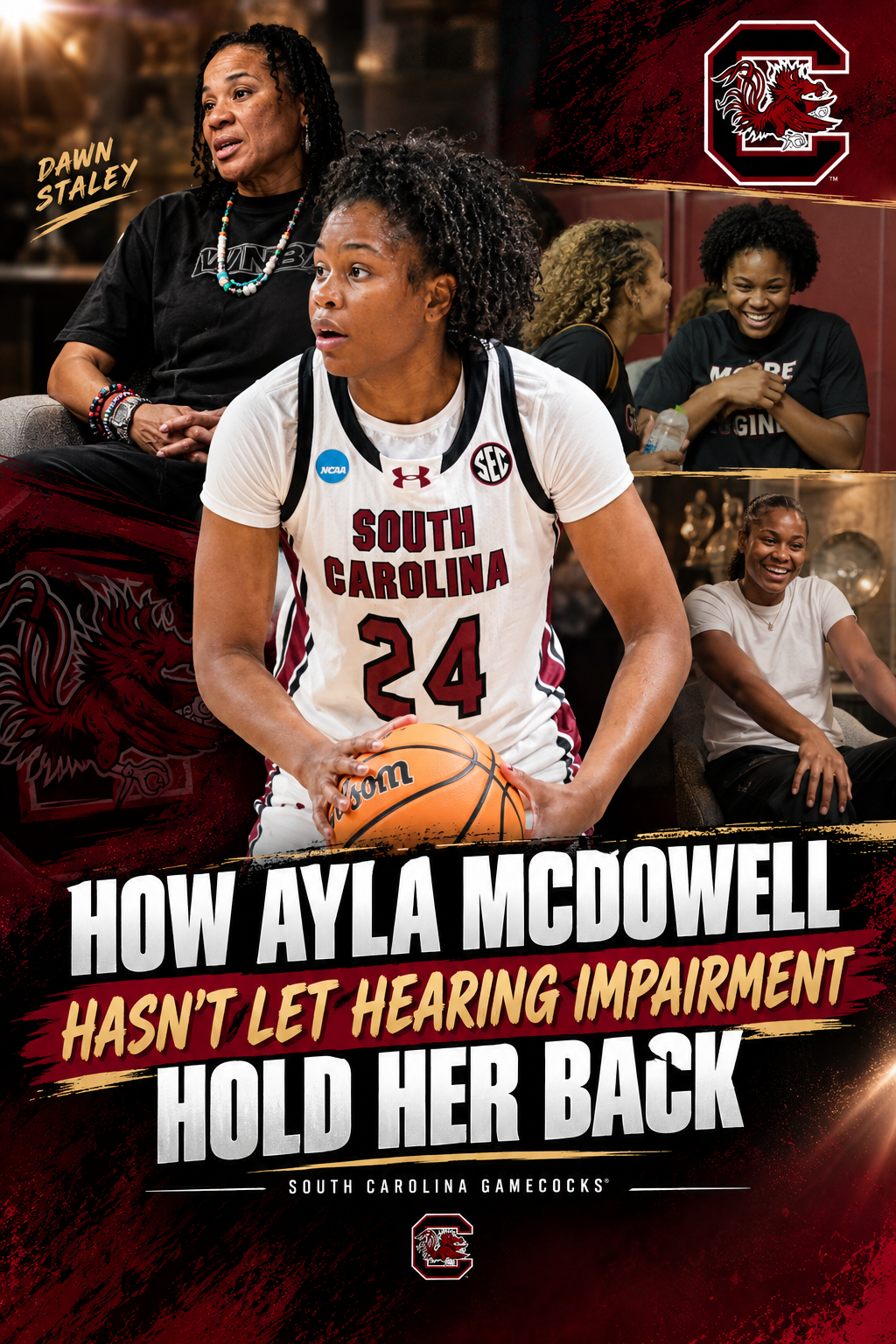
Ayla McDowell finally has the sound of the college game the way it’s supposed to be heard — and it took her freshman season falling apart in a film room for that to happen.
The moment that changed everything
In early February 2026, McDowell — a 6-foot-1 freshman guard making her first career start for South Carolina against Mississippi State — sat in the Gamecocks’ film room trying to follow coach Dawn Staley’s scouting report from across the room. She’d relied on lip-reading and physical cues to manage sensorineural hearing loss she’s had since birth, and Staley had known about it since McDowell’s 2024 official visit but hadn’t disclosed it to the rest of the team. That day, staring at Staley’s lips wasn’t enough. She grew annoyed and exhausted trying to make out what her coach was saying.
It wasn’t new. McDowell had been fitted for a hearing aid in her left ear at age 8, but stopped wearing it not long after and leaned entirely on reading lips instead. That workaround carried her through high school and into her first year of college ball — until it didn’t.
“I’m tired of looking at people”
By her freshman season, the accommodations were costing her more than they were saving her. In her own words:
“I think I need hearing aids. I’m tired of looking at people. I have to look at people when they talk, but I’m tired of having to do that and like force myself to do that … and it created challenges when it came to response times on the court. And just being able to hear what’s going on around me. If I wasn’t looking at someone, I couldn’t hear them if they were behind me.”
Teammates noticed too. They’d tell Staley they were trying to get through to McDowell on the floor, but she couldn’t hear them.
Staley’s steady push
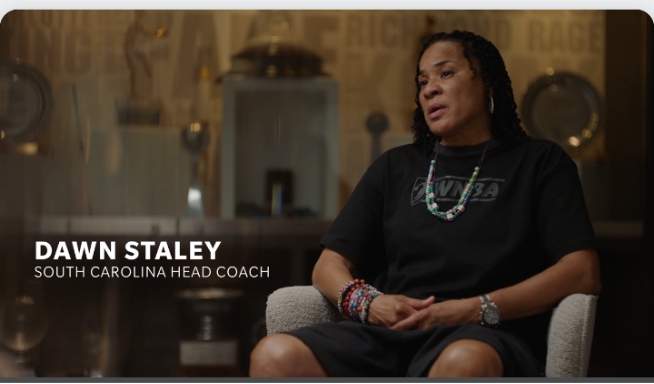
Staley didn’t let it go. Throughout that first season, she kept checking in, asking McDowell if she wanted to get retested and try hearing aids again — and each time, McDowell said she wasn’t ready. Staley’s reasoning was simple:
“There are so many people out there with some kind of impairment, hearing is one of them, she’s gonna be a rare of hope for somebody in her situation.”
“I wanted her to excel at basketball because she loves it so much.”
She understood, too, how hard it is to let go of a coping mechanism that’s worked for years, telling ESPN:
“I know to hold on to something, it’s exhausting.”
Taking the leap — with her team behind her
When McDowell finally decided to move forward with hearing aids, the reaction from her teammates was immediate and warm. “We’ll definitely help you out” and “We got you” made their way around the team bus, and for the first time in her basketball career, she’d take the court wearing hearing aids.
Heading into her sophomore season, McDowell described what that shift means for her game:
“I think I’m just going to be more confident in doing things, being able to read and react, hear and react, honestly. Just hear my teammates. Hear my coaches. Those are some things that I’m just preparing myself and excited to see for myself.”
Staley has already started noticing the difference in McDowell’s game during preseason work.
Part of a bigger story
McDowell’s path echoes other athletes who’ve competed at the highest levels with hearing loss — from WNBA great and Olympic gold medalist Tamika Catchings, who wore hearing aids and faced bullying as a child before becoming one of the most decorated players in league history and an advocate for those with hearing impairments, to Paralympic swimmers who’ve relied on visual cues instead of starting signals. What sets McDowell’s story apart is the coach in her corner refusing to let her hide it — and a locker room that met the news with support instead of stigma.
About The Author