“I Rooted for LSU the Whole Time”: Paul Mainieri Opens Up on His Short, Strange South Carolina Exit
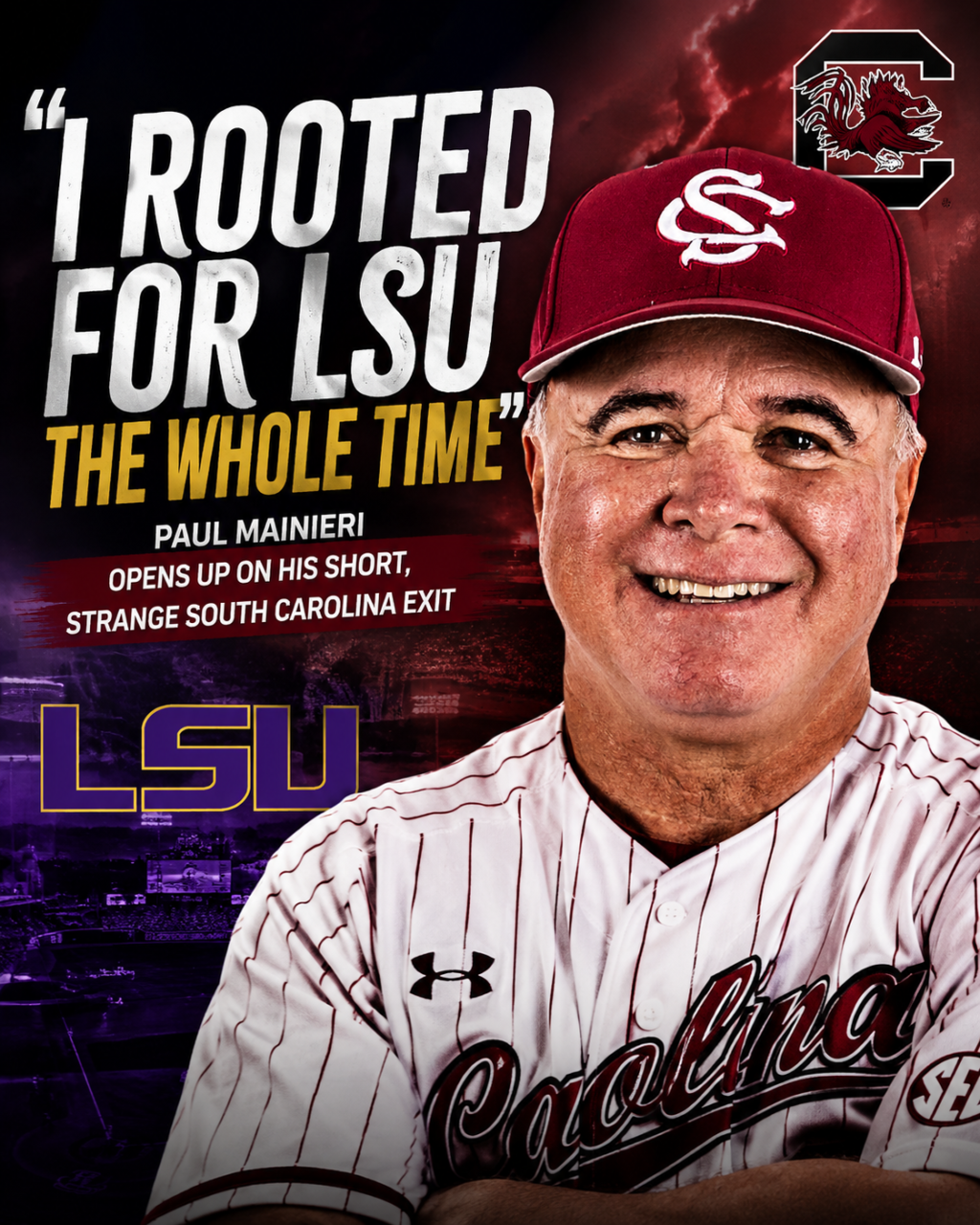
Paul Mainieri’s hour-long interview with WAFB-TV’s Jacques Doucet on July 10 marked some of his first public comments since he and South Carolina parted ways on March 21 — and the conversation revealed a coach who never fully left Baton Rouge, even while running someone else’s dugout.
A silver lining hiding in the schedule
As Mainieri’s brief tenure at South Carolina came to an end in late March, the longtime head coach felt relieved to call it a career and head back home to be with his family. He was also just glad he wouldn’t have to be in the visitors’ dugout when the Gamecocks traveled to LSU less than two months later — a scheduling quirk that, in hindsight, spared him from a genuinely uncomfortable moment.
That discomfort wasn’t hypothetical. Baton Rouge is where Mainieri went to school, where he met his wife Karen, and where he later coached for 15 years, winning a national championship in 2009. Facing his former program in 2025, when LSU played a three-game series at South Carolina, already gave him what he described as the most awkward feeling he could imagine. Going back to Alex Box Stadium as the opposing coach would have raised the stakes considerably.
“I don’t know if I’m a softy or what, but I root for LSU and I always will. But at the same time, I had a job to do,” Mainieri said. “But when I left before the season was over, when I left South Carolina by mutual agreement, one thing that I looked at, the silver lining, I said, ‘Well, at least I don’t have to take a team to Alex Box Stadium.’ I didn’t want to do that.”
That’s a striking admission from a sitting head coach — even a former one. It suggests his departure wasn’t just about results on the field, but also about a coach who may never have fully separated his professional obligations from his personal loyalties.
The numbers behind a short, difficult stint
Mainieri’s 80-game stint in Columbia didn’t yield great results: the Gamecocks went 40-40 overall with just six SEC wins under his leadership. That’s a rough return on investment for a program with South Carolina’s baseball pedigree, and it frames everything else in the interview.
He was originally hired by former athletics director Ray Tanner in June 2024, arriving at a program that had just made an NCAA Regional before parting ways with Mark Kingston after seven seasons. Mainieri was 66 at the time and had been out of baseball for three years since last coaching at LSU in 2021 — a hire that always carried an implicit expiration date, even if that wasn’t fully understood at the time.
A sport that had changed more than he expected
Perhaps the most revealing part of the interview is Mainieri’s own account of being caught off guard by how much college baseball had transformed during his time away. “I went there, and you know, you inherit a team that’s got some weaknesses, of course. So the first year didn’t go so great,” Mainieri said. “And then we started into the second year when we finally could recruit. But what a different world this recruiting is now with the transfer portal and open transfers and NIL and revenue share and all that stuff.”
That’s not just an excuse — it’s a genuinely useful data point about the scale of change in college athletics. A coach with a national championship pedigree and 15 years of SEC-level success at LSU still found the current recruiting and roster-management landscape disorienting enough to cite it as a central factor in his struggles. If a coach of Mainieri’s caliber needed time to adjust and didn’t get it, that speaks to how steep the learning curve has become for anyone re-entering the sport after even a short absence.
How the exit actually happened
The end came quickly. Following a blowout loss to Arkansas on March 20, current athletics director Jeremiah Donati and Mainieri met to discuss the program’s future, resulting in a mutual agreement for Mainieri to step down. “We just kind of agreed that it was time for me to head back to Baton Rouge, where I would go home, and maybe they would try somebody else because it was going to take time there,” he said. “I really didn’t have the time at my age. I always felt the job there was going to be a temporary assignment, but I thought I could put in two, three, maybe four years and get the program going.”
That framing — a rebuild he expected to take years, attempted by a coach who acknowledged from the start he might not have the runway to see it through — helps explain why the exit came so early relative to his own stated timeline.
Impatience, and no regrets about naming it
Mainieri didn’t shy away from characterizing the environment around the program in his final months. In the days after his departure, he told Nola.com that he felt the administration, fans and media had gotten impatient amid the losses. In this latest interview, he doubled down. “They were a little impatient about it, and I wasn’t really feeling it either. So we made an agreement to head home,” Mainieri said. “But like I told you, I wrote out a lot of lineups in my life; only 80 of those were at South Carolina. It’s people’s prerogative to judge me however they want to, but for me, it was just a kind of short-term thing.”
That’s a coach actively minimizing the significance of the stint in his own career narrative — 80 games out of a lifetime of lineup cards — which reads as much as self-protection as it does honest perspective.
A tidy, if coincidental, bit of timing
In the months since, South Carolina has found its next head coach, hiring Kevin Schnall on June 10 — just one day shy of the two-year anniversary of Mainieri’s original hiring. Mainieri closed the interview with a line that doubled as both closure and contentment: “Everything works out the way it’s supposed to. I’m glad to be back in Baton Rouge.”
For a coach whose brief South Carolina chapter never quite escaped the gravity of the program he left behind, that sentiment feels less like a throwaway line and more like the actual thesis of the entire interview.
About The Author