NCAA Removes Mandatory Pregame Handshakes for Women’s Basketball Coaches Following Auriemma-Staley Dispute
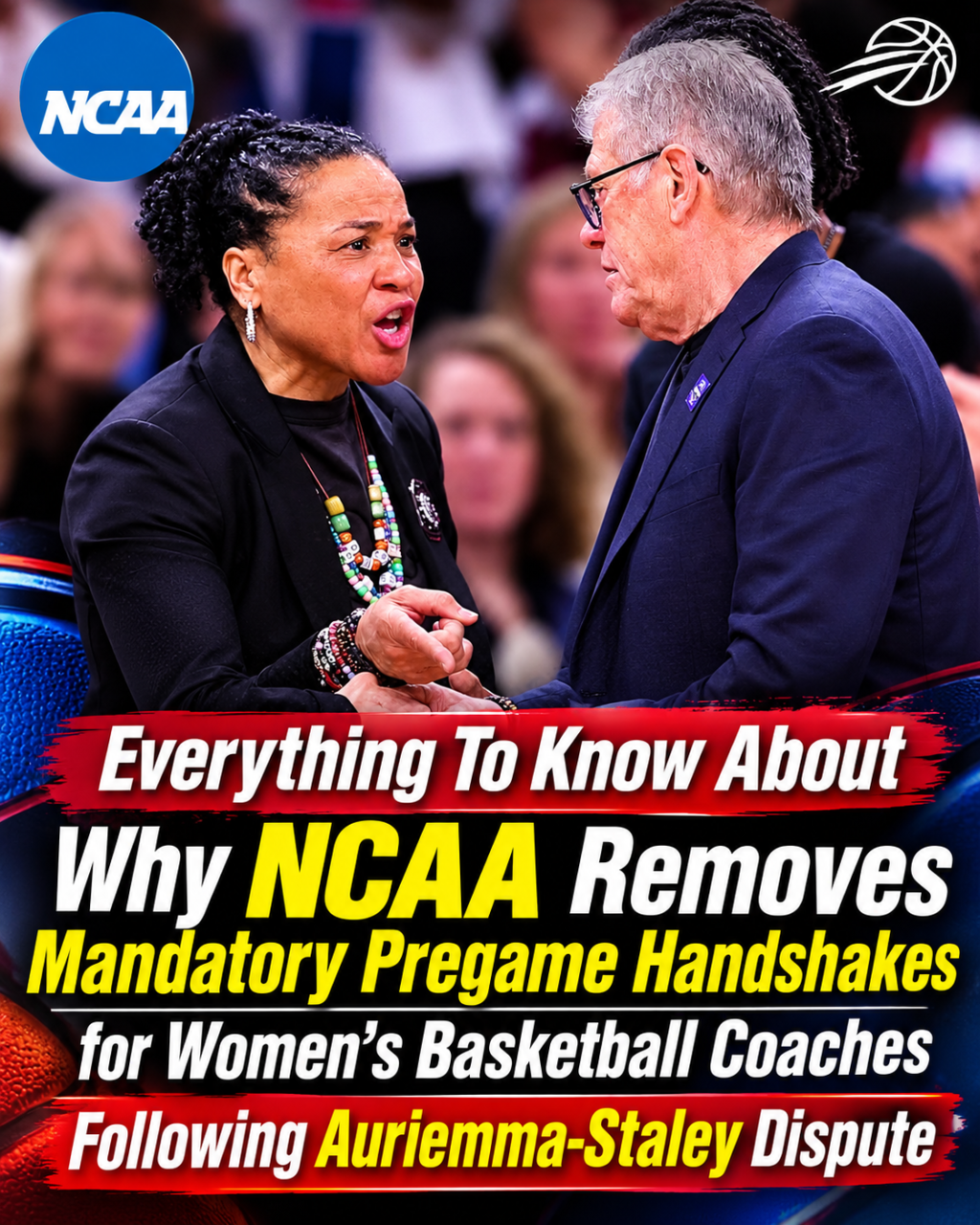
The NCAA has introduced a significant change to its women’s basketball tournament procedures, eliminating the requirement for opposing head coaches to shake hands before games. The decision follows the highly publicized confrontation between UConn’s Geno Auriemma and South Carolina’s Dawn Staley during last season’s Final Four.
The policy adjustment was included in a memorandum distributed Friday, November 20, by Lynn Holzman, the NCAA’s vice president of women’s basketball. The communication was sent to athletic directors, senior women’s administrators and sports information directors nationwide. USA TODAY Sports obtained a copy of the memo.
According to the document, the NCAA’s committee has approved a change that makes pregame handshakes optional rather than mandatory.
“The committee approved a policy change to no longer require coaches to shake hands pregame,” a bullet point in the document reads. “The committee encourages coaches to shake hands informally before team introductions.”
Although the adjustment is intended to maintain sportsmanship while giving coaches flexibility, its timing has drawn attention because of the disagreement involving Auriemma and Staley after South Carolina defeated UConn in the 2026 Final Four.
The Auriemma-Staley confrontation that preceded the change
The incident occurred during the closing moments of South Carolina’s Final Four victory over UConn last season. As the game approached its conclusion, Auriemma walked toward Staley’s sideline and briefly shook her hand. However, the interaction quickly escalated into a heated exchange.
Assistant coaches and officials eventually intervened to separate the two head coaches.
During his postgame press conference, Auriemma suggested that he was upset because he believed Staley had failed to acknowledge him with a handshake before the contest.
“For 41 years I’ve been coaching, 25 Final Fours and before the game, the protocol is you meet at halfcourt,” Auriemma said. “Anybody ever see that before? Two coaches meet at halfcourt and shake hands. Correct? Ever see it? They announce it on the loud speaker. And I waited there for like three minutes. (shrugs) So it is what it is.”
However, photographs and videos from before the game contradicted Auriemma’s account, showing that the expected pregame interaction had taken place.
Staley also addressed the situation during an interview with Holly Rowe, insisting that she had not intentionally disrespected her opposing coach.
“I’m going to let you know this, I’m of integrity. I’m of integrity,” Staley said. “So if I did something wrong to Geno, I have no idea what I did, I guess he thought I didn’t shake his hand at the beginning of the game, I don’t know. I went down there pregame, shook everybody on his staff’s hand … but hey sometimes things get heated. We move on,”
Auriemma subsequently apologized
The UConn head coach addressed the controversy the following day, issuing a public apology for his behavior after the game.
“There’s no excuse for how I handled the end of the game vs. South Carolina. It’s unlike what I do and what our standard is here at Connecticut,” Auriemma said. “The story should be how well South Carolina played, and I don’t want my actions to detract from that. I’ve had a great relationship with their staff, and I sincerely want to apologize to them.”
His statement acknowledged that his reaction had taken attention away from South Carolina’s performance and the significance of its victory.
The NCAA’s decision to remove mandatory pregame handshakes now gives coaches the option to handle those interactions informally before team introductions.
South Carolina and UConn prepare for another meeting
The timing of the policy change is particularly interesting because South Carolina and UConn are scheduled to meet again for the first time since their Final Four confrontation.
The two programs are set to face each other Tuesday, November 24, at 8 p.m. ET on FS1.
With Staley and Auriemma once again preparing to coach against each other, the matchup carries additional attention following their previous encounter. However, the focus will ultimately return to the players and the competition on the court.
Other NCAA Tournament changes
The removal of mandatory pregame handshakes is not the only adjustment included in the NCAA’s latest memorandum. Several additional changes will affect tournament operations, player reporting and media access.
1. Updated player availability reporting: The NCAA outlined changes to the procedures governing player availability information during the tournament.
2. Shot-clock display adjustments: Hosts with the necessary technology must display tenths-of-a-second on shot clocks during the first three rounds. The requirement will become mandatory for every host site in 2028.
3. Restrictions on arena replays: Schools and tournament venues will be limited to showing a particular replay or highlight on their in-arena video boards no more than four times.
4. Press conference transcription services eliminated: The NCAA will no longer provide transcription services for tournament press conferences, changing how members of the media access and document coaches’ comments.
5. Changes to regional-final media access: Teams competing in regional finals will no longer participate in NCAA-hosted press conferences or provide open locker-room access on the day between the Sweet 16 and Elite Eight.
What the handshake policy means going forward
The NCAA’s decision removes a longstanding pregame expectation and gives opposing coaches more flexibility in how they acknowledge one another before competition.
While the adjustment follows the widely discussed disagreement between Auriemma and Staley, it also represents a broader procedural change for women’s college basketball.
For South Carolina and UConn, their November 24 meeting provides an opportunity to move beyond last season’s controversy and return attention to one of the sport’s most prominent matchups.
This time, the conversation surrounding the game will have another storyline: whether the two coaches can keep the attention where it belongs — on basketball.
About The Author