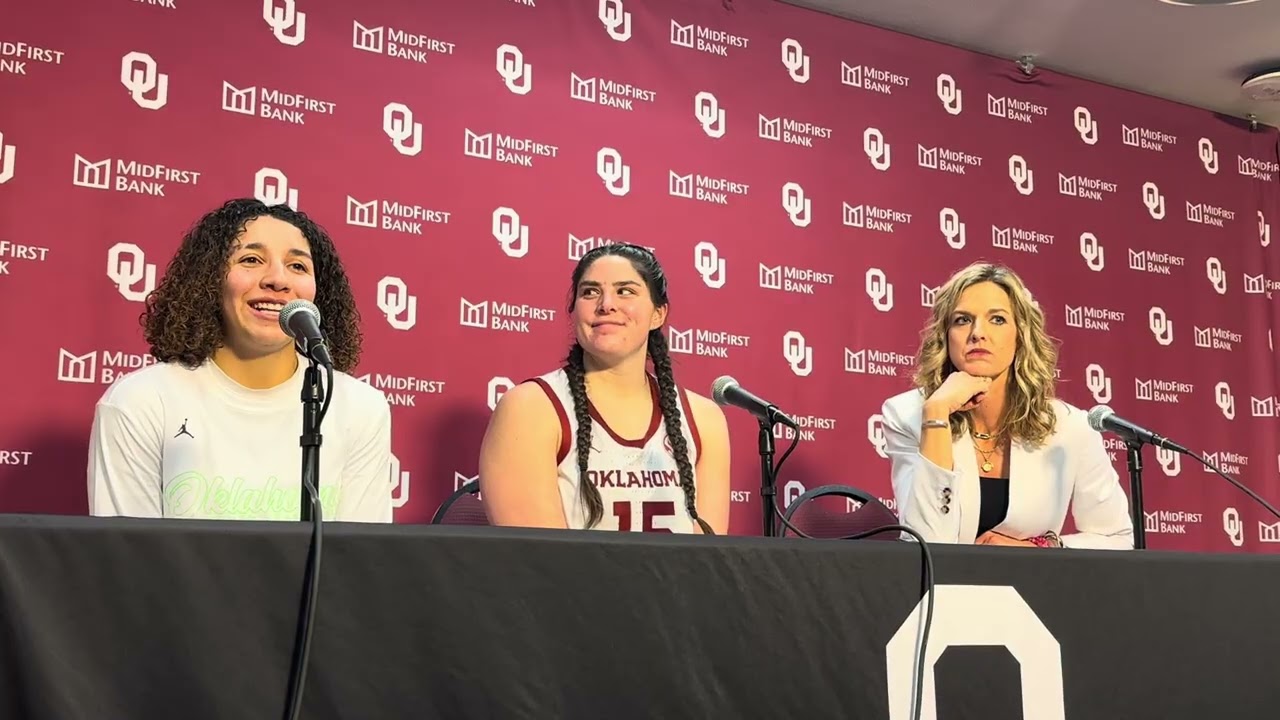
Oklahoma head coach Jennie Baranczyk offered deep insight into her team’s transformative 94-82 overtime victory against top-ranked South Carolina, crediting a collective shift in energy and approach rather than individual heroics, according to On3.
Chavez’s Overtime Takeover: A Team Effort
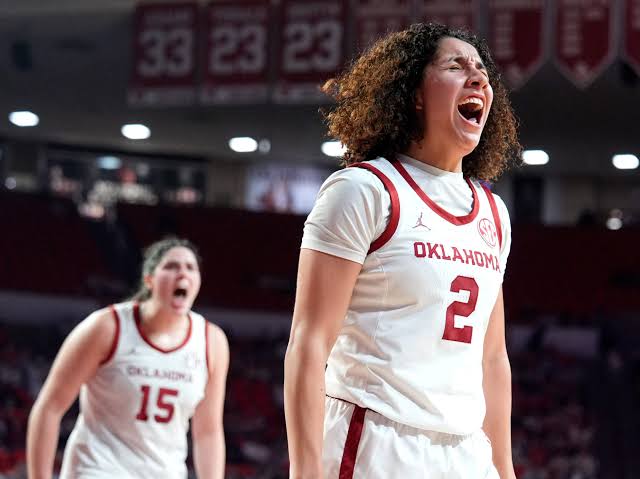
When asked about Aaliyah Chavez’s explosive 15-point overtime performance after struggling earlier, Baranczyk emphasized the broader context.
“Well, I saw a team today. That’s the team that, you know… Winning a game like this is huge, and with the crowd is huge. But I saw us back, and our energy back. And sometimes, the outcomes take care of themselves when you have that. So, that’s how we feel right now,” Baranczyk explained.
She praised Chavez’s mindset during the critical extra period: “I thought Aaliyah, especially in that overtime, she was just like, ‘Okay, let’s go.’ Not, ‘I got to do anything,’ or ‘I need to make sure I’m doing this.’ She got the ball where needed to go, and she just played — and the joy she played with, and the energy she played with. But she had the same energy for her team the whole game. So, there was a difference, I think, in us today that really allowed her to do that. And I think everybody on her team knows that’s in her, knows it’ll come out and has an incredible belief in the person that she is.”
Rather than crediting individual brilliance, Baranczyk highlighted how the entire team’s improved energy unlocked Chavez’s potential.
Managing the Final Minutes: Trust Over Control
Baranczyk discussed the delicate balance between coaching intervention and player autonomy during Oklahoma’s late-game struggles before their overtime dominance.
“That’s why we try to play those live because sometimes you don’t. And we could have probably called timeouts; we could’ve seen things. But we had the right ideas. We just got a little tight and a little hesitant. And they were too good. They’re going to capitalize on that. They always do, they always will, and they did. But I think between that and then having to get a stop, and then getting a stop…”
She revealed her timeout message focused on moving forward rather than dwelling on mistakes: “It wasn’t a timeout that was like, ‘Okay, let’s go now.’ It was more of ‘Okay, let’s go. You got your next time.’ I don’t even think we brought up overtime; I don’t think we said anything else. I think we just went right to what we needed to be able to do. And I thought we did a better job of that tonight — just moving on to the next thing and not carrying something with us from one thing to the next. I think we were just used to doing that, so it didn’t seem too big.”
What Changed After Three Straight Losses
Baranczyk identified specific players whose energy transformation sparked the victory.
“Sahara Williams was different. Her energy was different, her intensity… I thought Zya Vann was different. I thought her energy was good; I thought her ability to step up and move on to the next play was really good. I thought Payton Verhulst was amazing. I thought her movement, her practices were good. I think she did great. How about Keziah Lofton, Brooklyn Stewart? I mean, it was team today. We were just so much about a team. It wasn’t, ‘Okay, Aaliyah, go do your thing. Raegan (Beers), hey, we’re just going to get you the ball. Okay, Sahara, you do this.'”
She contrasted the collective panic at regulation’s end with the composed overtime execution: “Now, the hard part is we all panicked all at the same time at the end of the game, right? So, we’re going to learn that. But then, we got the second chance in overtime, and we go. You fed the hot hand, and they saw those types of things. So, that, to me, was what was different — the approach to the game, not the outcomes in the game.”
Trusting Players Through Pressure
Reflecting on the final 42 seconds of regulation—when Raegan Beers’ putback tied the game and Oklahoma secured a crucial stop—Baranczyk revealed her internal coaching battle.
“The whole time that I was in it, I kept being like, because the coach in me wants to control the moment and call the timeout and manage it. I have so much trust in them, and it’s January, and we’re going to play this thing to the long game. You have to learn how you feel in those moments because now, when we practice in those moments, we know how it feels. I have always been a proponent of, ‘They have the keys, they can do this, they can figure it out.’ And honestly, if we don’t hesitate on a couple, we’re pretty good, right? And they’re good. But we had the looks that we wanted. We just weren’t sharp enough.”
She described her philosophy of player empowerment: “Now, we reset in overtime; and then, we were really good. So, the whole time in my head, I kept battling my own ego of wanting to call the timeout. But I really wanted to watch them go through it, and they did it. I knew they would get a stop. Sometimes, you just know that you have to believe in your team, even when you, quote, unquote, ‘shouldn’t.’ But I’m going to every day, even when it’s not going well.”
Maintaining perspective, she added: “This isn’t the end of our road. This isn’t a Super Bowl win because, if it is, then you’re not ready for the next one in this league. You got to be ready for everyone. I think we’ve learned that lesson.”
Impact Beyond the Box Score
Baranczyk acknowledged the victory’s significance for rebuilding fan trust and belief.
“Well, I think it does a lot for the Oklahoma fan and the belief in us — even more than we have belief in each other. I think, the synergy that we have, if you came today, you’re like, ‘Dang, I really like this team. I like what they do; I like how they’re doing it.’ We’ve had a lot of people not like our growth process, and that’s been a challenge. So, one, I think that instills in us that we’re going to do this together, or we’re not going to do it at all. That’s something that we’re going to continue to say.”
She marveled at the crowd’s transformation during the game: “There was a moment — because we always are like, ‘Should you put the curtain around the top, right, so people come down?’ And, at one moment, I’m like, ‘Where did all these people come from?’ Because everybody came down, and they were in it, and they willed it.”
Describing the atmosphere, Baranczyk emphasized the fans’ unconditional commitment: “The energy was, like, you couldn’t help but feel how incredible the energy was. It wasn’t even a, ‘Well, if they win, then we’re going to come back. It wasn’t a, ‘If they play well, how I want them to play, then I’ll cheer for them, right? It was a, ‘I am in this, and I’m going to do whatever I can possibly do to help this team win this game.'”
She credited the home crowd directly: “That’s why we won it — because our fans came down, and they were in it, and they were part of it. They were just as much a part of it as everything else. If we are going to do anything, that synergy matters. I think that’s what people fall in love with when they watch our team. And I think a lot of the faithful are falling in love with the process because it’s not easy. We’re learning, and we went from some ‘me ball’ games to some ‘we ball’ games not because we’re selfish and we’re bad and all these things, but we’re learning.”
Baranczyk framed the victory as part of ongoing development: “I like to learn everything yesterday, too, but today, you got to see us really learn on a high stage. You got to see us learn against a really, really, really good team. And you got to see us not be afraid and just play hard. We made a ton of mistakes, and we’ll continue to do that, but we’re going to grow. We’re just going to go forward, even if it’s an inch — and if this is a big step forward, right? That’s what I think people got to see and feel today, and I think that’s something that we’re not going to go back from.”
“We’re Back” — To Who They Are
When questioned about her colorful language caught on camera during the post-game celebration, Baranczyk clarified her meaning.
“Probably not because I still technically have a boss here right now. When I said that we’re back, and I used a different word, what I mean by that is not, ‘We’re back. Take notice.’ But ‘We’re back to who we are.’ I mean, this has been a hard, hard, hard two weeks that have felt like two months. It’s challenging, and we’ve had hard conversations, and we’ve had way more tears than ever.”
She emphasized the internal rather than external focus: “And so, when I say, ‘We’re back’ — with some other things, very colorful, very passionate — that’s a team moment that I didn’t know that he (the cameraman) was in. And, also, what I mean is, ‘We are back.’ Not ‘Oklahoma is going to go in, and all of a sudden I’m trash talking.’ But it’s about we always.”
Analysis
Baranczyk’s comments reveal a coach who prioritizes long-term development over short-term results while simultaneously recognizing momentum’s importance. Her willingness to suppress her controlling instincts—resisting timeout calls during crunch time—demonstrates rare trust in player development through live-game adversity.
The emphasis on collective energy over individual performance represents mature coaching philosophy. Rather than crediting Chavez alone for the overtime heroics, Baranczyk identified the systemic improvements that created conditions for her star to excel.
Most significantly, her recognition of the fan base’s role—not as passive observers but as active participants in the team’s journey—reflects understanding that program building extends beyond X’s and O’s. The “we’re back to who we are” message signals Oklahoma’s identity recovery after a difficult stretch, positioning this victory as validation of their process rather than destination.