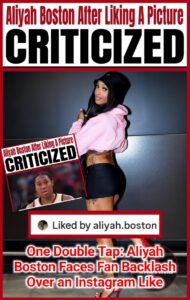
One Double Tap: Aliyah Boston Faces Fan Backlash Over an Instagram Like
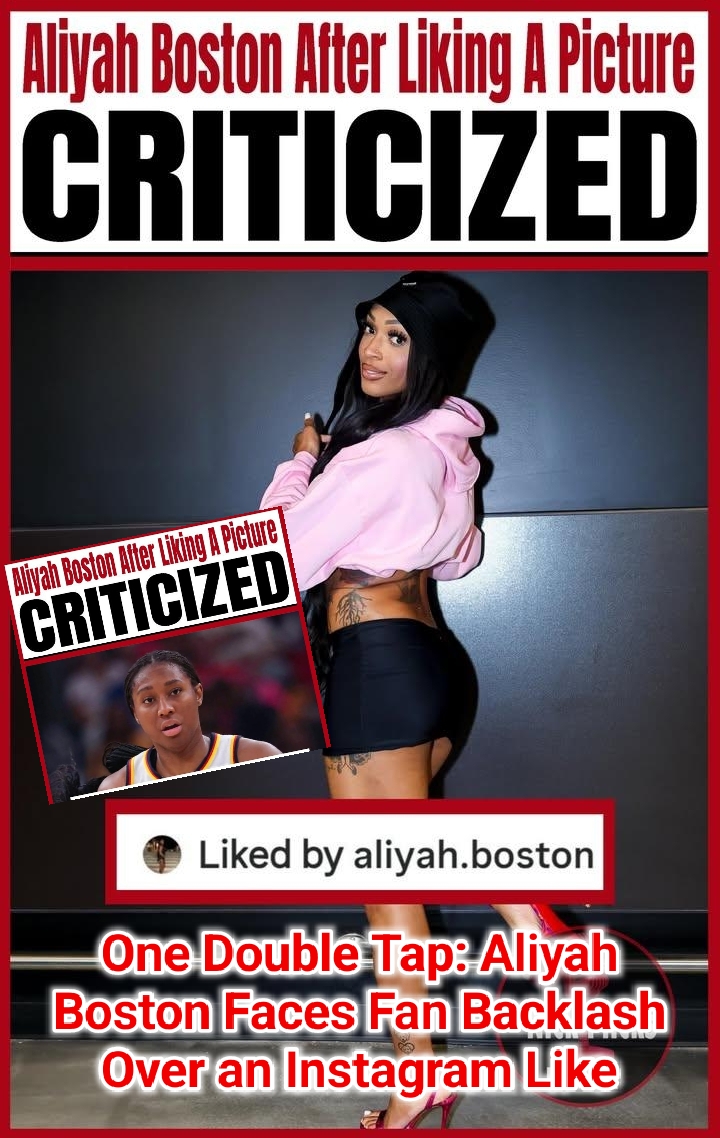
A single Instagram “like” has turned into a talking point. Indiana Fever forward Aliyah Boston liked a post from WNBA guard DiJonai Carrington, and some fans of the team reacted as if it were a betrayal. In a league where every interaction is dissected, the like became fuel for debate.
What Happened Between Carrington and Clark
The 2024 playoff eye poke. Then with the Connecticut Sun, Carrington struck Clark in the eye with a fingernail during the Sun’s win in the first round of the playoffs, while trying to block a pass. Clark said at the time “It wasn’t intentional by any means,” and Carrington also denied hitting her on purpose.
The aftermath. The incident became a flashpoint. USA Today’s Christine Brennan asked Carrington whether she intended it and whether she joked about it afterward; Carrington denied both. A later Instagram Live in which Carrington and her girlfriend appeared to joke about eye pokes fueled more criticism.
Earlier contact. In a June 2024 game, Carrington bumped Clark after being late to her because of a screen set by Boston.
The Cunningham Incident
The latest chapter came this August. Carrington was ejected for a Flagrant 2 foul on Sophie Cunningham, and then posted “WHITE PRIVILEGE” on social media targeting the Fever. The foul came when Cunningham drove for a layup and Carrington made contact with her head, sending her to the floor.
Cunningham’s reaction: She got up immediately and pushed Carrington while a teammate held her back, and later called the foul “intentional.” Carrington said it was not intentional, but warned “it might happen again” because of her style of play, and asked for consistency in how the league handles ejections and retaliation. (Chicago’s DiJonai Carrington ejected for foul on Indiana’s Cunningham and posts ‘white privilege’ +2)
The old video resurfaces. An older Carrington-Clark video drew over a million views, and Dave Portnoy called her the “dirtiest player in the game.” The race post also sparked wider debate about whether race shaped the reaction. (Yahoo Sports)
The Reaction
Critics tied the like to Carrington’s history with Fever stars Caitlin Clark and Sophie Cunningham, which several fans cited without giving specifics. The strongest reactions:
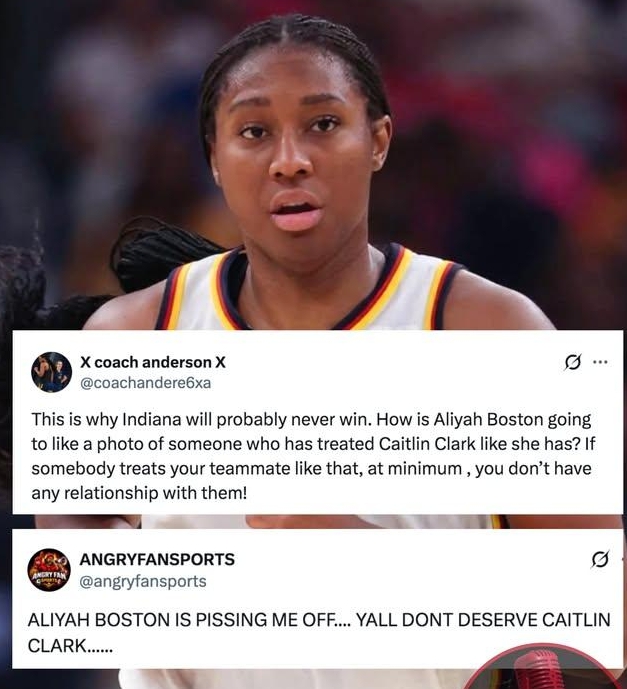
- One fan wrote: “This is why Indiana will probably never win.”
- The same fan argued that a teammate treated badly by someone means “you don’t have any relationship with them.”
- Another account said fans “don’t deserve Caitlin Clark” and that Boston was upsetting them.
- A third found it strange that Boston liked Carrington’s posts “while not even liking Caitlin’s recent post.”
- A fourth predicted that “Fever fans are going to think” a lot about it, given the history.
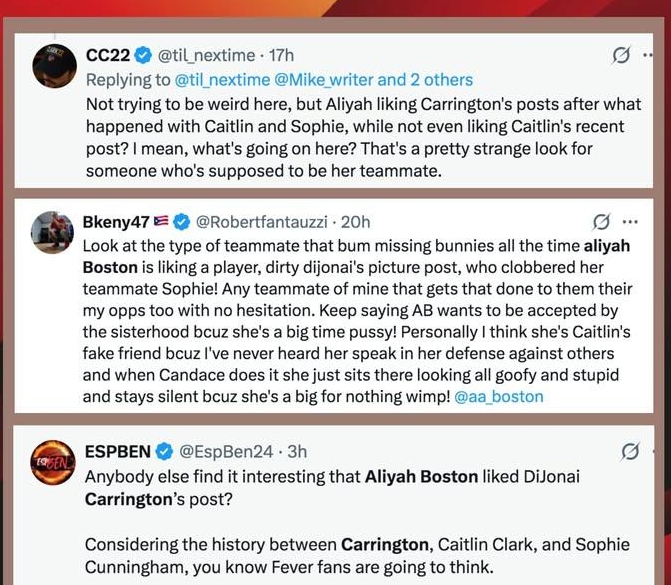
Some posts went further into personal insults aimed at Boston, which I’ve left out because they were abusive rather than informative.
The Context
The backlash lands on top of a tense backstory. Carrington and Fever fans have clashed before. She accidentally poked Clark in the eye during a 2024 playoff game, and while Clark has rejected any notion that the hit was intentional, Carrington received criticism and a racist death threat. Boston and Carrington have also faced off on the court, including a block by Boston that the Fever’s account later highlighted.
Boston has her own history with online hate. After a Fever season ended, she said she was “at the other end of those hate comments” and that it was a big reason she took a break from social media. Earlier, in another end-of-season press conference, she said she “wouldn’t put everything on Fever fans.”
Analysis
- A like is a thin basis for conclusions. It could mean friendship, respect, a casual tap or nothing at all, so the criticism rests on assumptions about what she meant.
- Fans expect teammates to pick sides. Many reactions treat social media behavior as a loyalty test, a pattern common in sports fandoms.
- Boston has been through this before. She has spoken about harassment from her own fan base, which adds irony to a backlash over a harmless interaction.
- Players are also colleagues. WNBA players often know each other from college, national teams or overseas play, so friendly relationships across teams are normal.
Key Takeaways
- The incident: Boston liked a post from Carrington.
- The backlash: Fans criticized her, citing Carrington’s history with Clark and Cunningham.
- No response yet: I found no comment from Boston, Carrington or the Fever.
- The bigger issue: Fan scrutiny of players’ social media keeps growing, and it has hit Boston before.
Conclusion
The episode says more about fan culture than about Boston. It shows how quickly one tap can become a referendum on loyalty, especially in a rivalry-heavy league. Unless Boston addresses it, the story will probably fade, but the debate over how much players owe fans in their online behavior is likely to continue.
About The Author