
Raven Johnson’s Rookie Season: A Frustrating Cycle of DNPs and Fleeting Minutes
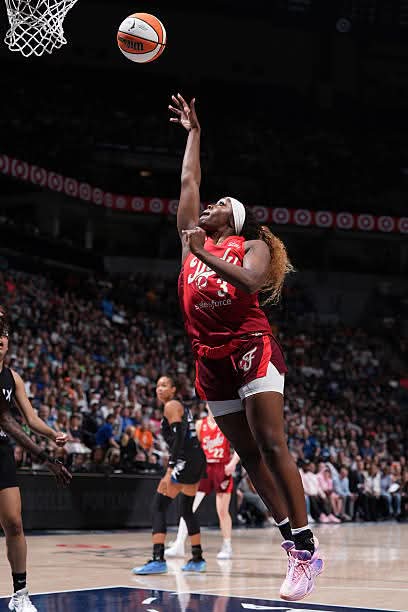
MINNEAPOLIS, MN - AUGUST 2: Raven Johnson #3 of the Indiana Fever drives to the basket during the game against the Minnesota Lynx on August 2, 2026 at Target Center in Minneapolis, Minnesota. NOTE TO USER: User expressly acknowledges and agrees that, by downloading and or using this Photograph, user is consenting to the terms and conditions of the Getty Images License Agreement. Mandatory Copyright Notice: Copyright 2026 NBAE (Photo by Jordan Johnson/NBAE via Getty Images)
Raven Johnson’s rookie transition to the WNBA has taken a puzzling turn in recent weeks, with the former South Carolina star bouncing between the bench and brief, high-pressure cameos that leave fans asking a fair question: what exactly is Indiana’s coaching staff looking for?
A frustrating recent stretch
The pattern has been jarring to watch. After sitting as a DNP, Johnson was suddenly inserted into Indiana’s last game against Indiana’s own opponent, only to log a single minute of action. Days later, she was thrown into a matchup against a hot Minnesota Lynx squad, scored 2 points in 3 minutes, and was pulled right back to the bench. That kind of short-leash usage — brief appearances against tough opponents with almost no runway to find a rhythm — is exactly the kind of inconsistent deployment that makes it difficult for any young player to build in-game confidence, let alone one still adjusting to the speed and physicality of professional basketball.
A crowded backcourt working against her
Context helps explain why Johnson’s minutes have been so hard to come by. Indiana’s guard rotation is packed: Caitlin Clark, Kelsey Mitchell, Sophie Cunningham, Lexie Hull, Tyasha Harris and Bree Hall all occupy the same positional space Johnson does. Even before the 2026 WNBA Draft, evaluators flagged this exact issue — while Johnson was viewed as efficient offensively and strong defensively, most saw her rookie role as a matter of competing for playing time behind an already talented Indiana backcourt, rather than being handed a clear path to minutes. That evaluation has largely played out as expected, though “competing for playing time” has translated into some genuinely unpredictable usage patterns from game to game.
The numbers reflect the uneven role
Johnson’s season averages tell the story of a player who hasn’t been given the volume needed to find consistency. Earlier in the season, she was averaging just 3.3 points, 2.2 rebounds and 1.3 assists per game, shooting 35.0% from the field and a rough 18.2% from three-point range. A plus-minus figure sitting around -14 for the season (roughly -2.3 per game) further underscores how difficult it’s been for her to make a consistent positive impact in her limited windows on the floor.
That stands in sharp contrast to what made her a first-round pick in the first place. Johnson was taken 10th overall after a standout final season at South Carolina, where she averaged 9.9 points, 5.1 assists, 4.0 rebounds and 1.5 steals in nearly 29 minutes per game while helping the Gamecocks reach the national championship game. The gap between that senior-year workload and her current sporadic WNBA minutes is stark — and it’s a common, if difficult, adjustment many accomplished college stars face when entering a league loaded with established veterans at their position.
A résumé that hasn’t disappeared
It’s worth remembering just how decorated Johnson’s college career actually was. A two-time NCAA champion, SEC Defensive Player of the Year, and a McDonald’s All-American coming out of high school, she built her reputation on both playmaking and defensive versatility — traits that don’t simply vanish because her current role is inconsistent. If anything, her defensive pedigree in particular suggests she could be more valuable in extended minutes than these brief, low-context appearances allow her to show.
What comes next
Indiana currently sits at 4-4 on the season under head coach Stephanie White, with the Fever set to face Minnesota again on August 2. Whether Johnson’s role stabilizes going forward likely depends on matchup-specific coaching decisions as much as her own performance in limited opportunities — a frustrating reality for any rookie, but especially one who spent her college career as a featured, high-usage floor general. For now, the pattern described — DNPs followed by brief, high-leverage minutes against tough opponents — remains the central storyline of her rookie season, and it’s a fair question whether that usage is setting her up to succeed or simply making it harder for her to ever find a rhythm.
About The Author