
South Carolina Must Fix Turnovers and Defensive Issues Ahead of North Carolina Showdown
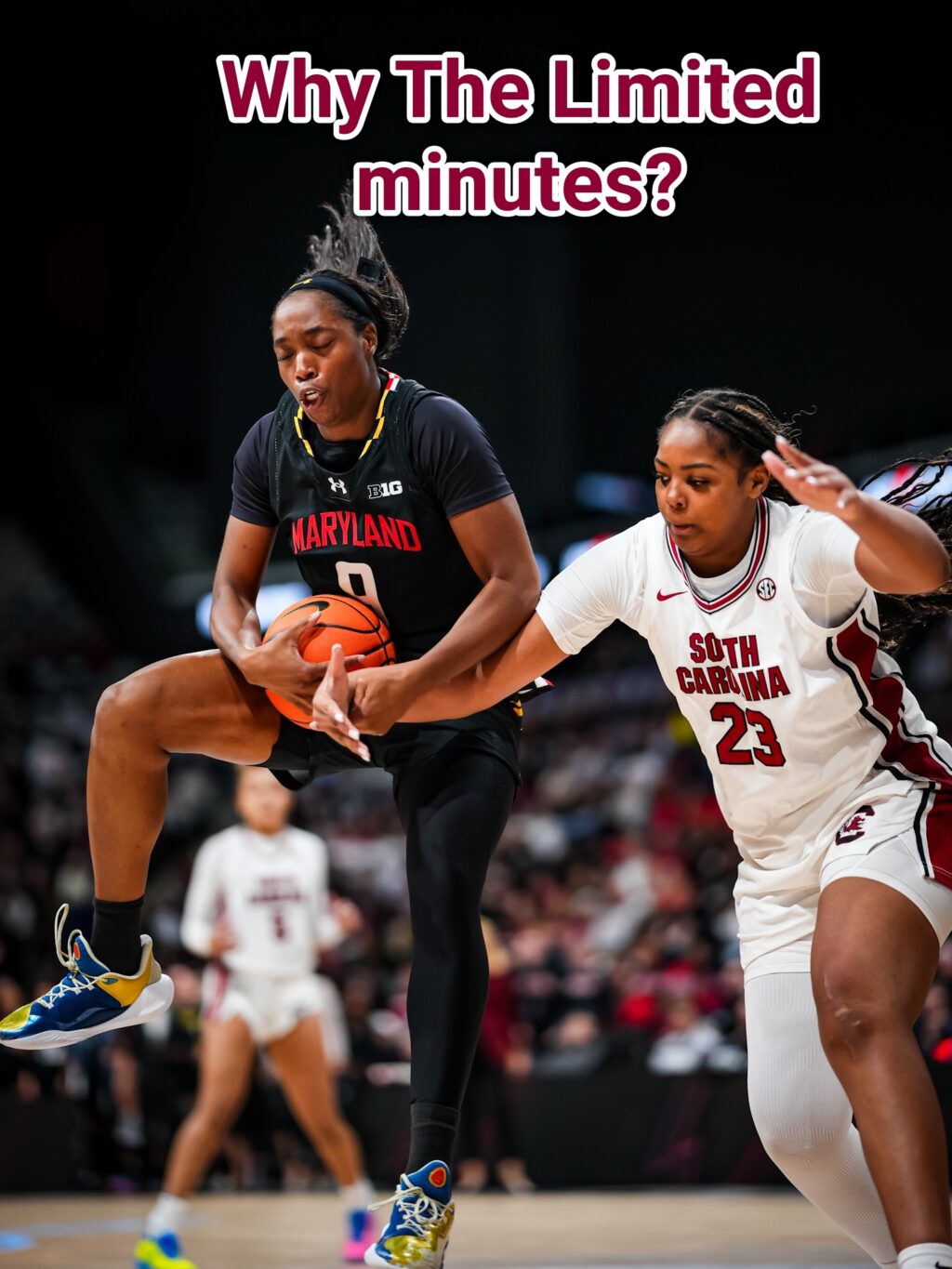
Limited Minutes for South Carolina’s Young Players
South Carolina’s Kelsi Andrews and Justine Loubens saw only five minutes of combined action, but they still managed to contribute two steals, one block and an assist. Oliviyah Edwards and the injured Kaeli Wynn did not get on the court.
Head coach Dawn Staley had hoped to give Andrews, Loubens and Edwards opportunities during the fourth quarter. However, the competitive situation against Maryland forced her to rely on more experienced players.
Staley expressed her disappointment about missing the opportunity to rotate her younger players, particularly after South Carolina surrendered its halftime advantage.
“They should have played,” Staley said, still frustrated over the blown halftime lead. “If we had kept the lead, there’s more opportunity for people to get some minutes. But when it got down to 10 (points) and then a two-possession game, you’ve got to go with the people that have been there.”
3. Turnovers Could Become a Major Concern
Turnovers were a problem for both South Carolina and North Carolina in their respective Monday matchups. Each team gave the ball away 17 times, a number that was manageable but still highlighted an area requiring improvement.
The concern for South Carolina is particularly significant because North Carolina uses an aggressive full-court press and several different zone defenses in the half-court. Those defensive approaches resemble the strategies Maryland used effectively after halftime.
Against Maryland, South Carolina committed 10 turnovers in the second half, allowing the Terrapins to generate 18 points from those mistakes.
The difference between the two halves was noticeable. South Carolina managed to prevent Maryland from comfortably organizing its defense early in the game, limiting the Terrapins to just six points off turnovers in the first half.
Robinson emphasized the importance of ball security and purposeful offensive execution.
“I think taking care of the ball is always one of the big things,” Robinson said. “We play great competition. So that’s definitely one of them. Playing together and flowing through offenses, hard cuts, things like that. Just being very intentional with every movement.”
Interestingly, South Carolina also struggled to capitalize on its opponent’s mistakes as the game progressed.
The Gamecocks collected 21 points from 13 Maryland turnovers in the first half, but their production dropped considerably after halftime, when they scored just four points from three turnovers.
North Carolina also had turnover problems against Oklahoma. Although the Tar Heels won the turnover battle, forcing 21 mistakes that produced 27 points, those extra possessions helped them remain competitive.
Defensive Performance Must Improve
Defense has traditionally been one of the biggest strengths of both South Carolina and North Carolina. That made their performances in Paris particularly surprising, with the Gamecocks allowing 93 points and the Tar Heels surrendering 91.
Maryland and Oklahoma deserve recognition for their offensive performances, as both programs have dangerous scoring options. Nevertheless, several defensive problems originated from mistakes on the offensive end.
Turnovers and questionable shot selection prevented both Carolina teams from getting properly organized defensively.
South Carolina struggled with its shooting after halftime, converting only 40% of its attempts. The Gamecocks were especially inefficient in the third quarter, making just six of 18 shots.
North Carolina experienced similar difficulties, shooting 36.4% after halftime and connecting on only six of 20 attempts during the decisive third quarter.
The Tar Heels also struggled to finish around the basket and convert from the free-throw line. They made just 13 of 27 layup attempts and 10 of 17 free throws.
These shortcomings could become important against another high-level opponent.
Scouting North Carolina: What the Tar Heels Bring
Since Courtney Banghart took charge in Chapel Hill, North Carolina has developed a reputation for playing disciplined defense. However, offensive consistency has sometimes been a challenge.
That is an area the Tar Heels expected to improve this season following the arrival of Harpring and Oklahoma State transfer Achol Akot, alongside the return of Nyla Brooks and Reniya Kelly.
Their opening performance against Oklahoma offered encouraging signs, but also revealed some weaknesses.
Harpring attempted 26 shots, an unusually heavy workload, particularly for a freshman. Additionally, 40 of North Carolina’s 86 field-goal attempts came from beyond the three-point line.
Although Maryland and North Carolina share several defensive characteristics, their offensive approaches differ significantly, especially in their reliance on outside shooting.
Robinson discussed the challenges South Carolina should expect:
“A lot of the things that Maryland does, but they shoot a lot more threes. I think against Oklahoma, 40 out of 86 field goal attempts were threes. They like to get them up. They like to play at a fast pace and to get up and down the floor. They’ve got some guards that can shoot it. I think Harpring presents a problem because she’s super competitive, can knock down open threes, (and) can create and playmake for other people. She’s a really solid player as a freshman. But they’ve got other key pieces that just do their job. They’re a physical basketball team. They rebound the ball extremely well, and we’ll be challenged on Sunday.
North Carolina had five players reach double figures against Oklahoma, although Harpring was the only player to score more than 13 points.
The Tar Heels would benefit from distributing their offensive production more evenly. Their three-point efficiency also needs considerable improvement after shooting just 27.5% from beyond the arc.
South Carolina Must Defend the Three-Point Line
One of the biggest lessons from the Maryland matchup is the importance of defending the perimeter.
South Carolina allowed Maryland to shoot an impressive 43.3% from three-point range, including nine successful attempts on 15 second-half opportunities.
Sophomore Addi Mack was particularly difficult to contain. She connected on six of 10 three-point attempts and finished with a career-best 35 points.
Her shooting performance has given South Carolina another reason to emphasize perimeter defense during preparations for North Carolina.
Robinson highlighted the difference between Maryland’s offensive approach and the threat presented by the Tar Heels.
“Maryland was more of a driver team, a slashing team, and UNC is really, really effective from the outside,” Robinson said. “Quick shots, transition threes, things like that. Very dangerous from the arc, so we’ve got to focus on that.”
Final Takeaway: South Carolina Has Important Adjustments to Make
South Carolina’s upcoming matchup against North Carolina presents several challenges that Dawn Staley’s team must address.
The Gamecocks need to improve their ball security, make better offensive decisions and prevent opponents from finding easy scoring opportunities in transition.
Most importantly, perimeter defense will be critical against a North Carolina team that is comfortable taking a high volume of three-point shots.
After the second-half collapse against Maryland, South Carolina has an opportunity to demonstrate that it can make the necessary adjustments.
The key question heading into Sunday’s showdown is whether the Gamecocks can protect the basketball, control the defensive boards and limit North Carolina’s outside shooting.
About The Author