South Carolina’s Point Guard Crisis: A Roundtable Reveals Cautious Optimism, Not Panic
Maddy McDaniel’s departure has forced South Carolina’s championship outlook into genuinely uncharted territory, but a closer look at how the program’s most attentive observers are processing the situation reveals something more nuanced than alarm — a program that’s taken a real hit, but one still positioned to compete at the highest level.
The consensus: a real setback, not a fatal one
Across the board, the assessment of McDaniel’s exit lands somewhere between minor inconvenience and serious complication, but never catastrophe. South Carolina entered the offseason already flagged by these same evaluators as having point guard as its single biggest concern — even with McDaniel still on the roster. That existing worry means her departure doesn’t introduce a new problem so much as it removes the one player who was supposed to solve it.
Still, the program’s overall talent level appears deep enough to absorb the loss for most of the regular season. South Carolina’s non-conference and SEC schedule is considered demanding enough on its own to force the roster to sort out its rotation naturally, well before postseason play begins — meaning some early-season stumbles may actually serve a useful developmental purpose rather than signaling a genuine crisis. What does look more likely to disappear is any realistic shot at an undefeated season, given how unsettled the backcourt currently is.
There’s also a meaningful distinction drawn between South Carolina’s standing relative to the rest of the country versus its own internal challenges. Because this offseason was unusually quiet across the sport’s other elite programs — few of last year’s top teams significantly upgraded their rosters — South Carolina’s talent edge over the field may hold up even without a clear point guard, shifting the program from a runaway favorite to simply one of several top contenders rather than knocking it out of contention entirely. The comparison drawn between UCLA’s dramatically different outcomes across recent seasons serves as a pointed reminder of just how much difference elite point guard play can make in March, regardless of overall roster talent.
Why the SEC and NCAA Tournament carry the most risk
The regular season is broadly viewed as survivable even without a true point guard, but the concern sharpens considerably when it comes to marquee matchups — top-tier SEC opponents and deep NCAA Tournament runs, particularly from the Sweet 16 onward. That’s where elite competition tends to expose exactly the kind of structural weakness a missing primary ball-handler creates, since tighter games against better opponents leave far less room for makeshift solutions.
The shared hope is that South Carolina will have largely worked out its point guard-by-committee approach by the time March arrives, even if that process looks unconventional along the way. There’s also broad confidence that if any coach in the country can manage this kind of adjustment successfully, it’s Dawn Staley — a vote of confidence rooted in her overall program-building track record rather than any specific fix already in place.
Tessa Johnson’s expanded role: capable, but not a full replacement
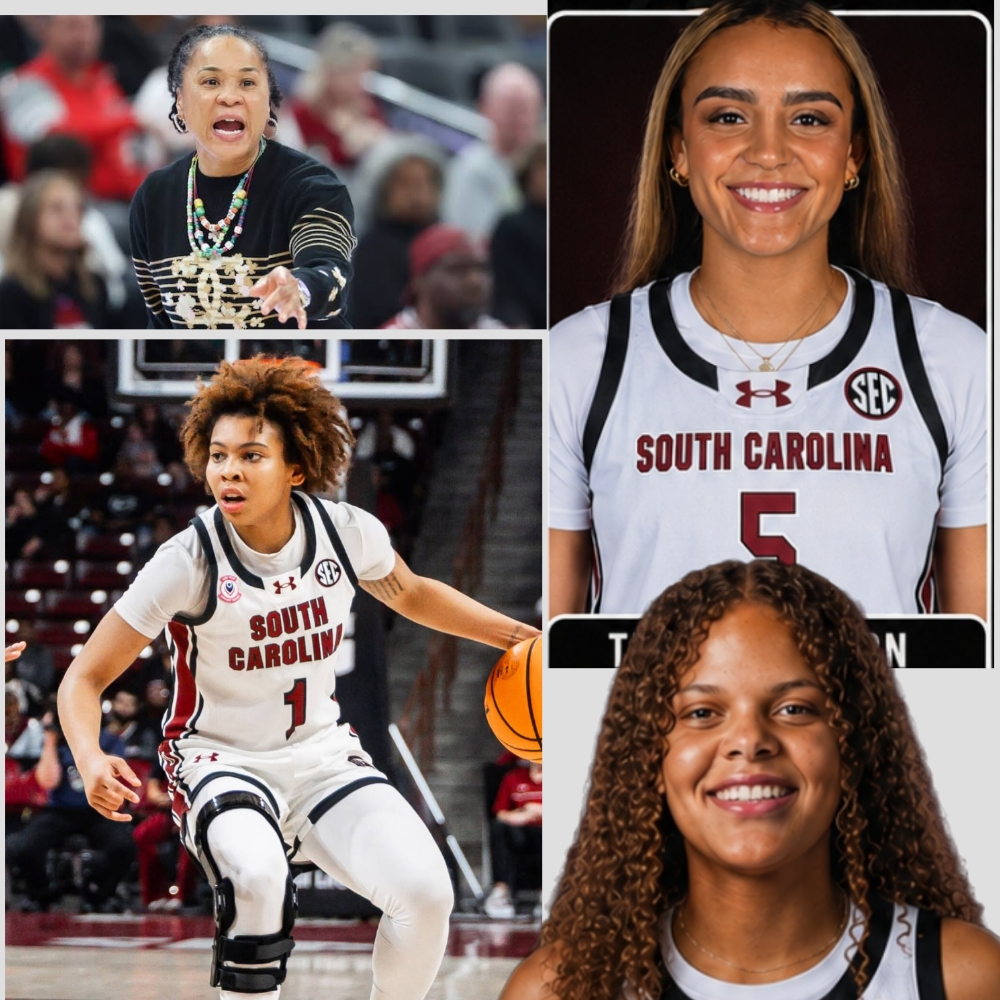
On the question of whether Tessa Johnson can handle primary point guard duties, the analysis converges on a similar theme: her role will necessarily change, but she won’t be asked to replicate the full, all-encompassing workload that past South Carolina point guards like Raven Johnson or Ty Harris carried. Instead, the expectation is a genuinely shared, committee-based approach, with Johnson, Agot Makeer, Jerzy Robinson and Chloe Kitts all absorbing pieces of the ball-handling and offensive initiation responsibilities.
A notable structural adjustment tied to this shift involves leaning more heavily on the post to help initiate offense, not just finish possessions — a schematic answer to not having a traditional table-setter running things from the perimeter. Johnson’s own track record offers some reassurance here; she’s already served as the team’s emergency point guard option in stretches over the past two seasons, and her assist-to-turnover ratio hit a career high last season, suggesting she’s more than capable of increased ball-handling responsibility without a corresponding spike in mistakes. The consistent caveat, though, is that asking either Johnson or Makeer to become a true, full-time point guard is likely too big an ask — the more realistic outcome is a rotating division of labor, with Kitts and Joyce Edwards also picking up point-forward duties depending on matchup. The added defensive versatility each of these players brings is viewed as a genuine asset in making that shared-responsibility model work.
Why an outside fix is considered unlikely
Given the ongoing legal uncertainty around fifth-year eligibility for the class of 2022 — with the NCAA actively appealing recent court rulings — the question of whether South Carolina should pursue a grad transfer point guard or a midseason high school addition produces the most skepticism of any topic in the discussion.
While it’s considered reasonable, even expected, that the coaching staff would at least monitor the landscape given the circumstances, actually pursuing a fifth-year addition is viewed as unlikely and potentially not worth the disruption. Finding a player talented enough to contribute meaningfully at South Carolina, while also possessing the right temperament for a likely reduced role and the toughness required to play under Staley, is considered a genuinely difficult combination to locate on short notice. There is some daylight in this part of the discussion, though — one perspective suggests that if a clear, low-risk upgrade existed, it would be worth pursuing, floating a specific name as a hypothetical fit, while acknowledging real doubt that such a definitive upgrade actually exists in the current pool.
The idea of adding a high school player mid-season draws even more resistance. The general sentiment is that integrating a true freshman point guard fast enough to contribute meaningfully within a single season is exceptionally difficult, made harder by the position’s unique demand for understanding how all five spots function together. Whatever hesitation exists around this idea, if South Carolina does eventually turn to a freshman at point guard, all signs point toward Robinson being the player already positioned for that opportunity, rather than any new addition. A rare successful mid-season precedent is acknowledged, but with an important caveat: that situation involved a program with limited expectations and little to lose that season, a very different set of circumstances than a roster built to contend for a national championship.
The bigger picture
Taken together, this roundtable reflects a program facing a genuine structural challenge rather than a season-ending catastrophe. South Carolina’s roster talent appears deep enough to navigate the regular season through a shared-responsibility approach at point guard, with Johnson, Makeer, Robinson and Kitts all likely to contribute pieces of that solution. The real uncertainty lies in March, when tighter games against elite competition will test whether this makeshift system can hold up against teams with a clear, established answer at the point guard spot — and whether Staley’s track record for in-season problem-solving proves sufficient to close that gap before the games start mattering most.
About The Author