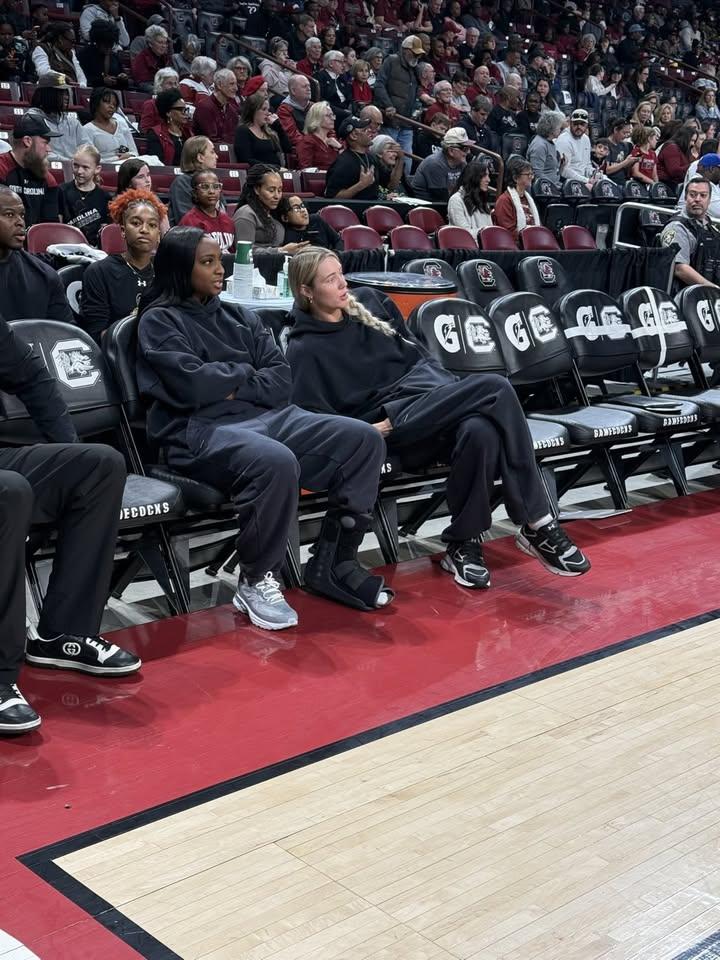
Columbia, SC — South Carolina senior guard Ta’Niya Latson has been observed wearing a protective boot on her left foot, a visible indicator of the ankle injury that has sidelined her from competition and created uncertainty about her return timeline as the Gamecocks navigate the early stages of SEC play.
The Walking Boot: What It Signifies
The presence of the walking boot represents standard medical protocol for managing lower leg injuries and should not necessarily be interpreted as indication of severe injury or extended absence, according to those familiar with South Carolina’s typical injury management approaches.
Standard Gamecock Protocol
For South Carolina’s athletic training staff, implementing boot protocols for lower leg injuries has become routine practice. The conservative approach prioritizes complete healing over rushed returns, even when injuries might not be severe enough to absolutely require immobilization.
Why Medical Teams Use Boots:
The walking boot serves multiple therapeutic purposes in managing ankle and foot injuries. It provides rigid support that prevents movement in directions that could aggravate the injury, particularly the rolling or twisting motions that caused the initial damage. By limiting range of motion during the critical early healing phase, boots reduce stress on injured ligaments, tendons, and soft tissues.
Additionally, boots offer psychological benefits alongside physical protection. Athletes wearing them are forced to rest the injured area rather than unconsciously testing it or compensating with poor movement patterns that could create additional problems. The visible nature of the boot also signals to coaches, teammates, and training staff that the player requires accommodation and should not participate in certain activities.
Typical Boot Timeline
Lower leg injuries requiring boot immobilization typically follow predictable progressions. The initial phase—lasting anywhere from several days to two weeks depending on injury severity—focuses on reducing inflammation and protecting the injury site. During this period, athletes wear the boot continuously except when sleeping or performing specific rehabilitation exercises.
As healing progresses, medical teams transition patients to part-time boot wearing, where the device is used during high-risk activities like walking on uneven surfaces or being around practice environments where accidental contact could occur, but removed for controlled rehabilitation work. Eventually, the boot is discontinued entirely as the ankle demonstrates sufficient stability and healing to handle normal stress.
The fact that Latson is wearing a boot several days after her injury aligns with standard early-phase protocol and doesn’t necessarily indicate severity beyond what Dawn Staley initially described as an ankle sprain.
Context: The Original Injury
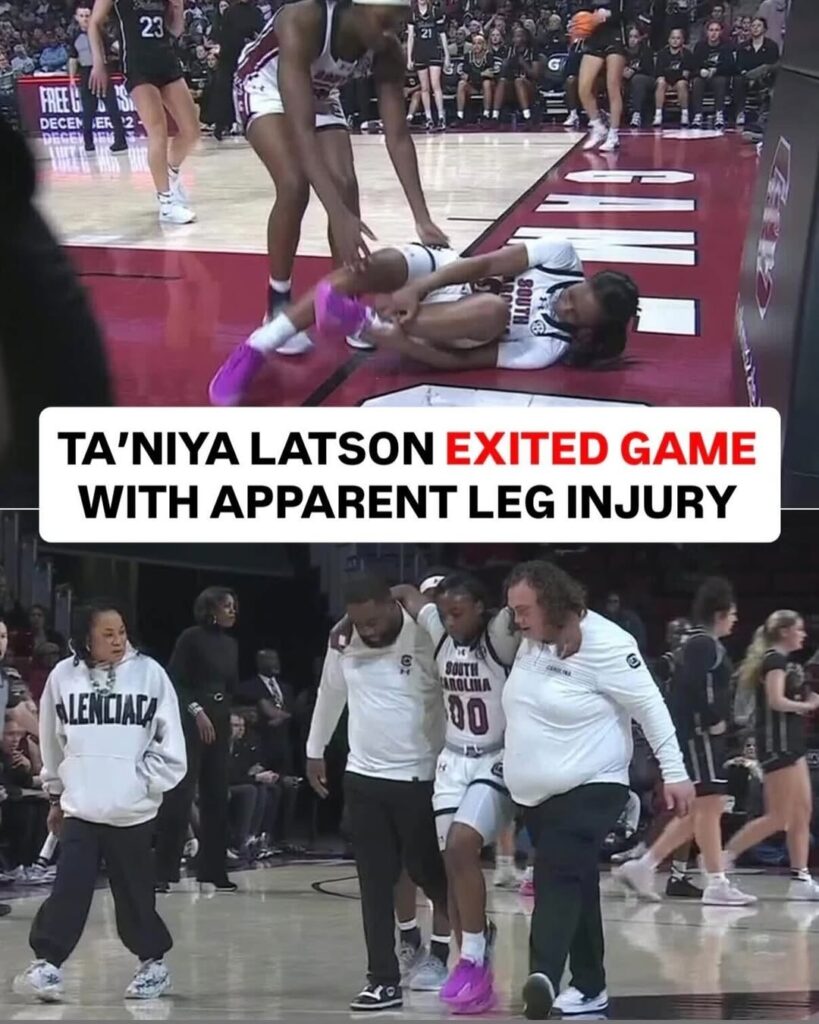
Latson suffered the injury during South Carolina’s game against Providence on December 29. While driving for a transition layup with 4:18 remaining in the first half, she appeared to either step on a defender’s foot or plant awkwardly, losing her balance and falling to the court while immediately grabbing her foot in obvious pain.
The injury was severe enough that Latson could not bear weight on the affected foot as head coach Dawn Staley and athletic trainer Craig Oates helped her to the locker room. In immediate postgame comments, Staley characterized it as “an ankle sprain, for right now. Knock on wood,” suggesting cautious optimism about severity while acknowledging the need for further evaluation.
Subsequent examination led to Latson’s confirmed absence for South Carolina’s SEC opener against Alabama on New Year’s Day, with Staley providing a day-to-day designation for her return timeline: “We’ll take it day-by-day. I’m hoping, I’m praying. If not, we’ve got to keep going.”
The Ankle Sprain Spectrum
Ankle sprains exist on a spectrum of severity that significantly impacts recovery timelines. Grade 1 sprains involve mild ligament stretching with minimal tearing, typically allowing return to activity within one to three weeks. Grade 2 sprains feature partial ligament tearing, usually requiring three to six weeks for complete recovery. Grade 3 sprains involve complete ligament rupture and may necessitate two to three months of rehabilitation, sometimes requiring surgical intervention.
The fact that Staley described Latson’s injury as a sprain rather than a fracture or more severe structural damage provides some reassurance, though the exact grade hasn’t been publicly disclosed. The boot usage suggests medical staff are taking appropriate precautions to ensure complete healing rather than risking reinjury through premature return.
Impact on Availability
Latson missed the Alabama game and her status for upcoming contests remains uncertain. The senior guard’s production—16.9 points, 4.0 assists, 3.5 rebounds, and 1.6 steals per game on career-best shooting percentages—represents a significant loss for South Carolina’s offensive operation.
However, the Gamecocks successfully navigated the SEC opener without her, with freshman Agot Makeer stepping into the starting lineup and contributing nine points and four rebounds while shooting perfectly from three-point range. This successful adjustment provides South Carolina breathing room to properly manage Latson’s recovery without desperation about rushing her return.
The Conservative Approach Philosophy
South Carolina’s athletic training staff has consistently demonstrated preference for conservative injury management, prioritizing long-term health over short-term availability. This philosophy makes particular sense for a program with championship aspirations—risking reinjury or extended absence by rushing players back for early-season games could prove catastrophic during March’s most critical contests.
The boot represents this conservative approach in action. While Latson might be physically capable of walking without the boot, using it during the early healing phase provides extra protection and peace of mind for both medical staff and the player herself.
Looking Forward
As South Carolina continues through the SEC schedule, Latson’s return timeline will become clearer through her progression in rehabilitation. The transition from boot to regular footwear, her participation in practice activities, and medical clearance for game action will all provide indicators of when she might rejoin the lineup.
For now, the walking boot represents standard medical protocol—a temporary inconvenience in service of complete recovery rather than cause for alarm about extended absence or career-threatening injury.