Walmart Toilet Paper? The Indiana Fever’s Raven Johnson Gift Package Situation Is More Troubling Than You Think
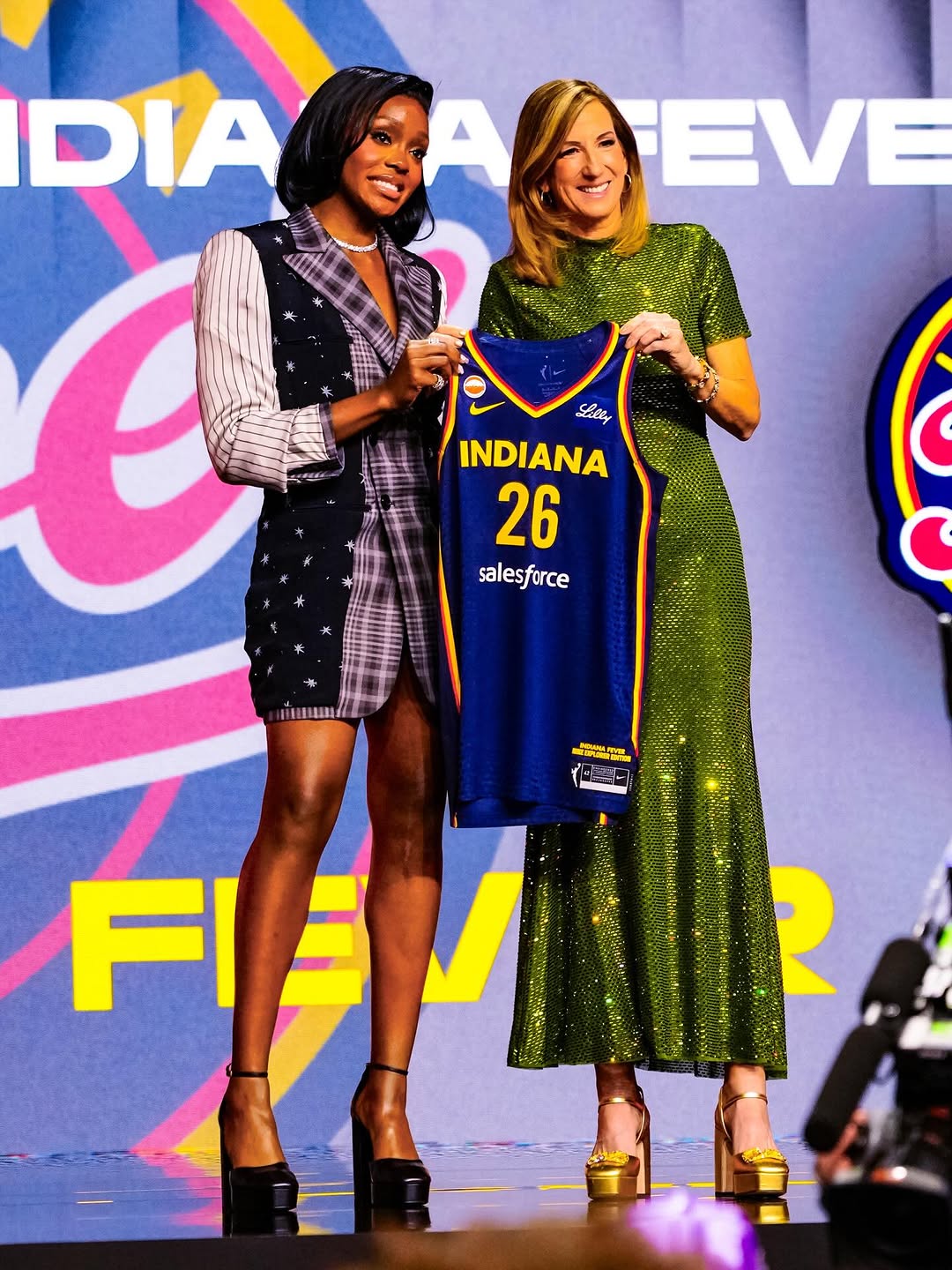
The WNBA Draft was supposed to be Raven Johnson’s coronation moment. Instead, it became a case study in overhyped credentials, questionable front office decisions, and the kind of welcome package that makes you wonder if the Indiana Fever actually know what they’re doing.
A Pick Nobody Was Begging For
When the Fever selected Johnson 10th overall, the reaction from their own fanbase was telling. This wasn’t the usual social media noise from outsiders — these were Fever supporters, people who want the franchise to succeed, openly questioning whether their front office had just wasted a premium draft slot.
General manager Amber Cox rushed to defend the pick, claiming the organization never expected Johnson to still be available at 10. But that framing deserves scrutiny. If multiple teams ahead of Indiana passed on her, perhaps they knew something Cox didn’t. In a draft full of players who could contribute offensively from day one, the Fever used a top-10 pick on a player whose career scoring average sits under 10 points per game. That’s not a hidden gem — that’s a gamble dressed up in organizational spin.
Head coach Stephanie White described herself as “over the moon” after speaking with Johnson by phone following the pick. Coaches are always enthusiastic about their own selections. That’s the job. But enthusiasm in April means nothing if Johnson can’t produce when the lights actually come on.
The Statistics Tell a Complicated Story
Johnson’s supporters will lead with the accolades — SEC Defensive Player of the Year, two national championships, Dawn Staley’s program, all of it. And those credentials carry weight, they do. But let’s be honest about what the numbers actually show.
In 28.7 minutes per game during her senior season, Johnson averaged 9.9 points, 4.0 rebounds, 5.1 assists, 1.5 steals, and 1.0 triples. Those are respectable college numbers — for a supporting player on a dominant team. South Carolina was built to win with or without Johnson’s offensive output, which means her stats were never truly pressure-tested the way a first-round WNBA pick’s should be.
The “she doesn’t need to score because Caitlin Clark exists” argument is convenient, but it papers over a real concern. At the WNBA level, defensive specialists who can’t create any offensive pressure become liabilities — easy to gameplan around, easy to leave open, easy to exploit. Johnson has never had to be the player in a high-stakes moment. She has always operated in Dawn Staley’s carefully constructed ecosystem, surrounded by elite talent, in a program where her role was clearly defined and protected. The WNBA is a different animal entirely, and the learning curve for players who’ve never carried offensive responsibility is steeper than franchises like to admit.
The Welcome Package That Said Everything
Then came the care package — and whatever diplomatic spin you want to put on it, the optics were genuinely embarrassing.
Johnson posted a photo of the Fever’s arrival gift: a plant, two cases of La Croix, a tote bag, and toilet paper. The internet did not let it pass quietly.
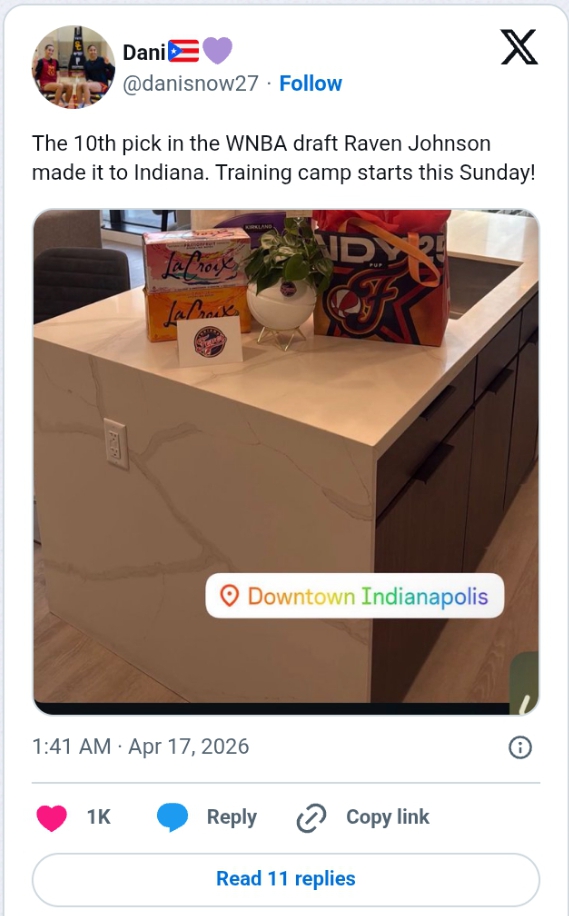
“Hey @IndianaFever DID WE REALLY GIVE OUT THIS RANDOM STUFF TO OUR PLAYERS??? IS THAT WALMART TOILET PAPER???”
“They are cheap asf. So embarrassing.”
“That’s Costco toilet paper and another thing I noticed is I’m pretty sure that Indiana Fever bag says 25 on it. They couldn’t even get an updated 26 version lol.”
“They’re leftovers from All-Star Weekend.”
“They need marketing help. Real help.”
“We move poor that is not the move.”
These aren’t random trolls. These are fans who, in the same breath as criticizing the package, are telegraphing exactly how high their expectations for this franchise have become — and how far the Fever’s institutional habits have fallen behind those expectations.
The WNBA is in the middle of an unprecedented visibility boom. Caitlin Clark alone has made Indiana one of the most-watched franchises in the league’s history. Sponsors are paying attention, national media is paying attention, and a new generation of fans who have never watched a WNBA game before now associate the Fever with a certain level of relevance and ambition. Into that context walks Raven Johnson, greeted by what appears to be a hastily assembled basket of clearance items and a tote bag from last year. It’s a small thing that reveals a larger institutional mindset — one that the franchise cannot afford if it actually wants to capitalize on this moment.
The Culture Argument Has Its Limits
The most enthusiastic defense of the Johnson pick rests on culture and intangibles. She was called “good juju” by a teammate. Dawn Staley credited her with impacting recruiting. She wins. She competes. She elevates the people around her.
These qualities are real, and they shouldn’t be dismissed. But they are also extraordinarily difficult to quantify — and organizations that lean too heavily on intangibles when defending draft picks are often organizations that are rationalizing a decision after the fact rather than making a clear-eyed projection about professional production.
The Fever have Caitlin Clark. They have the attention of the entire sports world. This is the window — and windows close. Johnson may well develop into exactly the complementary piece Indiana believes they drafted. But betting a top-10 pick on potential, culture fit, and defensive tenacity in a league where the floor is rising rapidly is a risk the team’s fanbase had every right to question on draft night.
The Uncomfortable Bottom Line
Raven Johnson is, by any measure, a remarkable college basketball player. Two national championships, elite defensive credentials, and a place in one of the most celebrated programs in the history of the sport. None of that is in dispute.
What is in dispute is whether a player with her offensive profile, transitioning from a supporting role in a dominant college system, was the right use of a top-10 WNBA Draft pick for a franchise operating under an extraordinary spotlight — and whether an organization that welcomes her with what fans called budget toilet paper and a year-old tote bag truly has the infrastructure and ambition to make the most of this rare competitive moment.
The toilet paper was, at minimum, a metaphor. The Fever should hope the rest of Johnson’s tenure doesn’t become one too.
About The Author