
Rematch Ready: Why South Carolina’s Familiar Bracket Path Is Less Controversial — and More Complicated — Than Social Media Thinks
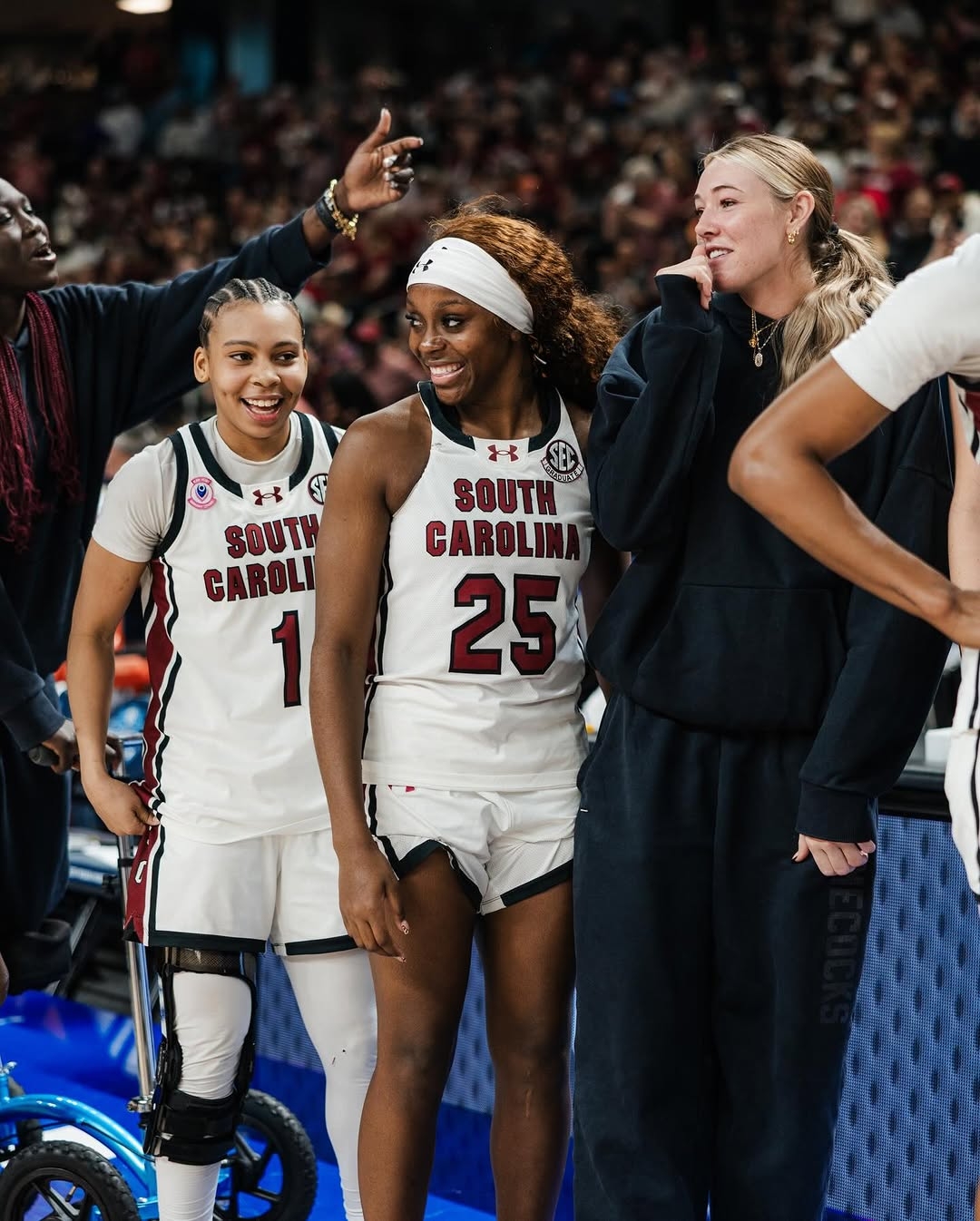
COLUMBIA, S.C. — Within minutes of the NCAA Tournament bracket dropping Sunday, the conversation around South Carolina had already skipped past the first round entirely.
That reaction was understandable. It was also, technically, a rules question dressed up as outrage.
Setting the Record Straight on Rematches
The bracket placed the Gamecocks on a path that, assuming expected outcomes hold, would produce a second-round rematch with either Clemson or Southern Cal — both teams South Carolina faced in November. The reaction on social media was predictable: accusations that the selection committee had broken its own rules, that rematches shouldn’t be allowed, that something had gone wrong in the process.
None of that is accurate.
The NCAA selection committee operates under a tiered system of bracketing guidelines. There are five “Core bracketing principles” and five “Core placement steps” — these are mandatory and non-negotiable. They govern familiar structural elements like the S-curve seeding format and, notably, a newer rule requiring the top overall seed to play Friday/Sunday for the regionals.
That last adjustment was not accidental. It was the direct result of Dawn Staley’s advocacy after South Carolina was forced to play the 2023 Final Four on short rest despite holding the No. 1 overall seed — a scheduling inequity that Staley made clear needed to be corrected.
Beyond those mandatory steps, the committee follows a section called “Additional considerations.” These are exactly what they sound like: suggestions, not requirements. The very first one reads as follows: “Avoid rematches of regular-season games in the First Four and first and second rounds when possible.”
The operative phrase is when possible. With 22 teams drawn from the Big Ten and SEC alone in this era of super conferences, the bracket is a geometry problem with more constraints than solutions. Avoiding every possible rematch isn’t always structurally feasible — and the rules were never written to require it.
A History That Puts This in Context
Far from being unusual, rematches are a recurring feature of the South Carolina tournament experience. In the last decade alone, the Gamecocks have seen first-round rematches with Savannah State (2015) and Presbyterian (2024), regional rematches against Baylor, UCLA, Maryland, and Duke, and Final Four rematches with UConn (twice) and Texas.
That’s not a scheduling anomaly. That’s the natural consequence of a program that consistently plays at the highest level against the deepest competition — and then keeps encountering those same teams as the bracket narrows.
Against that backdrop, a potential second-round meeting with Clemson or Southern Cal is hardly a novelty. It’s business as usual.
What the Familiarity Actually Means
The more substantive question isn’t whether a rematch is fair — it’s whether the November context carries any meaningful weight in March.
Staley’s answer was direct.
“You pretty much have to wipe the slate clean,” she said. “We’re all different teams. We’re much better than we were back in November. And they are much better now that March is here. So we’re not going to leave any stone unturned. We’re gonna try to put together some game plans that can get us out of the first round and on to the second, and hopefully we’ll approach it in the same way.”
That framing — wiping the slate clean while still mining the familiarity for whatever tactical value it holds — is a measured and experienced approach to tournament preparation. Staley isn’t dismissing the prior knowledge. She’s contextualizing it correctly. Four months, a full SEC schedule, and the pressure of a tournament run transform teams in ways that early-season film can only partially capture.
Still, some familiarity is better than none.
“We’ve played common opponents all the time,” Staley said. “It’s real common for Southern Cal and Clemson, and it’s not to look past the first round, but I mean, we played both of them. It’s some familiarity, so that helps a little bit, and I know we haven’t played both of them in a long time. But it’s good to have some familiarity with whatever team comes out of that and if we come out of it.”
The View From Clemson’s Sideline
If the rematch dynamic is complex for South Carolina, it carries an entirely different weight for Clemson. The Tigers are making their first NCAA Tournament appearance since 2019 — a program milestone — with a roster that coach Shawn Poppie acknowledged has very limited postseason experience.
“We only got three kids that have played in the tournament,” Poppie said.
In that context, the prior game against South Carolina becomes an asset for a different reason than pure tactical familiarity. The Tigers have already been inside Colonial Life Arena. They know what it looks and sounds like. They’ve taken shots on that floor. For a young team prone to being overwhelmed by the environment before the opening tip, that experience isn’t insignificant.
“I think using that experience of we’ve shot in there a couple of times, I think you can lean on that,” Poppie said. “We were not very good back then, and I think we were very competitive. I think we’ve got a lot of naiveness, too.”
That word — naiveness — is Poppie threading a needle carefully. He’s acknowledging his team’s inexperience while framing it as a potential asset rather than a liability. Teams that don’t know enough to be afraid sometimes play looser than those burdened by the weight of expectation.
The Bottom Line
South Carolina enters the tournament as the No. 4 overall seed at 31-3, opening March 21 at Colonial Life Arena against Southern or Samford before what could be a high-profile second-round matchup. The bracket is what it is — built within a rule structure that never guaranteed rematch-free paths, and shaped by the mathematical realities of a landscape dominated by two conferences.
The outrage was misplaced. The rules were always public. And for a program with South Carolina’s tournament pedigree, the real work has nothing to do with who’s on the other side of the bracket.
It has to do with who they are in March — which, as Staley has made clear, is a different team entirely from the one that took the floor in November.
About The Author