
“Bree Hall Saw It First: She Believed Joyce Edwards’ Rise Was Inevitable—and Now Edwards is Rewriting Her March Madness Story”
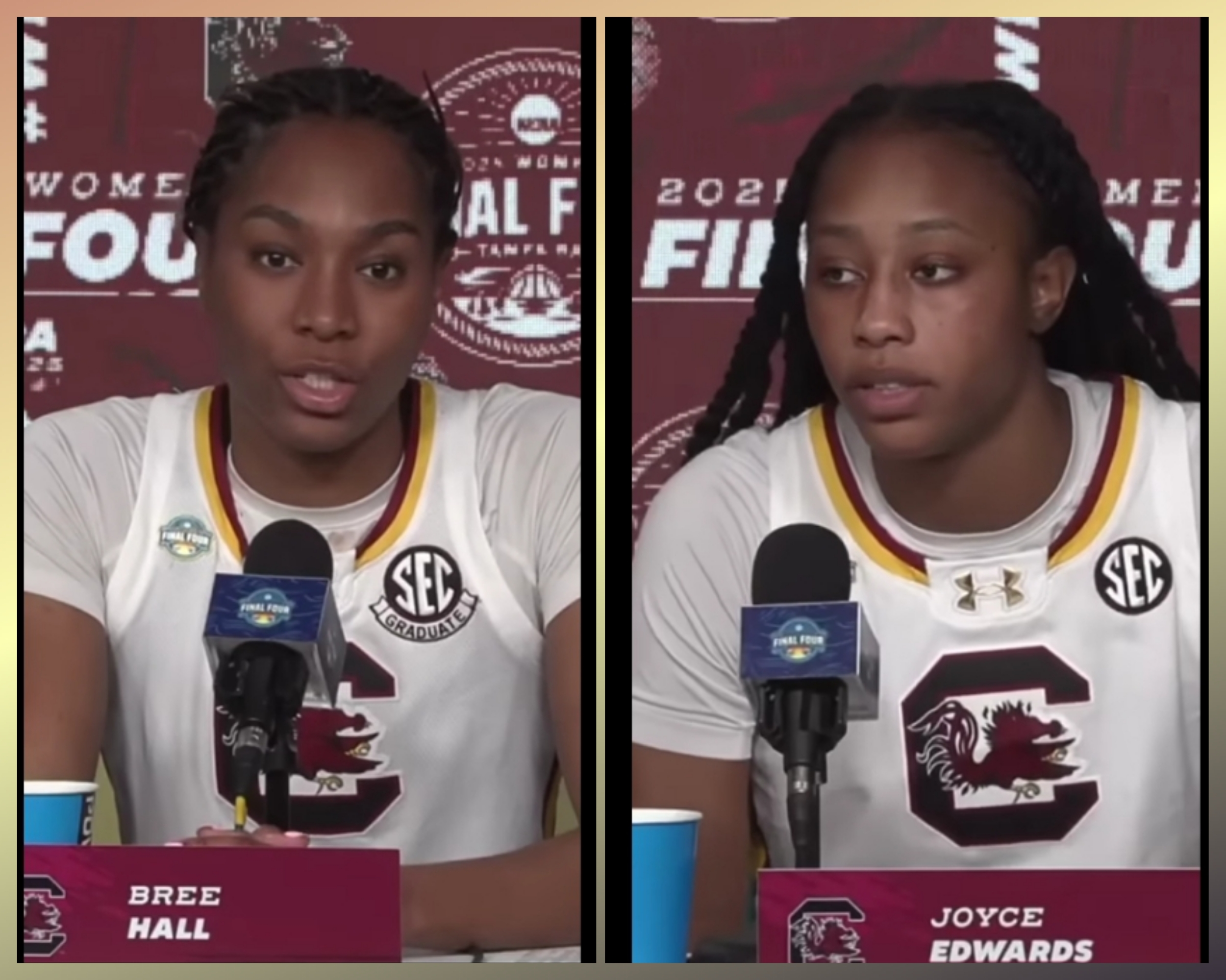
From Freshman Fade to Sophomore Force: How Joyce Edwards Rewrote Her March Madness Story
COLUMBIA, S.C. — The last time Joyce Edwards walked off an NCAA Tournament floor, she had just scored 10 points in a national championship loss to UConn. She was a freshman. The moment was too big, the stage was too bright, and the evidence was right there in the box score.
But Bree Hall saw something else entirely.
“She’s an incredible player,” Hall said after UConn’s 82-59 dismantling of South Carolina last April. “She’s going to come back for more, it’s not over for her at all.”
Twelve months later, Hall looks prophetic. Edwards isn’t just coming back for more — she’s arriving as the engine of a No. 1 seed.
What Last March Revealed — and What It Couldn’t Hide
The 2025 NCAA Tournament gave the world its first real look at Joyce Edwards under pressure. What it revealed was complicated.
She opened with a statement — 22 points against Tennessee Tech in the first round — a performance that suggested a star had arrived. Then Indiana happened. Edwards went 2-of-8 from the field with five turnovers, finishing with a season-low five points in the second round. From one of the most promising freshman performances in recent tournament memory to one of the most difficult afternoons of her young career, all within 48 hours.
What followed was a study in a player trying to find herself on the biggest stage. Six points against Maryland in the Sweet 16. A career-low four against Duke in the Elite Eight. South Carolina’s upperclassmen absorbed the burden, carrying the Gamecocks through a stretch when their most talented freshman simply couldn’t find her footing.
Then something shifted. Against Texas in the Final Four, Edwards posted 13 points and 11 rebounds — a performance anchored partly by going 5-of-6 from the free throw line, but also by a visible recalibration. She wasn’t trying to be the star. She was trying to contribute. And in doing so, she found herself again.
Ten points and five rebounds in the title game loss to UConn closed her freshman tournament run. It wasn’t the ending anyone had hoped for. But it was, as Hall understood, a beginning.
The Circumstances That Demanded More
What happened next wasn’t planned — it was forced by circumstance, and Edwards responded by becoming something none of the projections fully anticipated.
When Ashlyn Watkins announced she wouldn’t be playing this season, Edwards’ role expanded immediately. When Chloe Kitts tore her ACL in October, it expanded again. Suddenly, South Carolina’s most talented returning forward wasn’t easing into a larger role alongside veteran presence. She was the veteran presence — standing beside only one returning starter in point guard Raven Johnson, and surrounded by transfers and a redshirt sophomore still finding her way.
The program needed Edwards to become something in October that she hadn’t yet fully been in April. And she did.
By the second game of the season against Bowling Green, she already looked different. Her post game had developed dimensions it didn’t have before — counter moves, improved footwork, a trust in her own body inside the paint that gave teammates and coaches an entirely new level of confidence in what she could do when she caught the ball in space.
The Numbers That Tell the Story
The statistical case for Edwards’ transformation is overwhelming. She leads South Carolina at 19.6 points per game heading into the NCAA Tournament — nearly seven more points per game than her freshman average of 12.7. She has scored 20 or more points 19 times this season, a figure that ranks fifth in program single-season history. Her 34-point effort against USF on December 18 stands as a career high.
On February 5, she scored her 1,000th career point — reaching the milestone in 64 games, five fewer than Gamecocks legend A’ja Wilson. That comparison, whether Edwards invites it or not, speaks to the trajectory she’s on.
She currently ranks 11th among all scorers in this year’s NCAA Tournament bracket, fourth in the SEC in points per game, and second in field goal percentage at 58.7 percent. The efficiency is what separates her from a high-volume scorer who simply shoots her way to big numbers — Edwards is getting buckets at an elite rate because her game has become sophisticated, not just aggressive.
“Joyce is just different, she looks more seasoned,” Dawn Staley said. “She looks more like she understands what’s happening. I think she really understands her power on both sides of the basketball. When you’ve been there before, you really have a good understanding of what you can do and where you’ve had success.”
That phrase — she understands her power — is the key to everything. Last March, Edwards had the talent but not yet the command. This March, she has both.
What March 2026 Means
South Carolina opens the NCAA Tournament on March 21 at Colonial Life Arena, facing the winner of the First Four matchup between Samford and Southern — two No. 16 seeds. The path ahead, if the Gamecocks advance as expected, will grow progressively more demanding. And it will require Edwards to perform precisely when the moments are the largest.
Last year, the large moments shrank her. This year, the evidence — 19 games of 20-plus points, a 58.7 field goal percentage, a leadership role inherited through adversity and executed with remarkable maturity — suggests the opposite is true.
Bree Hall saw it coming from the floor of a Tampa arena in the aftermath of a championship loss.
The rest of college basketball is about to see it too.
About The Author