“She Hated ‘Tournament Tessa’… Now Tessa Johnson Might Be UNLEASHING an Even SCARIER Version When It Matters Most
Tournament Tessa Has Evolved — And She Might Just Have Another Gear
There’s a certain poetry to the way postseason basketball transforms players. For Tessa Johnson, that transformation has a name — and a complicated relationship with the person it belongs to.
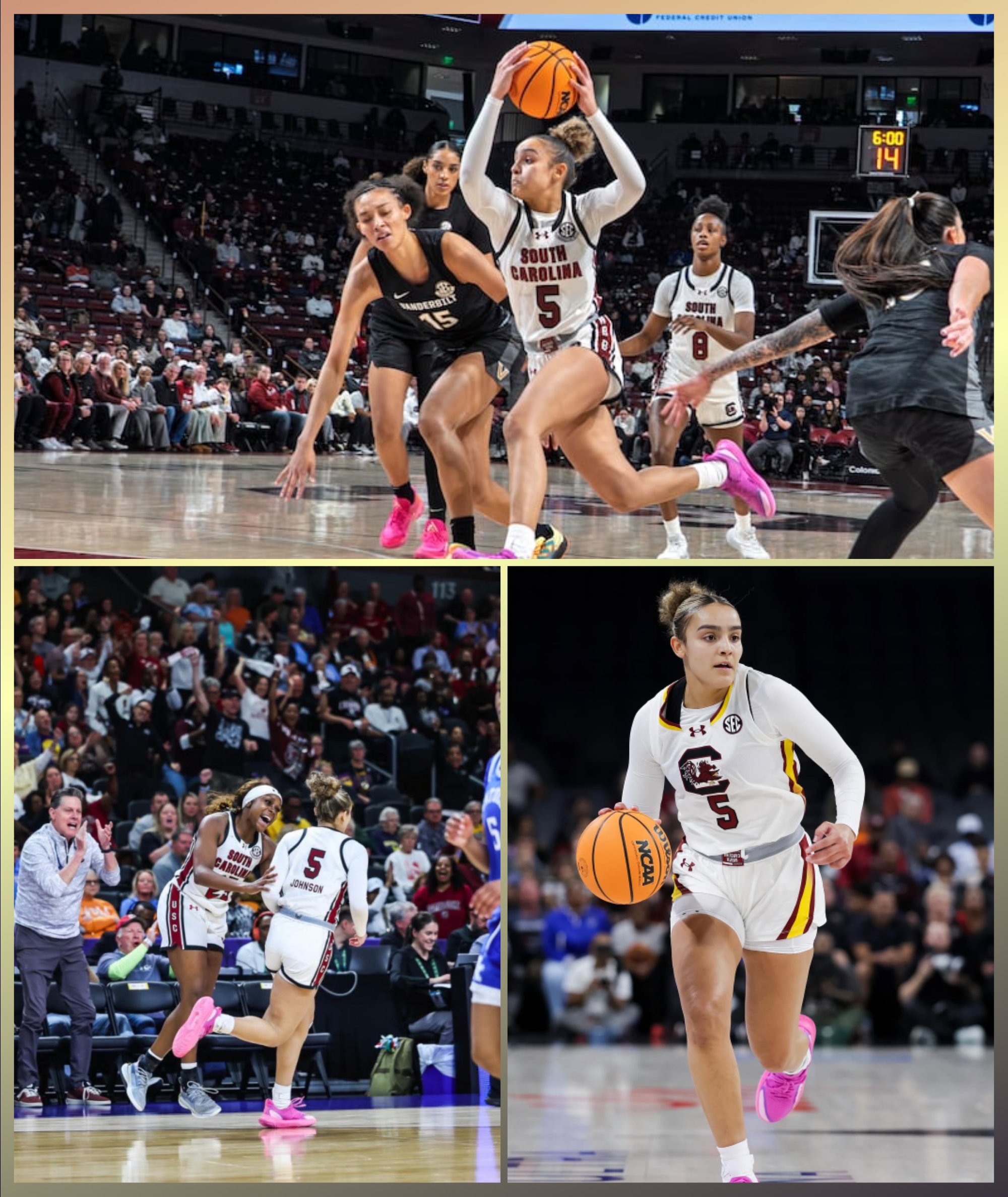
“Tournament Tessa” was born in 2024, when the then-freshman emerged as one of South Carolina’s most pivotal contributors during the Gamecocks’ national championship run. The nickname stuck, followed her into the next postseason, and cemented itself when Johnson became South Carolina’s leading scorer in back-to-back national championship games. By that point, even head coach Dawn Staley was invoking it as shorthand for when her wing locked in and played with aggression.
The only person who never fully bought in was Johnson herself.
“I would like me to play like Tournament Tessa stinking every single game,” Johnson admitted during last year’s NCAA Tournament. “And I need to be more consistent throughout the season. If I was consistent throughout the season and also (added on) in the tournament, then I would like Tournament Tessa.”
It’s a revealing window into how Johnson’s mind works. The nickname, to her, felt less like a compliment and more like an indictment — an acknowledgment that a better version of herself only showed up selectively. When she was first asked about it during the 2024 Sweet 16, her response was immediate rejection. It took a team-high 15-point performance against Oregon State in the Elite Eight to soften her stance, however reluctantly.
“No! (giggles) No,” Johnson said initially. “I mean, you can if you’d like.”
It was already too late.
A Season That Demanded More — And Got It
This year, Johnson answered her own challenge. Her 2024-25 campaign was the best of her career by virtually every measurable standard. She transitioned into a full-time starting role and set personal bests in points (12.9), rebounds (3.3), assists (2.5), and three-point attempts (179), connecting on 79 of them at a 44.1% clip — good enough to lead the SEC. She was named second-team All-SEC, went viral after an exasperated Kim Mulkey pleaded to her sideline, “Who can guard Tessa?”, and delivered signature performances against Louisville, Texas, Oklahoma, and Vanderbilt.
The inconsistency that had defined her first two seasons — and quietly fueled the Tournament Tessa mythology — was largely gone. She scored in double figures in all but eight games, and several of those exceptions came in blowouts where she logged reduced minutes.
Staley credits both Johnson’s physical maturation and her intentionality in the offseason.
“She has played a lot more consistently than she had the first two years,” Staley said. “I think that has to do with just the amount of experience she has and the amount of playing time that she’s getting. I do think it’s due to the work that she’s put in. She’s stronger this year than she was at the end of last year, and she was intentional about working with Molly (Binetti) and doing the things that she needs to do to not get beat down because it’s a long season.”
Staley also pointed to something more physical — Johnson’s frame. The coach chose her words carefully, knowing her player’s tendency to spiral into self-analysis.
“It’s very physical. If you can remember last year, she was very thin. Very thin. I do think she falls on the floor a lot more than I would like, but imagine if she didn’t have — I don’t want to say this word because she might just go off the deep end again with overanalyzing — but she’s got a little more girth to her than she did last year.”
Reframing the Nickname
Perhaps the most significant development isn’t what Johnson did on the court, but what shifted in how she thinks about who she is on it.
“I feel like I have been playing a little more consistent,” Johnson said. “I feel like I could always do better, but I looked at the name Tournament Tessa a little bit differently now, and I kind of switched my perspective and feel like I’m able to get ready for the tournament also.”
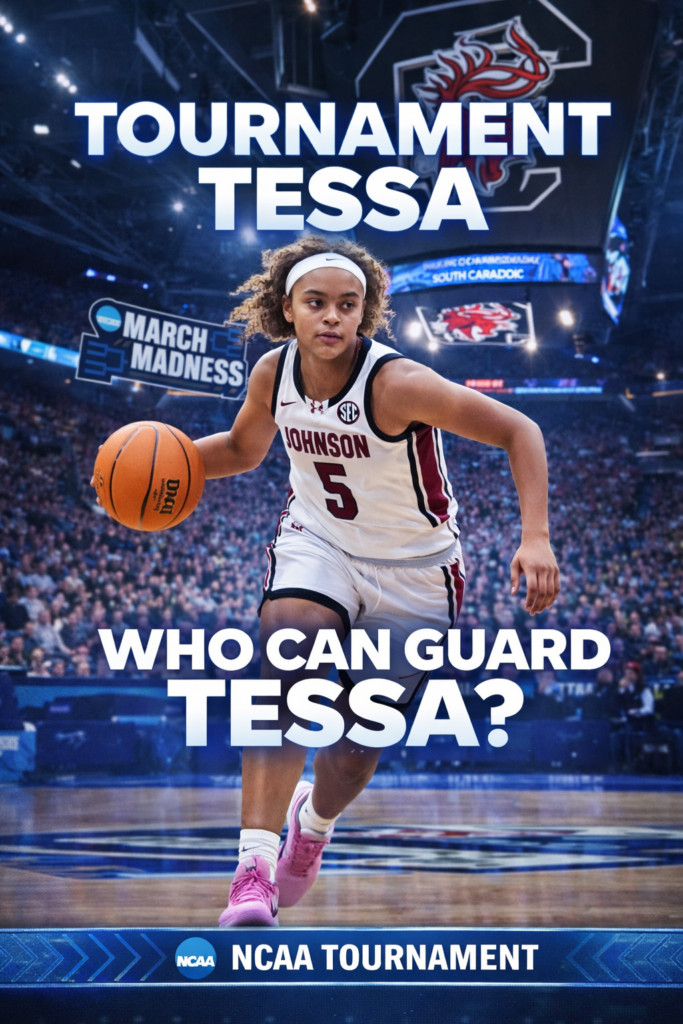
That’s a subtle but meaningful evolution. For two years, the nickname felt like pressure — a reminder of what she hadn’t sustained. Now, she seems to be treating it as something additive: a postseason identity layered on top of a more reliable regular-season foundation, rather than a replacement for one.
When asked whether Tournament Tessa still has an extra gear to unlock come March, Johnson was characteristically measured.
“I guess,” she said. “We’ll see.”
Staley, who was nodding emphatically beside her, clearly believes so — and wants Johnson to believe it too.
“I think Tessa just overanalyzes things at times, and (the nickname is) one of them,” Staley said. “I think it’s a term of endearment that she needs to embrace a little bit more because not very many players can rise to the challenge of post-season play, and we know Tessa can do that. I do think we’ll see, hopefully and prayerfully, we’ll see Tournament Tessa.”
The real question heading into this postseason isn’t whether Johnson can elevate — her track record answers that. It’s whether a player who has spent three years trying to make the nickname obsolete might finally be ready to own it. A more consistent Tessa Johnson with a postseason gear still left in reserve isn’t just a storyline. It’s a problem for every team standing between South Carolina and another title.
About The Author