
South Carolina’s Freshmen Arrive Right on Time: Makeer, McDowell, and Tournebize Seize Their NCAA Tournament Moment
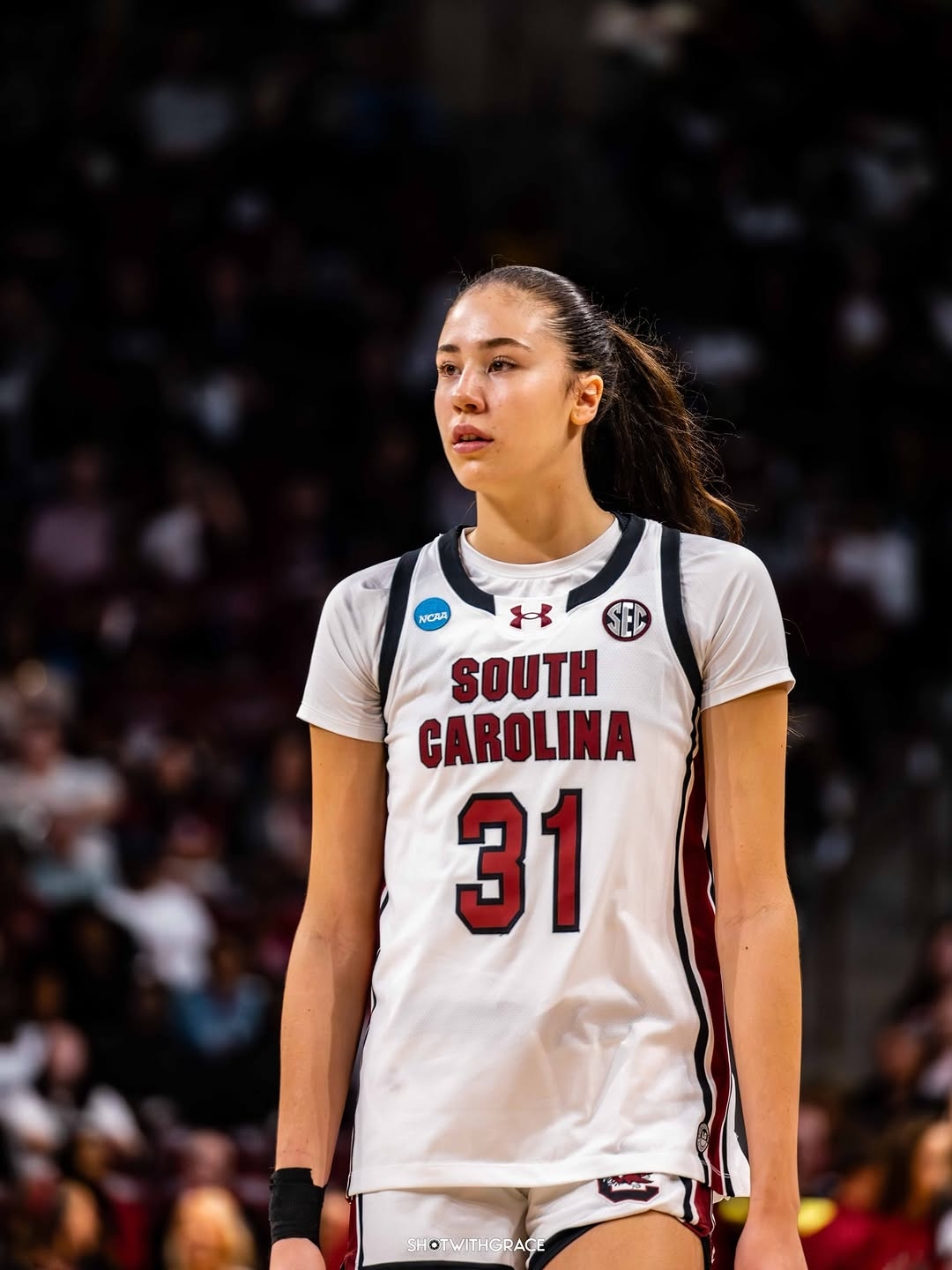
The NCAA Tournament has a way of sorting out who is ready and who is not. For South Carolina’s freshman trio — Agot Makeer, Ayla McDowell, and Alicia Tournebize — the Gamecocks’ first-round blowout wasn’t just a comfortable win. It was a referendum on their readiness, and all three passed with flying colors.
Coming off a nearly two-week layoff following the SEC Tournament, Dawn Staley leaned on her bench in a way that felt deliberate. This wasn’t charity minutes in a blowout — it was a calculated investment in depth at the most critical point of the season. With a long tournament road potentially ahead, Staley needed to know her freshmen could perform when the lights got brighter. The answer, emphatically, was yes.
Rust, Confidence, and the Return to the Floor
Alicia Tournebize was the first off the bench early in the first quarter, Agot Makeer logged 26 minutes — third most on the team — and Ayla McDowell saw her second-highest playing time since the Tennessee game. For three freshmen navigating their first NCAA Tournament experience after an extended break from game action, the extended run of minutes was both a test and a gift.
Makeer, refreshingly candid about the moment, framed it in exactly the right terms.
“I think it was really good,” she said. “I’m excited to just get on the floor. We haven’t played in a while, so just knocking the rust off and playing hard was good.”
The acknowledgment of rust matters more than it might seem. After the SEC Tournament — where South Carolina’s losses to LSU and Texas exposed real vulnerabilities — there were genuine questions about whether certain players had found their footing. A two-week gap between games can either deepen doubt or reset confidence. For these freshmen, it appeared to do the latter.
What was equally striking was the absence of nerves. McDowell, speaking about her own psychological state, offered insight into just how far she has come since the opening months of her college career.
“No, no,” McDowell said. “I actually haven’t had many butterflies before games this season. That’s pretty surprising for me. But that just showed me that my confidence has grown.”
That confidence is not a small thing. The mental transformation from a player who came in with high school expectations to one who can walk into an NCAA Tournament game steady and unafraid is the kind of growth that doesn’t show up on a stat sheet but defines postseason runs.
Playing Through Comfort — and Building Something Real
The first-round opponent was always going to be a manageable test. South Carolina was expected to win, and they did so decisively. But what Makeer articulated in her post-game remarks revealed something deeper than a freshman simply happy to have played well — it revealed a player thinking about the tournament as a whole, not just the game in front of her.
“I think it was really good to have this game,” Makeer said. “I think all along we knew that we were gonna win this game. We didn’t know by how much, but we knew we had to come out and play hard. This team, even though we knew we were more talented than this team, we knew they would test us in every way possible because they play hard, they rebound, and they can guard. I feel like going into our next game, they gave us something that we can build on.”
That kind of scouting awareness and big-picture thinking — acknowledging an opponent’s strengths while also recognizing the developmental value of the performance — is not what you expect from a freshman in March. It speaks to the culture Staley has built at South Carolina, one where even the youngest players are taught to see beyond the moment they are standing in.
McDowell, who sat out both the LSU and Texas games in the SEC Tournament, was simply relieved to be back on the floor doing what she does best — competing.
“It felt pretty good to get out there for my first tournament game,” she said. “I enjoy playing with my teammates all the time. I’m glad we got the dub, and I’m glad we’re being able to move on to the next round.”
Her four points and an assist were modest numbers, but the real value of her 26 minutes was in the timing. She needed live game reps, and she got them in a setting where the margin allowed for the kind of learning that pressure-cooker games cannot provide.
Tournebize and the Art of Staying Locked In
The mental challenge of a blowout is underappreciated. It is easy to coast when the scoreboard is comfortable. It is hard to stay locked in, maintain defensive intensity, and treat the final minutes with the same urgency as the first. Alicia Tournebize zeroed in on exactly that challenge — and what it revealed about her team’s character.
“I’m feeling good. It was a good game,” she said. “We played together until the end of the game. Sometimes, when the games aren’t very close (…) like it was important for us to keep plugging, stay locked in until the end. So, I liked it.”
That buy-in to the process, even when the result is no longer in doubt, is what separates programs that fall apart in the second weekend from those that keep advancing. Tournebize’s awareness of it as a freshman — and her satisfaction that the team lived up to it — suggests a level of maturity that bodes well for the rounds to come.
Her stat line backed it up. She finished with five points and a career-high 11 rebounds, the second consecutive game in which she set a new career high in boards. This is no coincidence. Dawn Staley has publicly said that Tournebize’s improved rebounding gives her the confidence to play her more. Tournebize clearly heard the message and has responded.
“I hope so,” Tournebize said. “It’s important for post players to be able to get some rebounds. I try to focus on when you’re missing some shots, it’s important to crash the board and like be able to give another (possession) to the team.”
The logic is sound, and the execution has followed. For a big who came in as a developmental prospect, two straight games of career-high rebounding numbers in the NCAA Tournament is exactly the kind of upward arc that changes a player’s role mid-tournament.
Makeer’s Coming-Out Party
If Tournebize’s performance was a statement, Makeer’s was a proclamation. She finished with 15 points — a career high — and added three rebounds, three assists, three steals, and a block that made the crowd catch its breath. It was the most complete game of her freshman year, arriving at precisely the moment it was needed most.
What made her post-game comments so compelling was the absence of surprise in them. Makeer didn’t speak like someone who had stumbled onto a great performance. She spoke like someone who had always known this was coming.
“It was just playing hard and letting it come to me. I feel like I’ve always had it in me and for it to come now is probably the most important thing,” she said. “I think my confidence was still high even after we lost (to Texas). I knew we had to bring it. Even in practice, our emphasis was that everyone still has to bring (it). And everyone’s important to this team and has to bring to this team what they have. I think tonight that’s what I did.”
That response after the Texas loss is telling. Losing in the SEC Tournament could have shaken a freshman. Instead, Makeer used it as information — a reminder that the standard had to be met regardless of what came before. That mental resilience is exactly what tournament teams need from their role players.
Raven Johnson, one of the team’s veteran leaders, saw it clearly.
“I’m excited. They didn’t even look nervous,” Johnson said. “That’s a good thing you want to see in March from your freshmen. Going off Gotti, 15 points. A good stat line. And I think she’s coming at the right time. I feel like, well, we all feel like, she’s an X-factor for this team.”
Johnson’s framing of Makeer as an “X-factor” is significant. That term gets thrown around carelessly, but in tournament basketball it has real meaning. It refers to a player opponents haven’t fully accounted for, someone whose impact can tilt a close game before the other team has time to adjust. If Makeer is just now arriving at peak form, opposing coaches have a problem on their hands.
One Last Mystery: Is Ayla McDowell Still Growing?
For all the serious basketball analysis, South Carolina’s first-round win left one genuinely unresolved question hanging in the air — and it had nothing to do with brackets or matchups.
Has Ayla McDowell, listed at 6-1, gotten taller since the season began?
“I think so,” she said. “(Wendale Farrow) mentioned the other day, you might have gotten taller. Every time I go back home, when we have time off, I get near my old high school coaches or my mom, and I’m like, Dang, I think I did get taller. So, yeah, I think I have grown a little bit. And I don’t know how.”
It’s an endearing reminder that underneath all the tournament stakes and tactical analysis, these are still teenagers. McDowell grew up with her height charted on a wall at home in Houston — that kind of childhood ritual that most athletes leave behind when they turn professional in everything but name. Apparently, she hasn’t fully grown out of it yet — literally or figuratively.
“I do, actually, at home back in Houston. I do. I forgot to do that last time, but I think I have grown for sure,” she said. “I’ve been stretching a lot more, so maybe that’s it.”
Whether it is the stretching, the reps, the coaching, or simply time, something is working for these three freshmen. They came into March Madness as question marks. After one round, they look increasingly like answers.
About The Author