“From Near Death to Sideline Leader: Travian Robertson’s Miraculous Comeback—and the Shocking Forgiveness That Changed Everything”
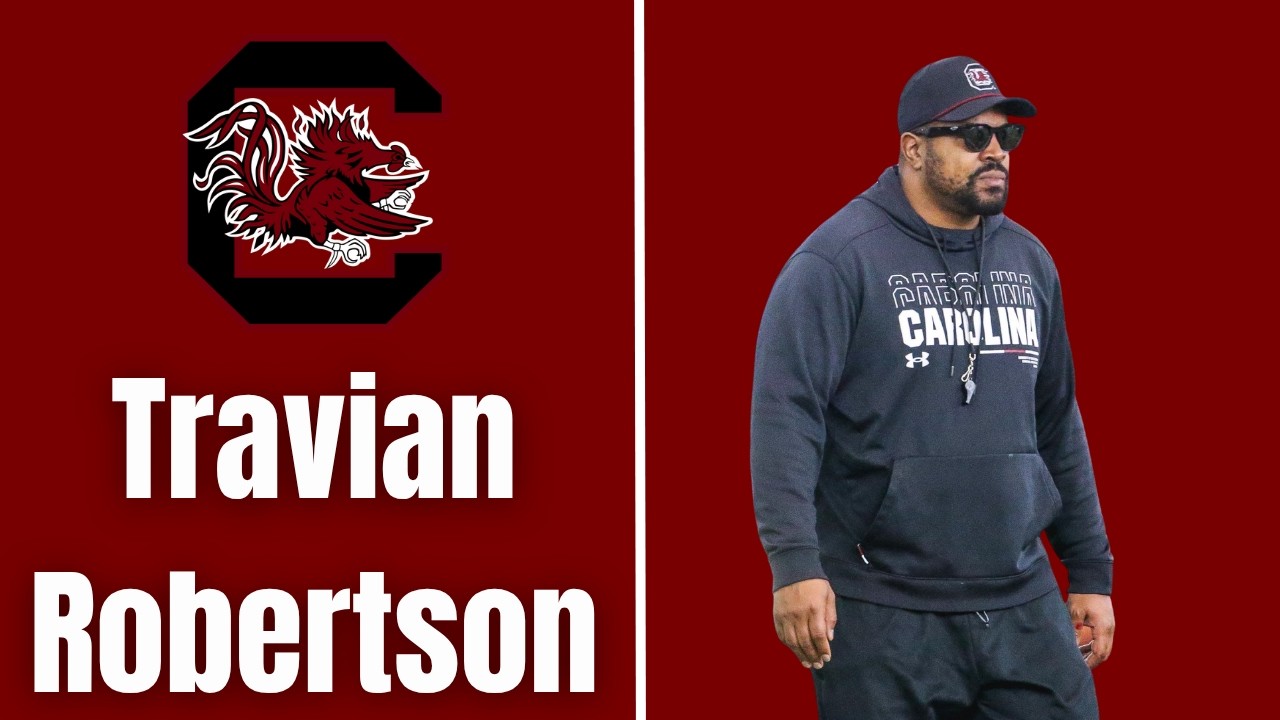
Travian Robertson: The Long Road Back, and the Harder Road Within
Before the Whistle
On the morning of August 22, South Carolina football defensive line coach Travian Robertson was simply trying to get to work. It was just before 6 a.m. when a 2014 Nissan Pathfinder traveling west on U.S. 76/Dutch Fork Road drifted across the center line and hit Robertson’s white 2024 Chevy Tahoe head-on.
The driver of the Pathfinder, 35-year-old Columbia resident Kelly Marie Johnson — a mother of five — died at the scene. A lawsuit filed by Robertson and his wife, Kettiany, against Johnson’s estate contends that she had consumed alcohol to the point of intoxication before getting behind the wheel. Two lives were upended in an instant. One ended there.
“I Was Going to Be All Right”
Robertson was conscious when paramedics arrived. That alone was not guaranteed. He is a man grounded in faith, driven by the belief that something larger than himself is in control of his circumstances — and perhaps that framework is the only way to explain what he felt when he was pulled from the wreckage and placed on a stretcher.
“I don’t know what it was,” Robertson said, “but it came over me that I was going to be all right.”
It was not false bravado. It was something quieter and more durable. And in the days that followed, he would need every ounce of it.
Robertson was transported to the trauma ICU at Prisma Health Richland, where he spent the first ten days of an eventual two-week hospital stay. Over those two weeks, he required five surgeries — a number that captures the severity of the collision more than any description could. The procedures stabilized him first, then addressed his legs. The doctors did their part. Robertson, drawing on the same discipline he demands from his players, did his.
Learning to Fight Without a Playbook
The mind has a way of filling silence with worst-case scenarios. Robertson is human, and negative thoughts came — that is not a weakness, it is a natural response to trauma. But he made a deliberate choice not to let those thoughts set the tone.
That choice was informed by lessons Robertson had absorbed working under football coach Willie Fritz — a relentless emphasis on positivity not as a cliché, but as a practical competitive tool. What works on a roster can work in a hospital room.
“The whole accident was a negative,” Robertson said. “But I tried to make every day a positive day for me.”
When doctors suggested he complete his rehabilitation at an outside facility, Robertson overruled them. Instead of daily trips to a clinic, he chose to rehab at home — spending three months non-weight bearing, unable to walk, unable to do almost anything — surrounded by his wife and three sons. That decision was less about convenience and more about what he knew he needed to heal the full person, not just the physical one.
“It was about three months where I was non-weight bearing. I couldn’t walk. I couldn’t do anything,” he said. “Eventually my natural instincts of being a hard worker just kicked in.”
When doctors said nothing over five pounds, Robertson found Gatorade bottles and started doing reps. When the body is ready to work, it finds a way.
Milestones Measured in Proximity
Progress after catastrophic injury doesn’t arrive in dramatic leaps. It comes in small, almost quiet increments — and for Robertson, each milestone was meaningfully measured by how close he could get back to his players.
First, his wife drove him to the facility and he stayed in the car. His players and coaches came to him, crowding around the window, filling the parking lot with the energy of people who were genuinely relieved to see him. Then came the balcony — watching practice from above, seated in a wheelchair with boots on both legs. Then a golf cart on the sideline. Then standing. Then jogging.
Each stage represented not just physical recovery, but a man methodically reclaiming his identity — as a coach, as a competitor, as a presence his players could depend on.
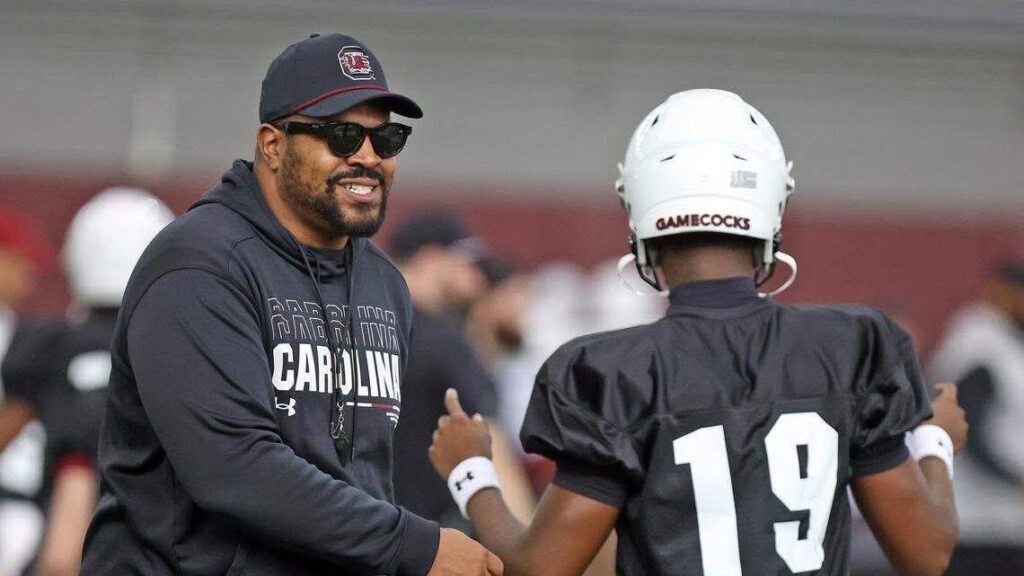
Seven months after the crash, Robertson is back full time. He is leading the Gamecocks’ defensive tackles, running drills, doing the job. Head coach Shane Beamer recently saw it on film and still found himself struck by what he was watching.
“I was watching practice tape the other day and saw him on tape jogging from one drill to the next,” Beamer said. “Which is pretty miraculous when, not even a year ago, there were questions whether he would even survive at one point.”
A Lesson That Goes Beyond Football
Robertson is careful about how he frames his own story. He does not want it romanticized, and he is pointedly unsentimental about what he went through. No one should want to be an inspiration in this way, because the price of that inspiration is enduring something horrific. He knows that. He says it plainly.
But he also knows that a coach’s job — on the field and off it — is to find the teaching point in everything that happens. And he was not going to let something this significant pass without extracting something meaningful from it.
“I do take it,” he said. “It’s very important to me that I stand strong for things that are happening in life other than football, so they can see that we are human beings and we all go through things. Every thing isn’t gonna be peaches and cream. We’ve got to figure it out.”
He was speaking to his players in that moment, but the lesson radiates beyond any locker room.
The Harder Work: Forgiveness
If Robertson’s physical recovery is the remarkable part of this story, his interior response to it may be the more profound one.
When his brother came to visit him in the hospital and saw the condition he was in, anger consumed him — a completely understandable reaction. He directed that anger at the woman whose choices had put Robertson in that bed. Robertson stopped him.
What followed wasn’t a platitude. It was a carefully reasoned, deeply personal declaration about what survival actually requires.
“I was like, ‘Look man, you can’t say you forgive and you still hate,'” Robertson said he told his brother. “I explained to him, ‘In order for me to move on and be at peace with this, I had to immediately forgive with love. … If I had a lot of hate with my forgiveness, I would not be standing here right now.'”
Kelly Marie Johnson left behind five children. She made a decision that morning that cost her her life and nearly cost Robertson his. Holding that truth alongside genuine forgiveness is not easy work — it may, in fact, be the hardest thing Robertson has done throughout this entire ordeal, harder than five surgeries, harder than three months without weight bearing, harder than Gatorade bottle curls in a living room.
But he did it. And by his own account, it is the thing that made everything else possible.
Robertson did not get in his car on August 22 hoping to become an inspiration. He was just trying to get to work. What happened to him was not a gift, and he would be the first to say so.
But what he chose to do with it — the daily positivity, the relentless rehabilitation, the radical forgiveness — that part was entirely his. And that, more than any comeback story, is what his players are watching.
About The Author