Dawn Staley’s Next Challenge: Breaking Down South Carolina’s 2027 Recruiting Priorities
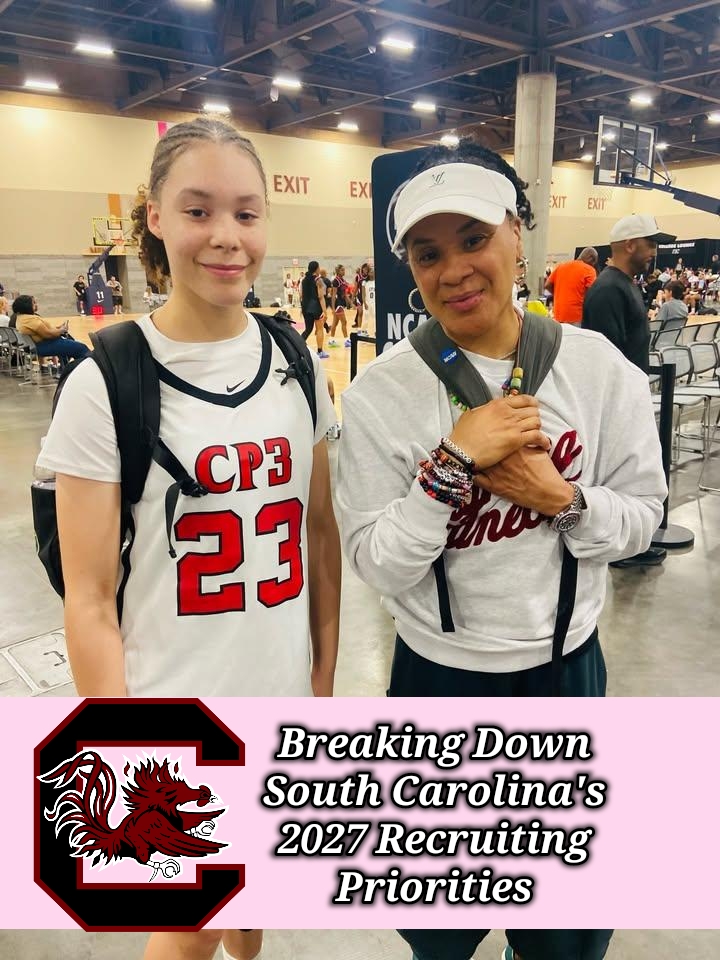
With the 2026 recruiting cycle officially closed and one of the most celebrated roster-building offseasons in recent memory behind her, Dawn Staley now turns her attention to the next frontier — the 2027 recruiting class. But before diving into the players themselves, understanding how the modern recruiting landscape actually works is essential context for everything that follows.
The Free Agency Mindset Has Taken Over Recruiting
The single biggest misconception fans carry into recruiting season is applying an outdated framework to a fundamentally different process. The priorities that defined recruiting a decade ago — or even five years ago — have been structurally reorganized. Relationships with coaches, campus visits, team chemistry, and system fit haven’t become irrelevant, but they are no longer the primary drivers for elite prospects.
The more accurate lens today is free agency. Think WNBA. Think NFL. Think NBA. Relationships still get a program in the door, but the conversation quickly shifts to compensation, development, and winning. Elite recruits have agents — and the ones who don’t, should — and they are approaching their decisions with a sophistication that would have been unthinkable just a few years ago.
Player development has emerged as perhaps the single most compelling pitch any program can make. With WNBA rookie contracts now approaching $250,000 annually, the financial stakes of professional readiness have never been higher. A recruit isn’t just choosing a college program anymore — she’s choosing where she wants to launch a professional career. Programs that can credibly demonstrate a pipeline to WNBA success hold a structural advantage in every recruiting conversation.
How the Process Actually Works
Women’s basketball recruiting operates differently from other sports in one important cultural respect: it tends to be quieter. Many elite prospects no longer publicly announce scholarship offers, and the absence of fanfare shouldn’t be mistaken for a lack of activity. Every cycle also produces a handful of players who include high-profile programs like South Carolina in their finalist lists primarily for visibility — a dynamic worth keeping in mind when tracking commitment predictions.
Most prospects at this stage of the 2027 cycle have not meaningfully narrowed their choices, and even those who have released public finalist lists retain the flexibility to change course. There is no official tracking system, which means the picture is always incomplete and subject to revision.
Where South Carolina Stands Heading Into 2027
The Gamecocks enter the 2027 recruiting cycle with 11 players expected to return: point guard Maddy McDaniel; guards Agot Makeer, Jerzy Robinson, Jordan Lee, and Ayla McDowell; and forwards Kaeli Wynn, Oliviyah Edwards, Joyce Edwards, Alicia Tournebize, Adhel Tac, and Kelsi Andrews.
That’s a deep, veteran-laden core — but roster construction is never static, and an honest assessment of the roster reveals clear areas of need. The three primary targets heading into 2027 are point guard depth, post presence, and reinforcement at the wing and forward positions.
Point Guard: The Most Urgent Priority with Real Solutions Available
The good news at the point guard position is that the 2027 class offers genuine star power. South Carolina is actively pursuing both Kaleena Smith and Jezelle Banks, two top-five recruits who represent the cream of the crop at the position nationally. Landing either one would meaningfully address the program’s most pressing need. The competition for both will be fierce, but Staley’s track record of developing guards into WNBA prospects is among the strongest selling points she can offer.
Wings and Forwards: A Deep Class Creates Opportunity
While wing and forward depth isn’t South Carolina’s most critical need, the 2027 class is loaded with talented, athletic options at those positions. Given the depth available, it would be surprising if the Gamecocks didn’t add at least one impact wing — even if it’s not the headlining priority. This is the kind of positional depth that allows a program to be selective rather than desperate, which is a position of strength.
Post: The Hardest Problem to Solve
The most challenging roster puzzle heading into 2027 is the post position, and the class itself doesn’t make it easy. The top-ranked post prospect, Caroline Bradley, has already committed to LSU — removing the most plug-and-play option from consideration. What remains in the high school class at that position is largely developmental — players who project as future contributors rather than immediate ones.
This reality points toward a likely strategic pivot. Rather than forcing a fit with a high school post prospect who isn’t ready to contribute right away, South Carolina will probably look to the transfer portal to address this need. Given what Staley just demonstrated with Jordan Lee this past offseason, there’s little reason to doubt her ability to identify and land an impact transfer when the time comes.
The Bottom Line
The 2027 recruiting cycle is operating in a new era of college basketball — one defined by professional-level decision-making, financial incentives, and development pipelines rather than traditional relationship-driven commitments. For South Carolina, the foundation is strong and the needs are clearly defined. The point guard pursuit is the most pivotal storyline to watch, the wing position is a bonus, and the post problem may ultimately be solved not in the high school ranks, but in the portal — where Staley has already proven she knows exactly what she’s doing.
About The Author