
This Might Be Dawn Staley’s Most Dangerous Roster Yet — And It’s Not Even Finished
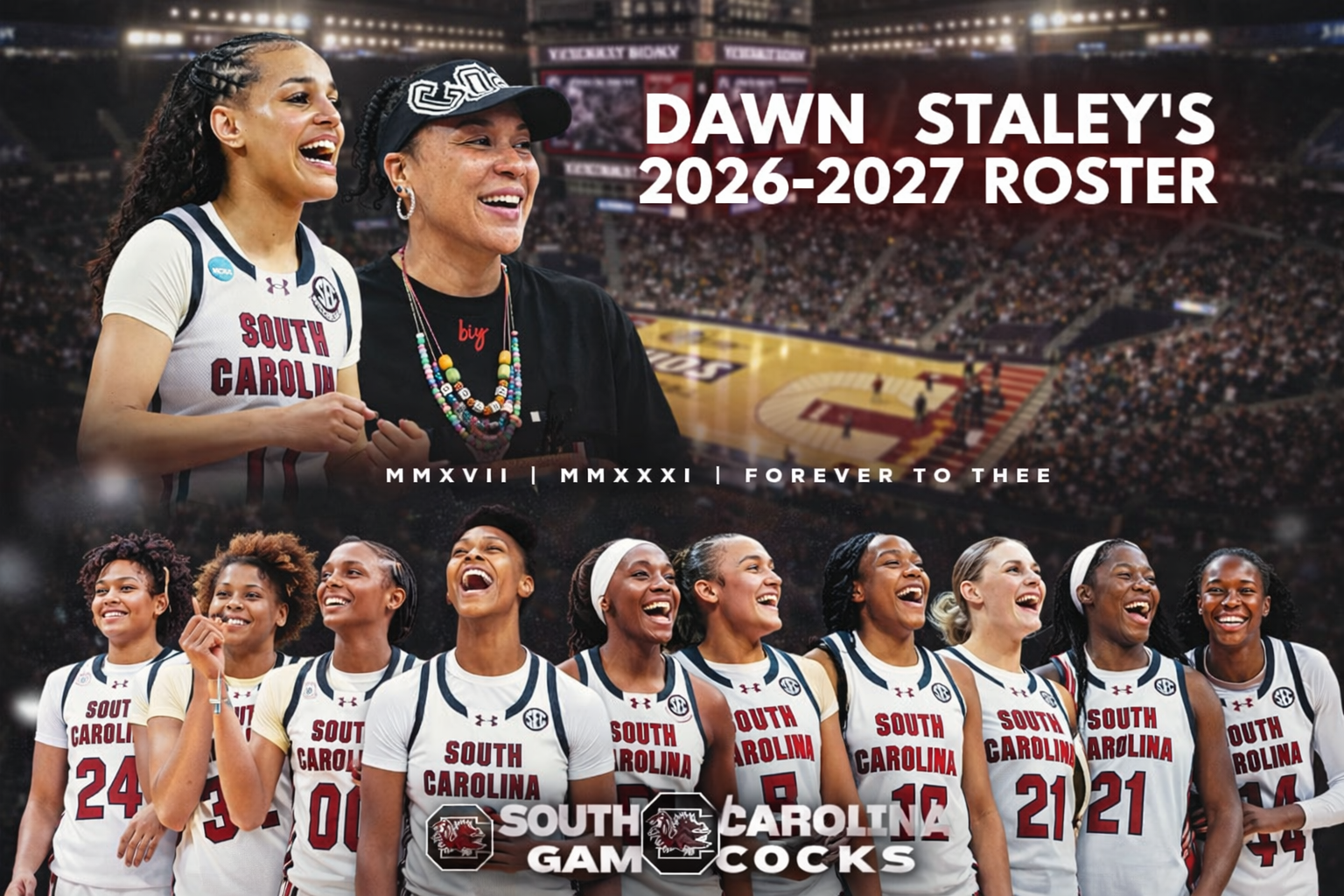
Forget the championship pedigree for a moment. Forget the six consecutive Final Fours, the three national titles, the dynasty-level recruiting. Look at what is quietly assembling in Columbia right now — position by position, layer by layer — and ask yourself a simple question: who stops this team?
With the addition of Jordan Lee now official, a full picture of South Carolina’s 2026-27 roster is beginning to crystallize. And what’s emerging isn’t just a good team. It’s a machine — deep, versatile, physically imposing, and constructed with surgical precision to address every weakness the UCLA loss exposed in April.
Let’s break it down.
Point Guard: A Changing of the Guard Done Right
Maddy McDaniel slides into the starting point guard role as Raven Johnson’s heir apparent — a transition that has been telegraphed for two seasons. McDaniel has had the benefit of learning behind one of the program’s most decorated guards, absorbing Staley’s system from the inside, and now steps into a leadership role with genuine supporting talent around her. The pressure of replacing a two-time All-American is real, but the infrastructure surrounding her has never been better positioned to ease that transition.
Jerzy Robinson brings an entirely different dimension to the position. The consensus top-five recruit in the Class of 2026 averaged 21.3 points, 8.3 rebounds, and 3.8 assists at Sierra Canyon — numbers that blur the line between point guard and primary option. Robinson’s ability to handle the ball, create off the bounce, and score at all three levels means McDaniel isn’t carrying the point guard responsibilities alone. This is a two-headed backcourt weapon at the top of the rotation, not a starter and a backup.
Shooting Guard: The Upgrade Staley Ordered By Name
Jordan Lee is the portal addition that directly answers Staley’s post-championship diagnosis. Athletic, capable of shooting off the catch or off the dribble, dangerous attacking downhill, and proven in high-pressure environments — including, memorably, against South Carolina itself on multiple occasions. Lee’s 34.8% three-point shooting last season at Texas gives the Gamecocks a legitimate perimeter threat who commands defensive attention beyond the arc.
Agot Makeer slides alongside Lee as a physically imposing wing-guard hybrid whose length and athleticism create matchup problems in their own right. With Lee drawing primary defensive attention, Makeer’s off-ball opportunities should increase — and if her three-point shooting continues developing, as those early offseason gym sessions suggested, she becomes genuinely difficult to account for.
Wing: Veteran Depth That Would Start Elsewhere
Tessa Johnson and Ayla McDowell at the wing positions represent something increasingly rare in college basketball: experienced, versatile contributors who understand their roles completely and execute them at a high level. Both are bigger guards who play predominantly off the ball — exactly the profile that benefits most from having a shooter like Lee and a creator like Robinson commanding defensive attention elsewhere.
The fact that both Johnson and McDowell profile as rotation starters on most programs in the country, yet serve as depth pieces in South Carolina’s system, speaks volumes about the overall talent concentration on this roster.
Power Forward: Length, Athleticism, and a Wildcard
Chloe Kitts is one of the most physically gifted forwards in the country — a versatile, switchable defender who can guard multiple positions and punish teams inside on the offensive end. Her return from injury last season was one of the most important storylines of the year, and a full, healthy season from Kitts elevates this roster’s ceiling considerably.
Ashlyn Watkins brings the kind of explosive athleticism that creates problems for opponents in transition and on the defensive end. Her continued development alongside Kitts gives South Carolina a power forward rotation that most programs would struggle to match individually, let alone in combination.
Kaeli Wynn — Robinson’s best friend and fellow California native — is a top-20 recruit who, depending on her medical redshirt situation, could either contribute immediately or develop into a significant piece in the seasons ahead. Either way, her presence in the program adds long-term depth that sustains the roster beyond this single season.
Post: The Interior Foundation That Makes Everything Work
This is where South Carolina’s roster construction reaches its most imposing dimension.
Joyce Edwards is the anchor — a dominant interior presence whose return from injury was the single most important development of last season’s stretch run. A healthy Edwards changes what defenses can do against this team at a fundamental level. Teams that pack the paint to stop the drive leave three-point shooters like Lee open. Teams that close out on shooters leave Edwards operating in space she will absolutely punish.
Adhel Tac provides physical depth behind Edwards, giving Staley a rotation she can trust without sacrificing size or toughness when Edwards needs rest.
Alicia Tournebize, the early enrollee whom ESPN designated the “gem” of the signing class, brings a skill set and motor that has already been described in superlatives by those inside the program. Having logged a full semester in Staley’s system already, Tournebaze enters next season with a developmental head start that early enrollees routinely translate into immediate contributions.
Kelsi Andrews, like Wynn, carries a potential medical redshirt designation — but represents future frontcourt depth from a top-20 prospect that keeps this roster stocked with elite talent beyond the immediate season.
The “Well-Oiled Machine” Thesis — Is It Justified?
Look at this roster holistically and the phrase “well-oiled machine” isn’t hyperbole. It’s structural analysis.
South Carolina now has a legitimate answer at every position. They have two point guards who can create offense independently. They have a proven transfer shooter at shooting guard who thrives in big moments. They have veteran wing depth that would headline most programs. They have a power forward rotation featuring two of the most athletically gifted players in the sport. And they have an interior anchor in Joyce Edwards whose presence organizes the entire offensive and defensive ecosystem around her.
The one prayer attached to all of this — “pray no one enters the portal” — is the only real vulnerability. Roster continuity has been a challenge across college basketball in the NIL era, and South Carolina is not immune. But the program’s culture, its championship track record, and the collective buy-in visible in those early offseason gym sessions suggest the foundation is stable.
The Uncomfortable Question for the Rest of the Country
South Carolina went to the national championship game this past season with a roster that was significantly undermined by injuries. A healthy, fully loaded version of this team was already one of the two best in the country.
Now add Jordan Lee. Add Jerzy Robinson. Add Alicia Tournebaze. Factor in the returns of players who missed significant time due to injury. And recognize that this roster, built to directly address the specific weaknesses Staley identified after the UCLA loss, hasn’t even completed its offseason additions yet.
The rest of women’s college basketball has approximately seven months to figure out an answer.
Good luck.
About The Author