Kelsi Andrews and Team USA Roll Through Group Phase Undefeated: A Gamecock’s Journey From Injury to Gold Medal Contention
IRAPUATO, MEXICO — Three games. Three dominant victories. Three more opportunities for Kelsi Andrews to remind everyone watching exactly why she belongs on the biggest stages the sport has to offer.
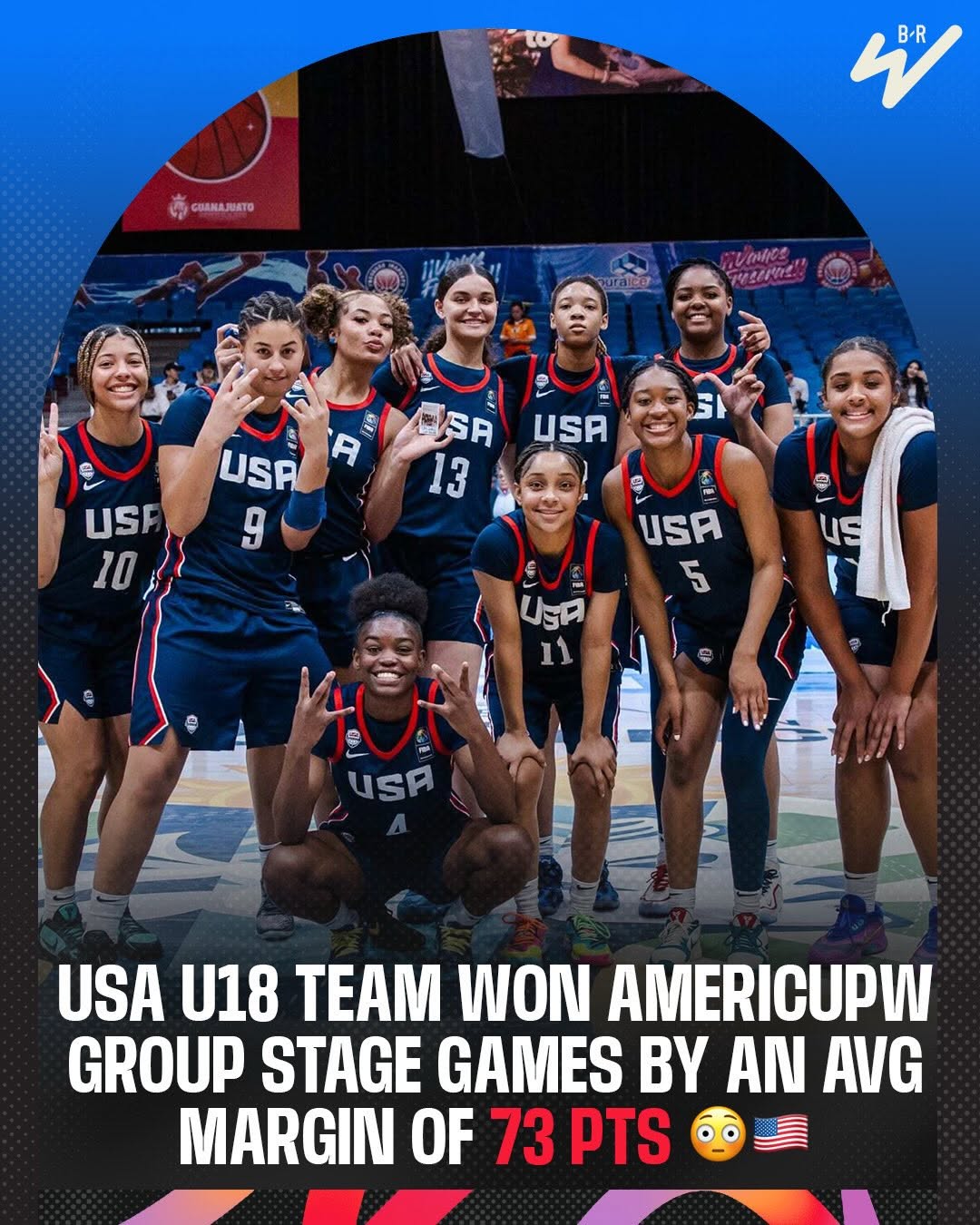
The South Carolina signee has been one of the steady contributors for the USA Basketball U18 Women’s National Team at the FIBA U18 AmeriCup in Irapuato, Mexico — starting all three group phase games and helping the Americans cruise through the preliminary round undefeated and into a direct semifinal berth. With wins over Argentina (113-47), Mexico (125-53), and Paraguay (123-41), Team USA has been nothing short of dominant, and Andrews has been a consistent, multi-dimensional presence in every game she has played.
The Numbers: Consistent, Versatile, and Efficient
Andrews is averaging 5.0 points, 3.0 rebounds, and 3.0 assists in 12.5 minutes across the group phase — a statistical line that undersells her actual impact precisely because of how efficiently she has delivered it. The minutes total is modest, reflecting the depth of a roster loaded with top-tier prospects, but what Andrews has done within those minutes is consistently meaningful.
Against Argentina in a 113-47 blowout, she logged 12 minutes with 5 points, 3 rebounds, 3 assists, and a steal — a perfectly balanced line from a player who understands her role and executes it without overreaching. Against Mexico in a 125-53 rout, she expanded to 15 minutes, posting 6 points, 4 assists, 3 rebounds, and 2 blocks — the two blocks a particularly notable addition from a guard, reflecting the kind of defensive instincts and length that make her a genuinely disruptive presence at both ends. Against Paraguay in a 123-41 demolition, with Dawn Staley watching from the stands, she delivered 4 points, 3 rebounds, 2 assists, and a steal across 11 minutes.
What stands out across all three performances is the assist total. Nine assists in 37.5 minutes of play from a guard coming off a serious knee injury and playing on a team stacked with elite prospects is not something that happens accidentally. Andrews is reading the game, making the right decisions under pressure, and demonstrating the kind of unselfishness and court vision that programs like South Carolina are built around. Dawn Staley does not build offenses around scorers alone — she builds them around players who make everyone around them better. Andrews, through three games, looks like exactly that kind of player.
The Injury Context: Everything About This Run Means More
The statistical contributions are impressive on their own terms, but they carry exponentially more significance when viewed through the lens of where Andrews was just months ago. She is coming off a knee injury that cost her almost all of her senior high school season, making her inclusion in the team trials encouraging in itself — let alone earning a starting role on the national team.
The fact that she not only made the 12-player final roster out of a 22-player trial pool but has started every single game at the tournament reflects a level of physical recovery and competitive readiness that cannot be taken for granted. Knee injuries — particularly ones severe enough to end a season — require physical rehabilitation and the far more delicate reconstruction of mental trust in the body. Watching Andrews play with confidence, assertiveness, and full extension on defensive plays across three international games suggests she has done that reconstruction work completely.
This is also not Andrews’ first experience navigating competition immediately following an injury. At the 2024 FIBA U17 World Cup in León, Mexico, she averaged 2.4 points and 2.9 rebounds in seven games despite coming off an injury. She absorbed that limited role, contributed where she could, and let the gold medal moment speak for itself. The growth from that tournament to this one — more minutes, more responsibility, starting assignments, and a dramatically expanded assist profile — is the clearest possible evidence of a player whose development trajectory is legitimate and sustained.
Chasing a Third Gold Medal: The International Résumé
Andrews is already among the most internationally decorated players in South Carolina’s incoming class. She won gold at the 2023 FIBA Americas U16 Championship, where she averaged 6.0 points, 6.5 rebounds, and a team-leading 1.7 blocks — that blocks number from a guard being the kind of detail that makes scouts and coaches sit up straight. She followed that with gold at the 2024 FIBA U17 World Cup. She participated in the U19 National Team Trials in 2025. And now she is a starter on the U18 AmeriCup team, competing for a third consecutive gold.
USA Basketball has won 12 gold medals at the U18 Women’s AmeriCup, including 11 consecutive golds. The program Andrews is representing does not lose at this tournament — and if the group phase performances are any indication, this year’s edition is on course to extend that streak. The Americans are beating their opponents by an average of more than 70 points through three games. The competition has not been close, and the semifinal awaits.
Dawn Staley Was Watching — and So Was the Recruiting World
The detail that perhaps best captures the magnitude of this moment came Friday, when Dawn Staley was in attendance to watch Andrews against Paraguay — and presumably to do some recruiting as well. That qualifier is important, because the recruiting dimensions of this tournament extend well beyond Andrews’ own performance.
Also on the 12-player Team USA roster are Jezelle Banks, Jordyn Palmer, Sydney Savoury, and Kaleena Smith from the class of 2027 — all of whom are active South Carolina recruiting targets — and Sydney Douglas from the class of 2028. Staley was not in Irapuato merely to support her incoming signee. She was working. Every interaction between Andrews and those recruits on and off the court, every conversation in a locker room or during a warmup, every moment those 2027 prospects spend watching how Andrews carries herself as a Gamecock representative — all of it is recruiting.
Andrews, knowingly or not, is serving as South Carolina’s most visible ambassador at this tournament. And based on what she has shown across three games — composure, unselfishness, two-way energy, and an ability to perform in international competition immediately following injury — she is making an exceptionally compelling case for what playing for Dawn Staley does for a player’s development.
What Comes Next: The Road to the Gold Medal Game
With the group phase complete, Team USA advances directly to the semifinals on June 14, where they will face the winner of Friday’s quarterfinal between Venezuela and Mexico. The gold medal game is scheduled for June 15.
The bracket sets up favorably for the Americans. Venezuela and Mexico were both handled convincingly in group play, and the path to a gold medal game does not appear to run through the most formidable competition in the tournament. Canada, who awaits on the other side of the bracket, represents the most credible threat to an all-American final — but that is a concern for the gold medal game, not the semifinal.
For Andrews specifically, each additional game is another opportunity to add to a national team résumé that is already extraordinary for a player her age, to continue demonstrating her health and readiness ahead of her arrival in Columbia, and to potentially close the deal on teammates who happen to be among the most coveted recruits in the class of 2027.
All games are available to stream on the FIBA YouTube channel for those wanting to watch the Gamecock signee compete for gold.
The third medal is within reach. Based on everything Andrews has shown in Mexico, it would be unwise to bet against her getting it.
About The Author