
Audi Crooks Heads To Oklahoma State — But Would She Have Ever Truly Fit Into Dawn Staley’s South Carolina System?
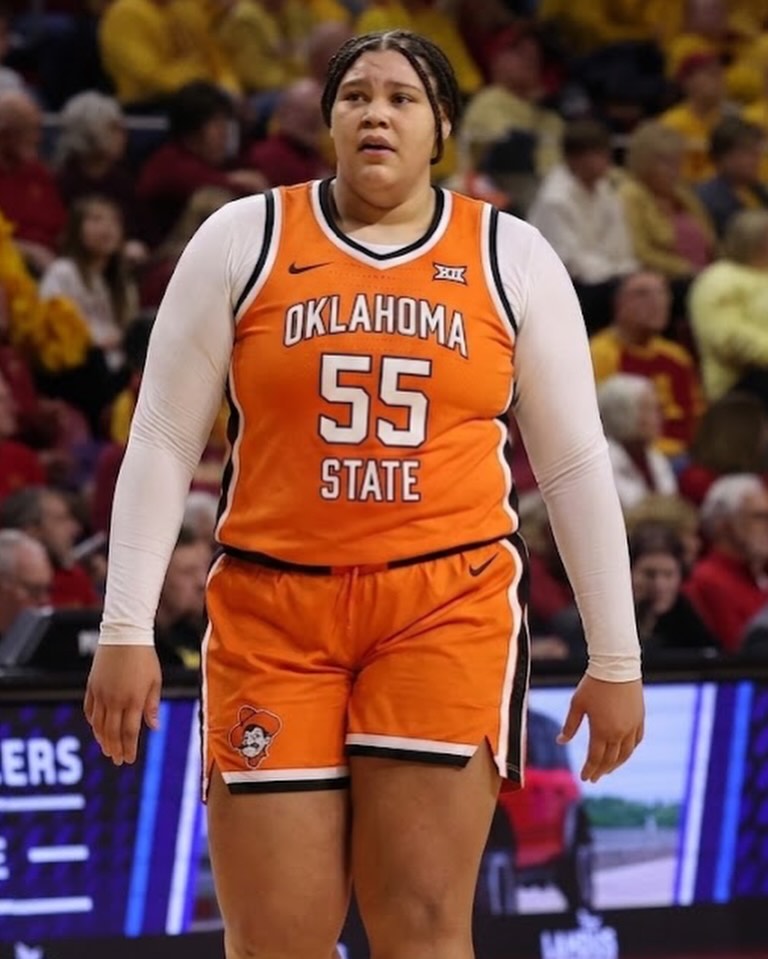
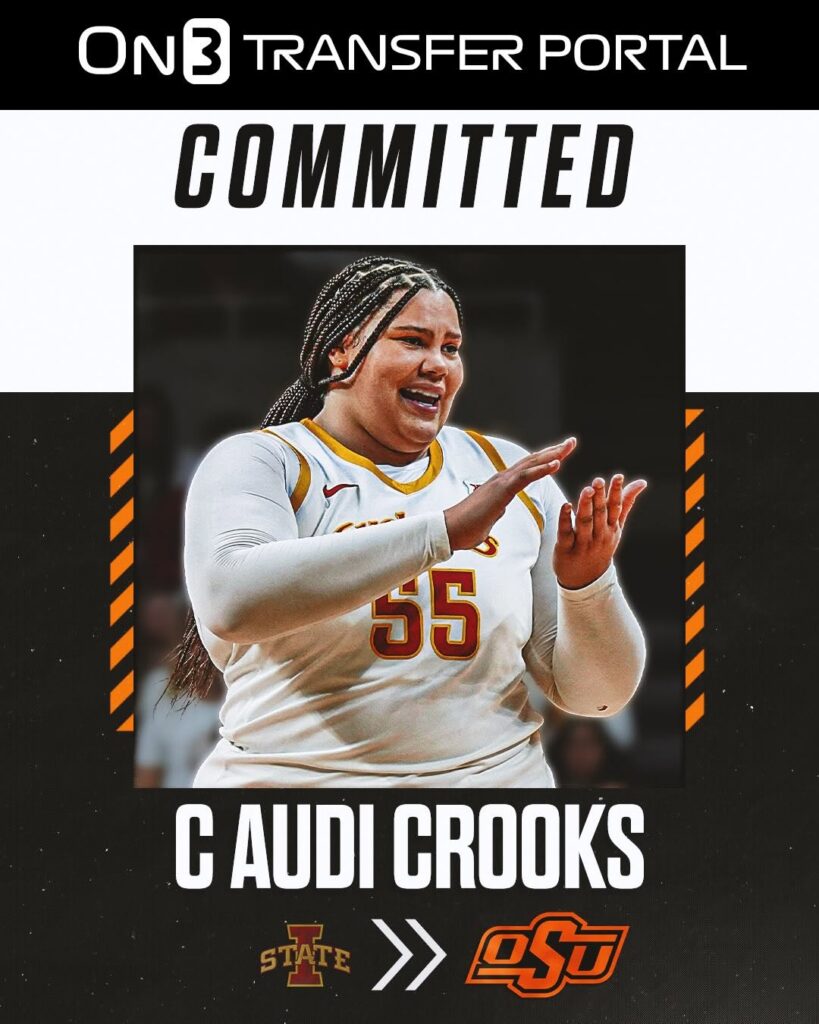
The transfer portal has delivered yet another blockbuster decision, as Iowa State star center Audi Crooks has officially committed to Oklahoma State, ending what was one of the most watched recruitment sagas in the women’s college basketball transfer cycle. With averages of 25.8 points and 7.7 rebounds per game this past season, Crooks is undeniably one of the most statistically dominant players to enter the portal in recent memory. The Cowgirls have landed a genuine star.
But as the dust settles on her commitment, a fascinating question lingers in the background — one that South Carolina fans in particular may find themselves wrestling with: Was Audi Crooks ever really a Dawn Staley player? And did the Gamecocks even want her — or did they simply miss out on a generational scorer?
The Numbers Are Impossible To Ignore
Let’s start with the obvious. 25.8 points per game is not a stat line you gloss over. That is a dominant, defense-warping, game-breaking level of production that very few players in women’s college basketball have ever sustained over a full season. Add 7.7 rebounds per game to that, and you have a center who is clearly capable of taking over games in the most traditional, post-dominant sense of the phrase.
Oklahoma State is getting a proven, elite-level scorer who can change the complexion of a program overnight. There is no debate about that. Crooks is a genuine star, and the Cowgirls deserve credit for landing her.
The real conversation, however, is whether that production would have translated inside the walls of Colonial Life Arena — and whether it was ever truly the right fit for what Staley is building.
Understanding What Dawn Staley Actually Builds
To evaluate whether South Carolina missed out on Crooks, you first have to understand what the Gamecocks system actually demands from its players — particularly its frontcourt pieces.
Staley’s program has never been built around one-dimensional post scorers who operate primarily in isolation or with their back to the basket. Her system is fluid, fast, and demands that every player on the floor — regardless of position — be able to defend multiple positions, rebound with purpose, make reads in transition, and contribute within a team-first framework rather than as a primary offensive focal point.
The players who have thrived most in Columbia under Staley have been versatile, defensively engaged, and willing to subordinate individual statistics for collective success. They have been players who make the team better in ways that don’t always show up in a scoring column.
Where The Fit Gets Complicated
This is where the honest analysis of Crooks’ game relative to Staley’s system becomes a genuinely interesting conversation.
Crooks is, at her core, a volume post scorer. Her 25.8 point average is built significantly on her ability to operate in the post, score in isolation situations, and draw fouls at a high rate. She is powerful, physical, and difficult to move out of her spots — qualities that make her extraordinarily effective in systems built to feed her the ball and let her operate.
The question South Carolina’s coaching staff would have had to answer is this: Does Crooks’ style of play serve our system, or would our system have to bend to serve her?
In Staley’s world, that is a critical distinction. The Gamecocks don’t typically build their offensive identity around a single post player demanding the ball in the paint. They spread the floor, attack in transition, create through ball movement, and win with collective versatility rather than individual dominance. Inserting a player whose production is rooted in high-volume post touches into that framework is not as seamless as the stat line might suggest.
The Defensive Question
Perhaps the most pointed area of concern from a South Carolina fit perspective is defense — which, as everyone in women’s college basketball knows, is where Staley’s program lives and breathes.
The Gamecocks’ defensive system demands that every player be able to switch, move laterally, guard in space, and apply full-court pressure at various points throughout a game. For a traditional center whose defensive identity is built around protecting the paint and battling in the post, the adjustment required to function in Staley’s defensive schemes is significant.
This is not a knock on Crooks as a player — it is simply an honest assessment of what Staley’s system demands and whether a player of Crooks’ profile has historically thrived in that environment. The Gamecocks have consistently prioritized defensive versatility in their frontcourt, and that is a very specific and demanding standard that not every elite scorer automatically meets.
Did South Carolina Miss Out — Or Did They Simply Move On?
This is the heart of the matter for Gamecock fans, and the answer is likely more nuanced than a simple yes or no.
On one hand, 25.8 points per game is 25.8 points per game. Any program in the country would benefit from that kind of offensive firepower, and there is always an argument to be made that elite talent finds a way to make any system work. Crooks is undeniably one of the best scorers in the portal, and there will be fans who look at that stat line and feel genuine disappointment that South Carolina wasn’t in the mix.
On the other hand, Staley has built a dynasty precisely by not chasing stars for the sake of their numbers. She has consistently prioritized fit, culture, and system compatibility over raw production — and that discipline has resulted in national championships, not just impressive individual performances. The Gamecocks’ history suggests that if they were not aggressive in pursuing Crooks, it was likely a deliberate and calculated decision rooted in exactly the kind of fit analysis outlined above.
Oklahoma State Got Exactly What They Needed
It is worth acknowledging that for Oklahoma State, this commitment is nothing short of transformational. The Cowgirls are getting a player who can immediately make them one of the most dangerous offensive teams in the Big 12, put fans in seats, and compete for attention in one of the most competitive conferences in the country. Crooks’ style of play — dominant, physical, high-volume post scoring — fits perfectly within a system that can be built around her strengths and designed to maximize what she does best.
This is a tremendous landing spot for Crooks, and a genuine program-shifting moment for Oklahoma State women’s basketball.
The Final Verdict
Did South Carolina miss out on Audi Crooks? Perhaps in the conventional sense — but probably not in the Dawn Staley sense.
The Gamecocks operate on a different set of recruiting principles than most programs, and those principles have proven themselves at the highest level repeatedly. Crooks is a brilliant scorer, a force of nature in the post, and a future professional — but the evidence suggests she may have been a square peg in the very particular round hole that Staley has spent years perfecting in Columbia.
Oklahoma State is celebrating tonight, and rightfully so. But don’t expect Dawn Staley to be losing any sleep. She knows exactly the kind of player she is building around — and she will keep hunting until she finds every last one of them.
About The Author