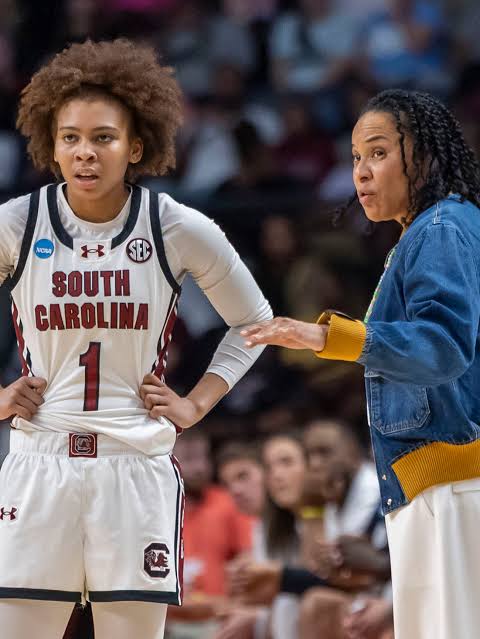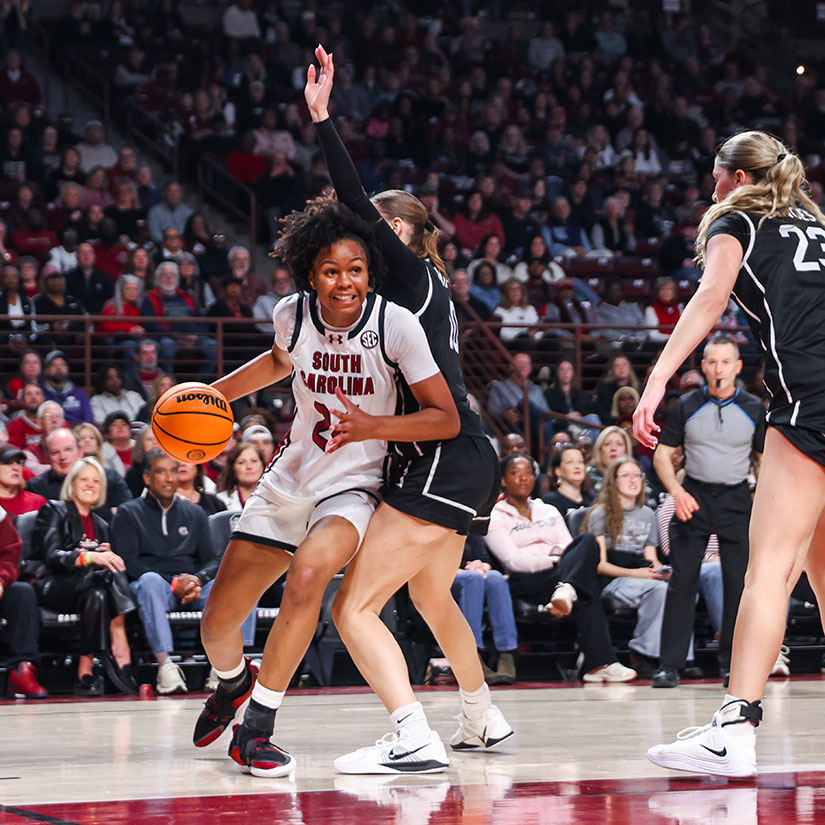
University of South Carolina freshman Ayla McDowell represents a new generation of student-athletes who refuse to compartmentalize their ambitions. The women’s basketball guard and mechanical engineering major approaches her dual challenges with a unified philosophy that treats defensive schemes and calculus problems as parts of the same intellectual puzzle.
The Convergence of Two Demanding Worlds
According to USC Women’s Basketball Head Coach Dawn Staley, McDowell “wants to take the world by storm.” This ambition manifests in McDowell’s daily reality, where she navigates one of college athletics’ most successful programs alongside one of academia’s most rigorous majors.
McDowell’s perspective reveals an integrated approach to challenge. “To me, everything is like a puzzle,” McDowell explains. “On the court you’re reading the defense, solving what’s going to happen next. It’s the same thing in school. I have to solve things and figure them out.”
The Rhythm of a Day
Her schedule reflects the demanding pace of elite collegiate athletics combined with STEM education. Morning weightlifting sessions begin at 7:30 a.m., followed by classes, basketball practice extending until mid-afternoon, tutoring sessions, laboratory work, and evening coursework that keeps her occupied until approximately 8 p.m.
Interestingly, McDowell identifies the greatest challenge not as time management or travel demands, but as the cognitive switching required by her academic load. “Studying for multiple exams at once,” she notes. “Switching my brain between calculus and chemistry is so difficult. That’s what makes it hard.”
From Cardboard Creations to Engineering Aspirations
McDowell’s engineering interests trace back to childhood creativity. “My mom would buy me toys, and I wouldn’t even play with them. I’d start creating things out of the cardboard and paper,” she recalls. “I’ve just always loved building things.”
Growing up in the Houston metropolitan area, this innate curiosity evolved through middle school manufacturing classes, robotics programs, welding courses, and annual high school engineering electives. Her choice of mechanical engineering stemmed from personal drive rather than external pressure.
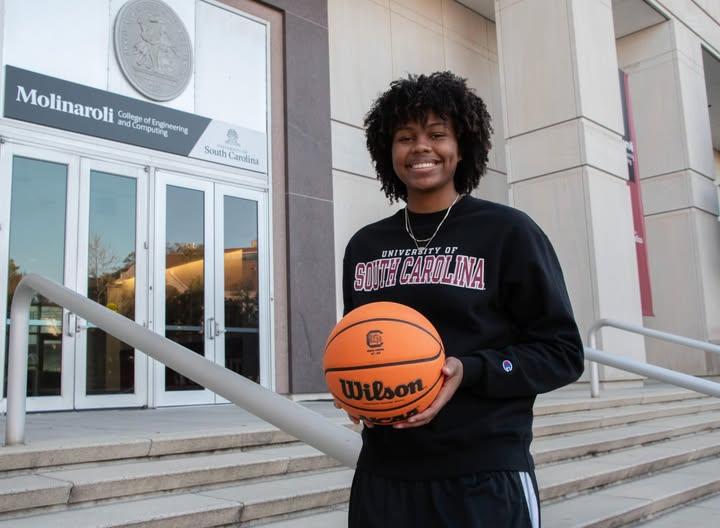
“I’m independent and like to do things on my own,” she states. “When I was choosing a major, I wanted something I really cared about and something that wasn’t easy.”
The decision between mechanical and civil engineering came down to versatility, informed by advice from a Molinaroli College of Engineering and Computing student ambassador who suggested that mechanical engineering skills transfer more broadly across disciplines.
Dual Ambitions, Singular Purpose
McDowell maintains realistic yet ambitious goals across both domains. While professional basketball remains her primary dream, she describes engineering as both a backup plan and a “plan-A-and-a-half.”
“I want to create things that can help people,” she says. “I love helping people on the court, and I want to help those in the engineering world too. I don’t know what I’ll make yet, but I know I want it to matter.”
The Carolina Difference
Columbia’s appeal to McDowell centered on community rather than facilities or rankings. “It was the family environment,” she explains. “I didn’t want to go somewhere and feel homesick, and I felt comfortable here right away.”
The support structure at USC has proven essential to managing her dual commitments. Academic advisors arrange tutoring sessions as needed, coaches maintain daily academic check-ins, and teammates understand the unique pressures of her chosen path.
Philosophy of Perseverance
McDowell references a parable about persistence when describing her approach to challenges. “There’s that image of a guy digging through a wall looking for diamonds,” she describes. “One guy gives up before he reaches them. The other keeps going. I think about that image all the time.”
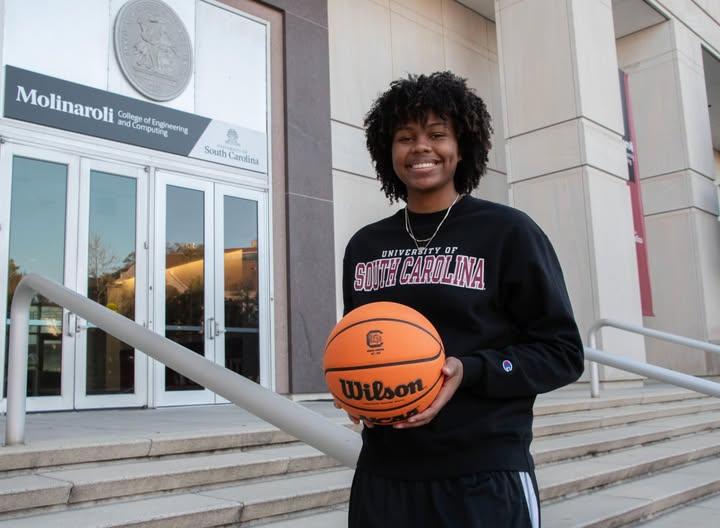
Her definition of success prioritizes resilience over achievement metrics. “Keep going, no matter what. Don’t let one bad moment define you.”
Looking forward, McDowell aims to complete her engineering degree potentially within three years, leveraging incoming credits and careful course planning. “I expect to grow tremendously as a player and student,” she projects. “I want to graduate and reach my best self.”
Legacy Beyond Statistics
McDowell’s impact vision extends beyond points scored or grades earned. “I want to leave an inspiring legacy,” she declares. “One that shows you can do whatever you put your mind to.”
She recognizes that influence doesn’t require stardom on the court. Her example—demonstrating that elite athletics and demanding STEM studies can coexist—may prove more valuable than any individual accomplishment.
Analytical Perspective
McDowell’s story illustrates several significant trends in collegiate athletics and higher education:
Integration over separation: Her refusal to treat athletics and academics as competing priorities reflects a holistic approach increasingly common among high-achieving student-athletes who view diverse challenges as complementary rather than contradictory.
STEM accessibility: By pursuing mechanical engineering while competing at basketball’s highest collegiate level, McDowell challenges outdated assumptions about who belongs in technical fields and when such pursuits are feasible.
Support systems matter: Her success depends not merely on personal drive but on institutional infrastructure—advisors, coaches, and teammates who facilitate rather than merely accommodate her dual commitments.
Redefining success: McDowell’s emphasis on persistence over performance metrics and legacy over accolades suggests a mature understanding of achievement that prioritizes sustainable growth over short-term validation.
Her journey, still in its early chapters, offers a compelling case study in modern student-athlete experience where excellence in one domain need not come at the expense of another, provided the individual possesses both capability and determination alongside adequate institutional support.
Source: University of South Carolina (sc.edu)