Dawn Staley’s Social Media Habits Reveal Something Bigger Than Fandom
Watching Dawn Staley’s timeline during a WNBA game tells you a lot about how she views her role in women’s basketball — not just as South Carolina’s head coach, but as someone actively invested in the sport’s broader growth, regardless of program ties.
A program-record presence across the league gives her plenty to watch
That investment is easy to understand given how connected Staley remains to the professional game. She’s led South Carolina since 2008, building on her own WNBA playing career from 1999 to 2006, and those relationships have only multiplied over time — both from her playing days and through the pipeline of former players she’s sent to the league. Right now, Staley has a program-record 12 former Gamecocks currently on WNBA rosters, giving her a genuine, direct stake in games across the league on any given night.
Recognizing talent with no South Carolina connection whatsoever
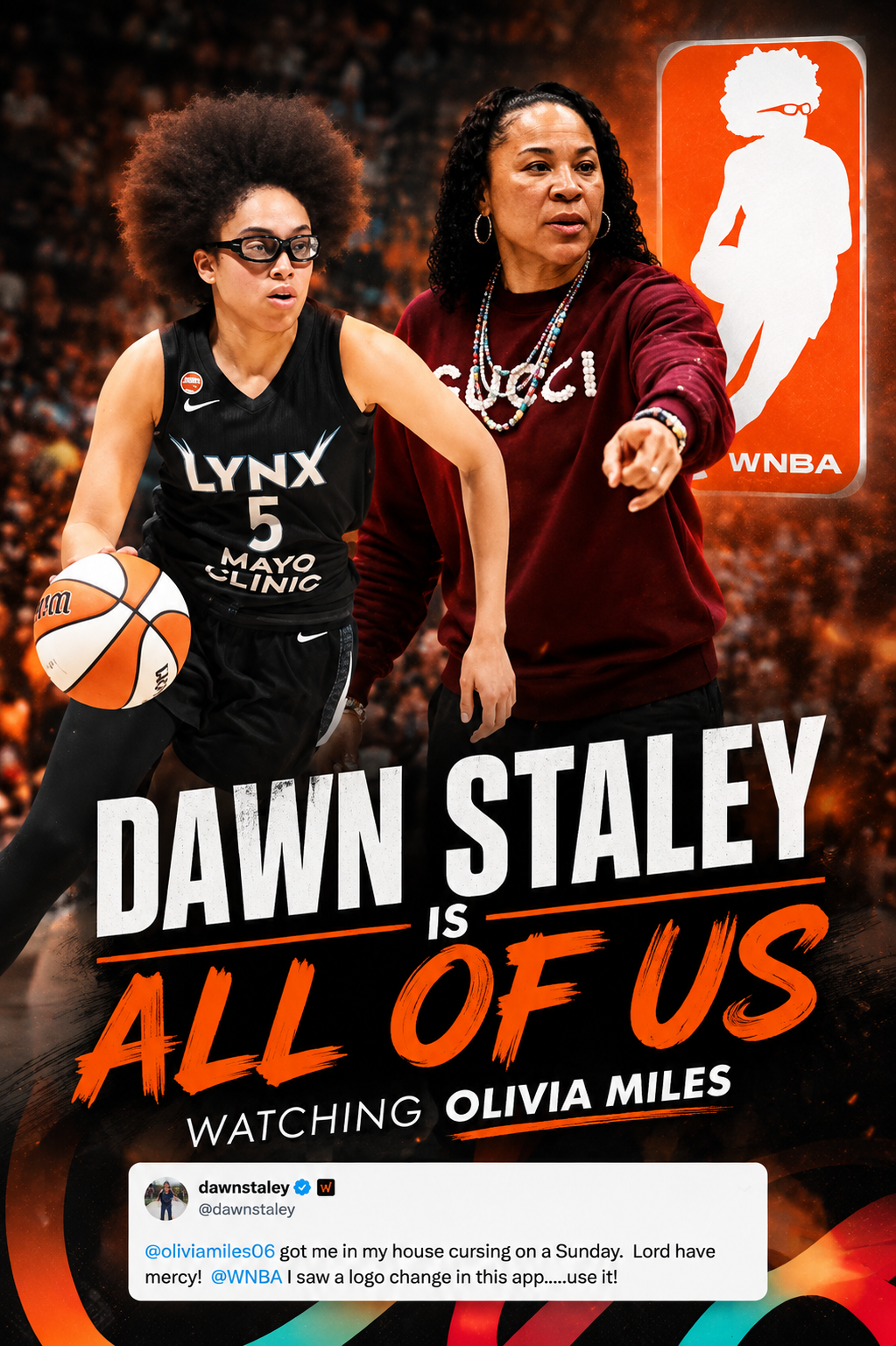
Yet what stood out during the August 2 primetime matchup between the Indiana Fever and Minnesota Lynx wasn’t Staley cheering for a former player — it was her enthusiastic reaction to a rookie with zero ties to her program. TCU product Olivia Miles put together a dominant performance for Minnesota, finishing with 28 points, six assists and four rebounds in a 108-100 win, including a blistering 23-point first half that got Staley posting in real time.
“@oliviamiles06 got me in my house cursing on a Sunday. Lord have mercy!” Staley wrote on X, before adding a jab directed at the league itself: “@WNBA I saw a logo change in this app….use it,” accompanied by an image of Miles’ silhouette reimagined as the league’s logo. That’s not a small compliment — suggesting a player deserves consideration as the face of the league’s actual logo is about as high a public honor as one competitor can pay another.
The pattern extends well beyond one player
This wasn’t an isolated moment, either. In that same game, Fever guard Kelsey Mitchell — a former Ohio State standout with no South Carolina connection — dropped 37 points, and Staley made sure to acknowledge that performance too: “@Kelz_Hoop dammit! You are straight NASTY!!!” Two unprompted, enthusiastic shout-outs to non-Gamecocks in a single broadcast reinforces that this is a genuine habit rather than a one-off reaction — Staley routinely using her platform to spotlight excellence around the league, independent of any personal or program connection.
A rivalry rooted in mutual respect
The Staley-Miles dynamic actually has history behind it. The two exchanged compliments ahead of their teams’ Elite Eight matchup in the NCAA Tournament, a game South Carolina ultimately won — ending Miles’ college career just short of a first Final Four appearance. Asked about Staley’s praise before that game, Miles didn’t hesitate to return the admiration. “Dawn Staley is such an icon … Just an important point guard. High praises, obviously,” Miles said. That existing rapport helps explain why Staley’s in-game reaction to Miles’ rookie breakout felt genuine rather than performative — it’s a continuation of respect that predates Miles even entering the professional ranks.
Miles, for her part, simply responded to Staley’s latest praise with a laughing emoji — a lighthearted acknowledgment befitting the tone of Staley’s original post.
Former Gamecocks still get their due
None of this means Staley has shifted her attention away from her own coaching tree. The Fever alone feature four former Gamecocks — Aliyah Boston, Raven Johnson, Ty Harris and Bree Hall — and Staley made sure to highlight Johnson specifically during the same game, writing “seatbelt gang! What you got Ray Ray!”, a nod to her former point guard’s defensive intensity. That single post, sandwiched between her praise of Miles and Mitchell, illustrates the real point: Staley isn’t choosing between supporting her former players and celebrating the league’s broader talent pool — she’s doing both, often within the same game.
Why this matters
Taken together, these small social media moments add up to something more meaningful than casual fandom. A coach with Staley’s stature and influence choosing to spend her time publicly celebrating players from rival programs — not just her own alumni — sends a clear signal about her priorities: growing the visibility and respect of women’s basketball as a whole matters to her just as much as promoting South Carolina’s own pipeline. In a sport still fighting for equal attention and coverage, that kind of unprompted, genuine cross-promotion from one of its most recognizable figures carries real weight.
About The Author