From Sumter to Green Bay: How Brandon Cisse’s One Season in Columbia Turned a Transfer Into a Second-Round NFL Pick
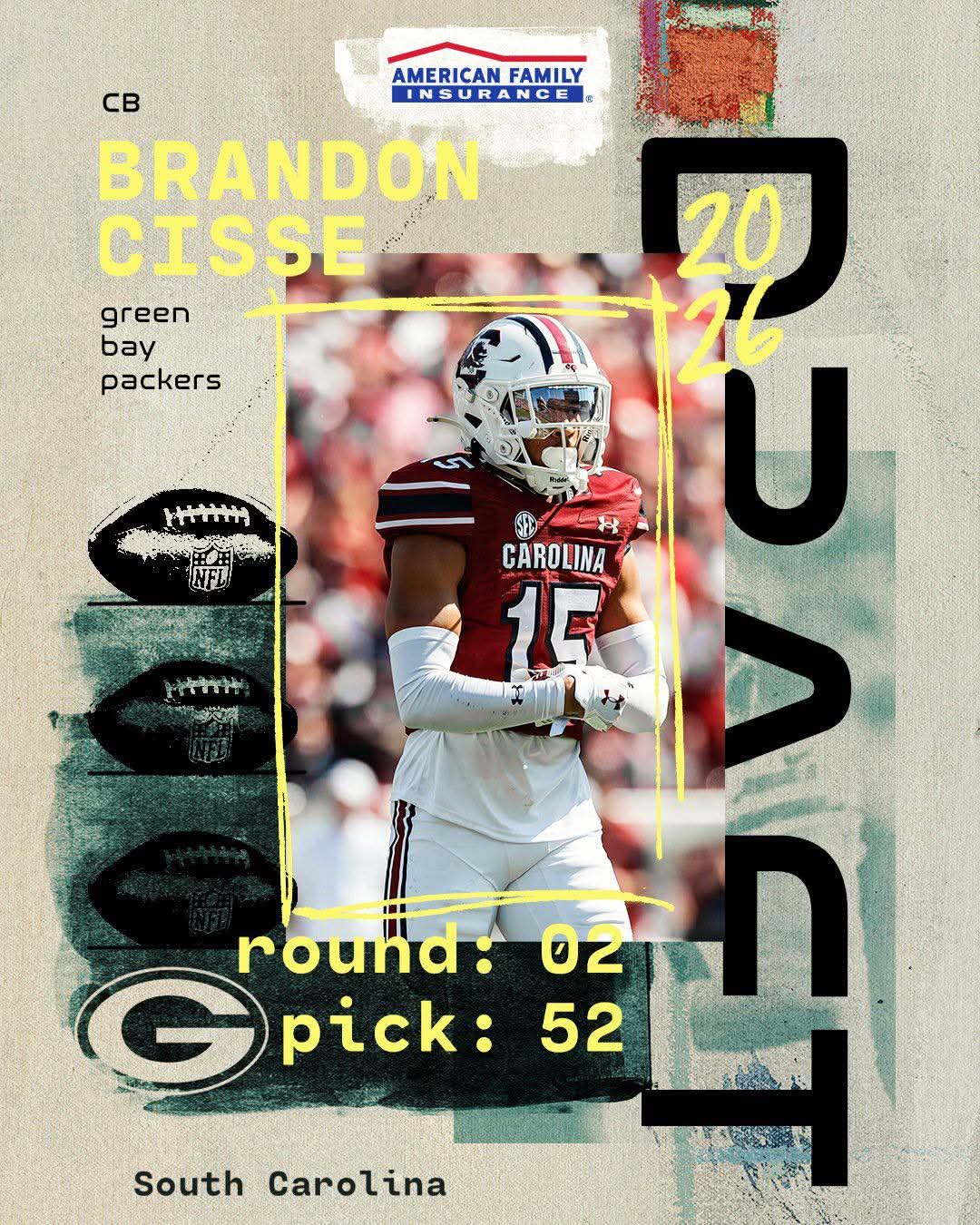
There is a pipeline running from Columbia, South Carolina to the NFL, and it doesn’t show any signs of slowing down. For the fourth consecutive year, a South Carolina defensive back heard his name called in the NFL Draft — and this time, it was Brandon Cisse, the Palmetto State native who bet on himself, transferred to his home state’s flagship program, and parlayed a single dominant season into a second-round selection by the Green Bay Packers.
The Green Bay Packers made it official on Friday, selecting Cisse with the No. 52 overall pick — a selection that carries immediate significance for both the player and the organization.
The Wait That Made It Sweeter
Cisse entered draft weekend with legitimate first-round buzz attached to his name. The conversation was real, the interest was genuine, and the expectations were elevated. When Thursday night came and went without his selection, it would have been easy to let the moment unravel into disappointment.
It didn’t. Because the reality of what Cisse brings to an NFL roster was always going to command professional attention, regardless of which round the phone call came in. By Friday afternoon, Green Bay had made its move — and Cisse’s professional football dream was no longer a conversation. It was a contract.
Landing at No. 52 overall in the second round is not a consolation prize. It is a validation. It means an NFL front office evaluated every piece of available evidence — the film, the metrics, the character profile, the competitive background — and decided Cisse was worth spending one of their most valuable draft resources to acquire. The first round miss stings for a moment. The second-round selection lasts a career.
Exactly What Green Bay Needed
The fit between Cisse and the Packers is not accidental, and it isn’t simply organizational preference. It is a direct response to a measurable organizational deficiency that Green Bay’s front office had to address this offseason.
During the 2025 NFL season, the Packers ranked 28th in the entire league in interceptions, picking off just seven passes all year. That is not a secondary performing at an acceptable level — that is a unit that opposing quarterbacks attacked with confidence, knowing the price of an errant throw was lower than it should be for a franchise with Super Bowl aspirations. Green Bay needed playmakers in the secondary. They needed players who could change the dynamic of how opposing offenses approached them.
Cisse answers that need directly. He arrives in Wisconsin with an athletic profile that made scouts take notice well before draft weekend — a 41-inch vertical and a 10-foot-11 broad jump at the NFL Combine that placed him in elite company among defensive backs in this class. Then, at South Carolina’s Pro Day, he ran a 4.40 in the 40-yard dash, confirming that the explosion measured at the combine translates to straight-line closing speed on the football field.
Those aren’t numbers. Those are weapons. And Green Bay just acquired them in the second round.
He will also be joining familiar Gamecock territory in Wisconsin. Fellow South Carolina defensive back Keisean Nixon is already established with the Packers organization, giving Cisse a built-in connection to the locker room and a living example of what the transition from Columbia to the NFL looks like when it’s done right.
One Season. Everything Changed.
The most remarkable aspect of Cisse’s story isn’t the draft selection itself — it’s the timeline. He spent his first two collegiate years at NC State before making the transfer decision that ultimately defined his professional trajectory. He came home to South Carolina ahead of his junior season, stepped immediately into the starting lineup at cornerback, and proceeded to play himself onto every serious NFL evaluator’s radar in the span of a single season.
The production in that one year was tidy and effective — 27 tackles, 1.5 for a loss, one interception, and five pass breakups in a season where opposing offenses made the deliberate decision to avoid testing him. That last point matters more than it might initially appear. Being avoided is a form of dominance in cornerback play. It means you’ve done your job so convincingly that the other team’s quarterback and coordinator have quietly decided that throwing your direction isn’t worth the risk.
The recognition he earned during that one year in Columbia underscored how quickly he made his presence felt. Cisse earned 2025 Newcomer of the Spring honors on defense and co-Newcomer of the Spring recognition on special teams — a dual designation that reflects not just talent at one position, but the kind of all-phases investment in the game that professional coaching staffs specifically seek out. Cisse himself has described his relationship with football in terms that explain exactly why those awards made sense: he is, by his own account, a “football junkie.” That identity — that consuming love for the craft — is what separates players who have ability from players who develop it into something an NFL franchise will pay second-round draft capital to acquire.
The Continuation of a Legacy
Cisse’s selection on Friday carries meaning beyond his individual story. For the fourth consecutive year, a South Carolina defensive back has been taken in the NFL Draft. Four straight years. Four different players. Four different professional opportunities generated by the same program, the same defensive coaching philosophy, and the same standard of player development that has made South Carolina’s secondary one of the most respected developmental units in college football.
That is not luck. That is a system. Dawn Staley has built her women’s basketball program into one of the most successful in the history of the sport, and on the men’s side, the Gamecocks are quietly establishing their own form of organizational excellence in the defensive backfield — producing NFL-caliber talent at a rate that demands recognition.
Brandon Cisse is the latest name on that list. A Sumter kid who took the long road through Raleigh, came home to Columbia, bet on himself in the biggest audition of his life, and answered every question the NFL asked with a vertical jump, a broad jump, a 4.40, and twelve starts of elite coverage football.
Green Bay didn’t just get a cornerback on Friday. They got a football junkie with elite athleticism, South Carolina-forged toughness, and a chip on his shoulder from watching Thursday night pass without his name being called.
That combination tends to produce very motivated professional football players.
The Packers’ secondary just got significantly more interesting.
About The Author