Gamecock Fans Are Opening Their Wallets Like Never Before — And The $168 Million Raised For Williams-Brice Is Only The Beginning
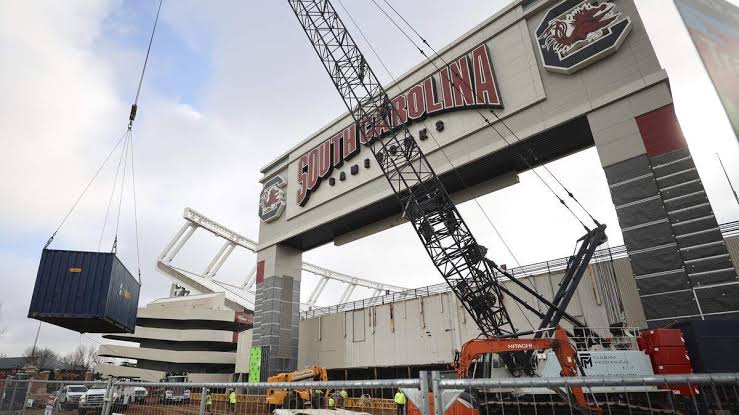
There is a particular kind of institutional momentum that reveals itself not in press releases or coaching hires, but in the willingness of a fanbase to invest real money in the future of a program. By that measure, South Carolina football is experiencing something genuinely significant right now. The University of South Carolina announced Thursday that its “Williams-Brice Reimagined” renovation project has surpassed $168 million raised, with suite sales exceeding expectations, premium seating outpacing projections, and the entire undertaking remaining on budget and on schedule.
Those are not routine progress report numbers. They are indicators of a fanbase that believes deeply in where this program is heading — and is putting its money behind that belief in tangible, unprecedented ways.
The Numbers Tell A Story
The $168 million figure is the headline, but the details surrounding it are arguably more revealing than the total itself. Athletic Director Jeremiah Donati confirmed that suite sales are “exceeding expectations during the initial phase of the campaign” — language that carries specific meaning in the context of major capital projects. Expectations in a campaign of this scale are not set conservatively. They are built on rigorous market analysis, comparable projects at peer institutions, and realistic assessments of donor appetite. When sales exceed those expectations in the initial phase, it signals that demand is running ahead of even the most optimistic internal projections.
“The passion and commitment our Gamecock fans continue to show toward our program is incredible,” Donati said. “Many of the new suite holders in Williams-Brice are longtime Gamecock supporters and they are really excited about what’s ahead for Gamecock Football and the Williams-Brice Stadium Reimagination Project.”
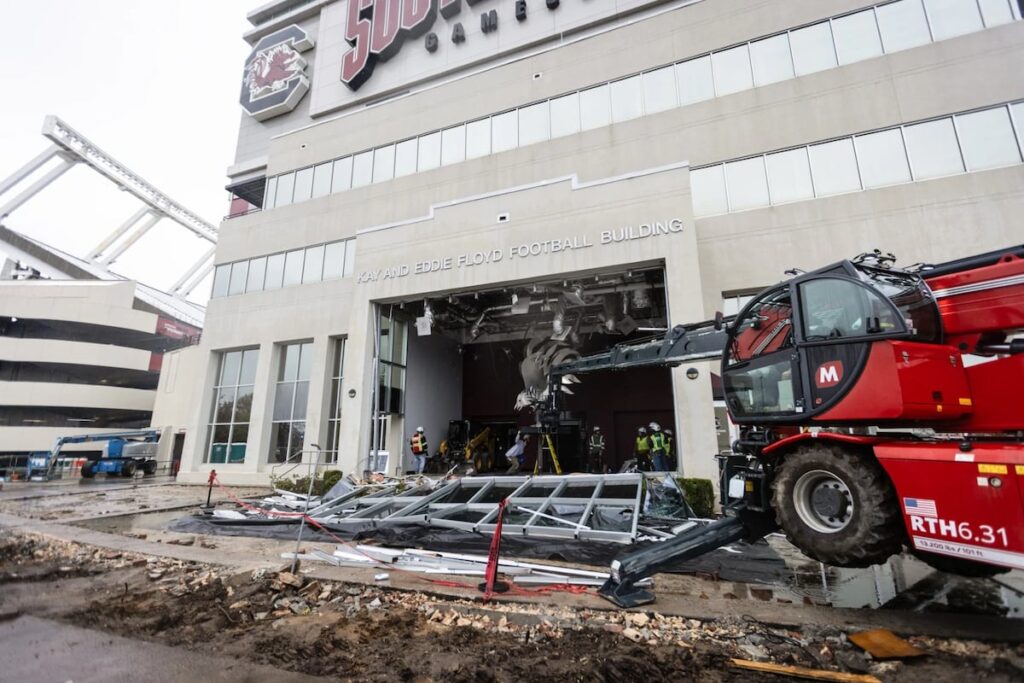
Donati’s emphasis on longtime supporters is worth examining. These are not casual fans making impulse purchases. These are individuals with deep, sustained relationships with the program who have chosen this specific moment — this specific project — to make their largest financial commitment to Gamecock athletics. That kind of buy-in from the program’s most loyal constituency reflects confidence in leadership, confidence in direction, and confidence in the vision being sold.
What The Timeline Means For The Program
The renovation’s structural timeline has direct implications for how South Carolina football operates over the next several years, and understanding those implications requires mapping the schedule against the program’s competitive trajectory.
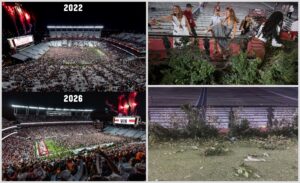
Club seat selections open June 1, with detailed information being distributed to Gamecock Club members in the coming days. All suite and club purchases apply to the 2027 football season — meaning the fans investing now are buying into a version of Williams-Brice that will be meaningfully transformed from what currently exists. The second phase of the renovation project begins after the 2026 season concludes, which means the 2026 campaign — opening September 5 at home against Kent State — will be the last full season played in the current configuration of the stadium before construction reshapes the fan experience.
That context gives the 2026 season an added layer of significance beyond the normal competitive stakes. It is, in effect, a farewell season to Williams-Brice as Gamecock fans have always known it — and an opening chapter in the story the renovation is being built to tell.
What “Williams-Brice Reimagined” Actually Delivers
The financial momentum is impressive, but the renovation’s credibility ultimately rests on what it physically delivers to the fans, recruits, and program it is designed to serve. South Carolina has committed to a range of improvements that address both the premium experience and the general fan infrastructure in meaningful ways.
On the premium side, the new suites and club seats represent a fundamental upgrade to the hospitality environment at Williams-Brice — bringing the stadium’s amenity level into competition with the facilities that SEC peers have been building and upgrading aggressively over the past decade. In the current landscape of college football, where facility quality directly influences recruiting conversations and revenue generation, closing that gap is not optional. It is essential.
Equally important, though less glamorous, are the infrastructure improvements that affect every single person who attends a game regardless of their ticket category. Wider concourses address one of the most persistent frustrations at Williams-Brice — the congestion that makes movement between sections during games genuinely difficult. Additional concession and restroom locations attack another chronic pain point that erodes the game-day experience for fans who have been navigating the stadium’s limitations for years.
The improvements to “The Cockpit” — South Carolina’s student section — deserve particular attention from a program-building perspective. Student sections are the emotional engine of college football atmospheres, and investing in that environment sends a direct message to the 18 to 22-year-olds who will occupy those seats for years to come. A better student experience generates better atmosphere, better atmosphere enhances recruiting visits, and better recruiting visits build better football teams. The Cockpit upgrade is not just a fan amenity — it is a competitive investment.
The Recruiting Dimension
No analysis of a major stadium renovation at a Power Conference program is complete without examining what it means on the recruiting trail, because the two are inseparable in the modern college football landscape.
Elite high school prospects — the players South Carolina needs to compete for SEC championships — are visiting multiple campuses every recruiting cycle and making direct comparisons between facilities, atmospheres, and the overall vision programs project for their future. A Williams-Brice Stadium in active, well-funded transformation tells a recruit something specific: this program is investing, this administration is committed, and the experience of playing here is going to be something worth being a part of.
The $168 million already raised — with suite sales exceeding expectations before the project reaches its midpoint — gives coaches a concrete, credible story to tell on recruiting visits. They are not asking prospects to trust a vision. They are showing them a funded, on-schedule reality that will be fully visible by the time a 2027 or 2028 recruit arrives on campus.
That is a fundamentally different conversation than programs still in the planning or fundraising stages can offer.
The Bigger Picture
What Thursday’s update ultimately communicates is that the Williams-Brice Reimagined project has moved decisively past the aspirational phase and into the execution phase — and the financial metrics suggest the execution is outperforming the plan. More than $168 million raised. Suite sales exceeding expectations. Premium seating outpacing projections. On budget. On schedule.
In major capital construction, hitting all of those benchmarks simultaneously at this stage of a project is genuinely uncommon. It reflects careful planning, strong donor relations, and an institutional credibility that makes large financial commitments feel secure rather than speculative.
For Gamecock fans, the message is straightforward: the stadium you have loved for decades is about to become something better — and the people building it have the resources and the momentum to deliver on that promise.
For the rest of the SEC, the message is equally clear. South Carolina is not renovating Williams-Brice because it has money to spend. It is renovating Williams-Brice because it intends to compete — for recruits, for championships, and for the kind of program identity that sustains excellence across generations.
The 2026 season kicks off September 5 against Kent State. Enjoy Williams-Brice as it is. Because by 2027, it will never look the same again.
About The Author