
New Book Explores the Legacy of Steve Spurrier’s Decade in Columbia
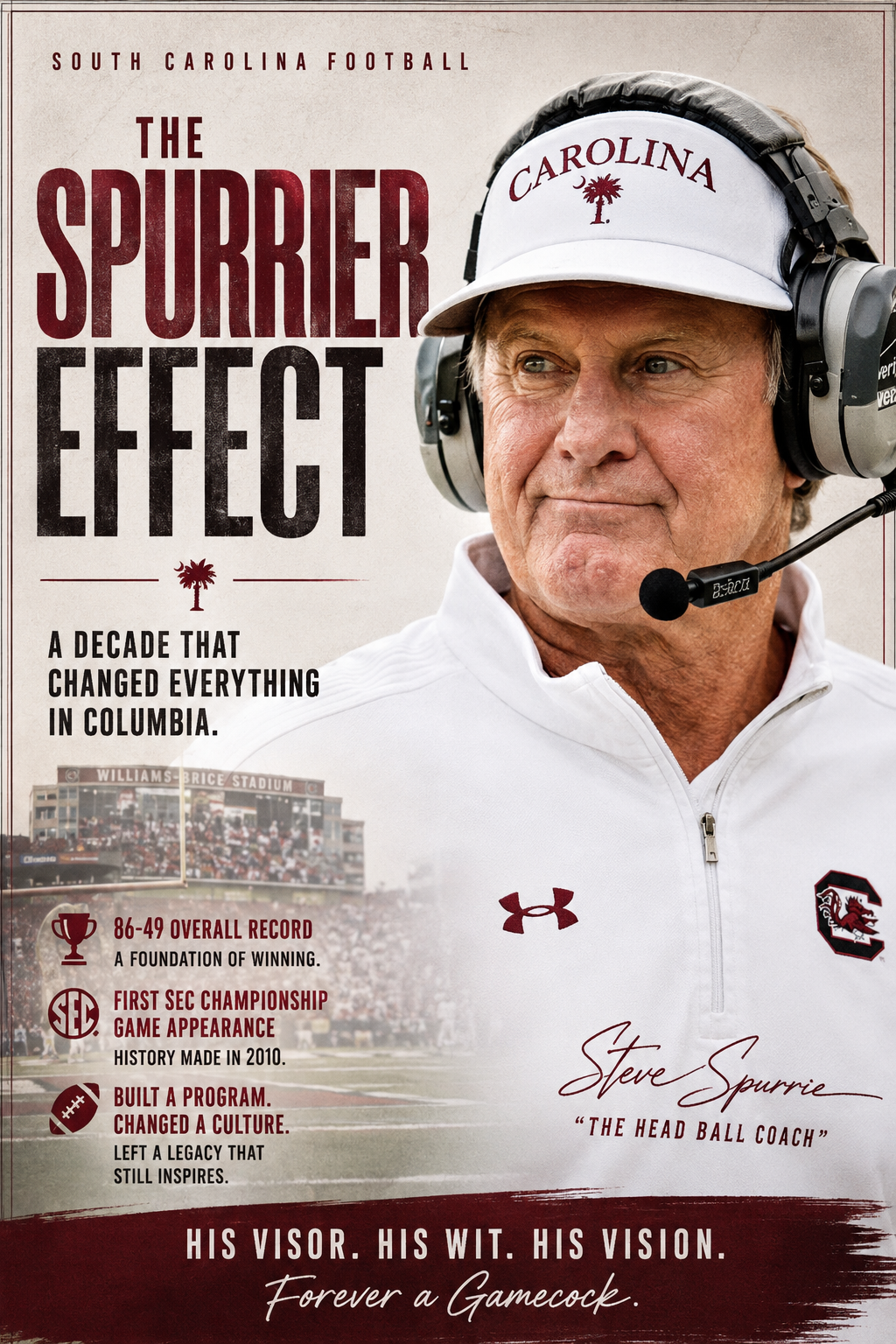
A new title chronicling one of the most transformative eras in South Carolina football history is set to hit shelves this month, offering an inside look at how Hall of Fame coach Steve Spurrier reshaped the Gamecocks program during his tenure leading the team.
A book built around the man, not just the record
“The Spurrier Effect,” co-written by Brent Silvia and Kevin Miller, arrives August 18 with a stated ambition to move beyond the scoreboard and dig into the personal side of a figure best known publicly for his visor and sharp-tongued press conferences. According to its synopsis, the book aims to “reveal the man behind the visor—his partnership with his wife, Jerri, his relationships with his players, and his fierce competitiveness, sharp wit, and unwavering belief in South Carolina’s ability to achieve greatness.” That framing suggests the authors are less interested in simply recapping wins and losses than in examining the personal relationships and mindset that shaped how Spurrier actually built and led the program.
A tenure defined by genuine program-building
Spurrier’s decade in Columbia produced an 86-49 overall record before his resignation in 2015 — a solid mark on its own, but one that undersells the broader significance of what he accomplished at a program that hadn’t historically been considered an SEC power. His tenure delivered the Gamecocks’ first-ever appearance in the SEC Championship Game in 2010, a genuine watershed moment for a fanbase that had rarely seen its team competing for a conference title at that level.
Why this book matters for Gamecock fans now
Framing Spurrier’s era through personal relationships rather than just statistics offers a different lens on a period that fundamentally changed expectations for South Carolina football. For a fanbase that’s continued measuring subsequent coaching regimes against the standard Spurrier helped establish, a deeper look at the partnerships, competitiveness and belief system behind those results offers valuable context — not just nostalgia, but a clearer picture of exactly what it took to elevate a program that had rarely competed at that level before his arrival.
About The Author