South Carolina Baseball Adds More Coastal Carolina Talent: Daniel Parker Commits in Kevin Schnall’s Second Portal Move

COLUMBIA, S.C. — The transfer portal momentum at South Carolina baseball is building fast. Just hours after securing their first commitment of the Kevin Schnall era in left-hander Hayden Johnson, the Gamecocks landed a second Coastal Carolina arm on Tuesday night. Right-hander Daniel Parker announced his commitment to South Carolina via Instagram, becoming the latest piece in what is shaping up to be an aggressive and strategically coherent roster reconstruction.
Two commitments in one day. Both from Coastal Carolina. Both following the same coaching staff. The pattern here is unmistakable — and intentional.
The Coastal-to-Columbia Pipeline
Parker’s commitment deepens what is quickly becoming a defined recruiting philosophy for the new Schnall staff. Like Johnson before him, Parker is not being recruited cold — he is following a coaching staff that has already developed him, understands his mechanics, and has a clear vision for his role moving forward.
That kind of institutional knowledge is a genuine competitive advantage. Schnall and his staff know Parker’s arsenal, his tendencies under pressure, and his developmental trajectory better than any outside program could after a brief recruiting window. For a team trying to build fast, importing players whose potential is already understood eliminates guesswork and compresses the development curve.
Parker will also bring something the Gamecocks desperately need given their mass roster exodus: youth and longevity. He will have three years of eligibility remaining when he arrives in Columbia, making him one of the most valuable long-term assets in this portal class from a pure timeline perspective.
The Player: Raw Upside With a Winning Track Record
As a true freshman in 2026, Parker held his own in a Coastal Carolina program that, despite its own injury challenges, still managed a 21-9 record and a second-place finish in the Sun Belt Conference. Being entrusted with 19 appearances — including two starts — as a freshman on a winning program is a meaningful indicator of the confidence the coaching staff had in him early.
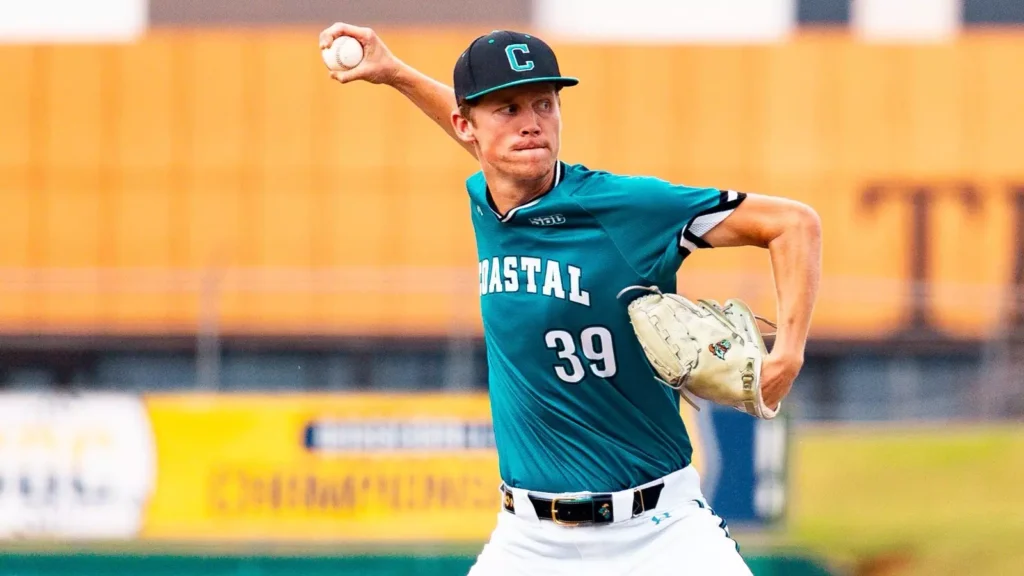
His numbers from that debut season paint the picture of a pitcher still developing but already showing real promise. Parker posted a 3-0 record with a 4.76 ERA over 34 innings pitched, finishing with 32 strikeouts while limiting opponents to a .232 batting average. The ERA, while not spectacular, is entirely reasonable for a freshman transitioning from high school to college ball, particularly one carrying a significant workload across 19 appearances. What stands out more meaningfully is the .232 average against — that figure suggests his stuff already forces hitters into weak contact, even if the command numbers (32 strikeouts to 21 walks) still need refinement.
The walk rate is the most honest development point in his profile. Twenty-one walks across 34 innings is roughly 5.6 per nine — a number that will need to improve substantially to succeed at the SEC level, where opposing lineups punish pitchers who live behind in counts. However, walk rates are among the most correctable statistical categories for young pitchers. With improved mechanics and a full offseason of work under Williams, that is a very addressable issue.
South Carolina Roots Add Emotional Fuel
Like the left-hander Johnson before him, Parker brings home-state ties that matter. He is a Hartsville native who notably attended nearby P27 Academy in Lexington — a school that has become a respected pipeline for college baseball talent in South Carolina. Playing his college career in Columbia means Parker will be close to his roots, his family, and the community that watched him develop into a college-caliber pitcher. That proximity often translates into performance.
His high school pedigree also reflects legitimate pre-college recognition. Coming out of the Class of 2025, Parker was ranked by Perfect Game as the No. 4 right-handed pitcher and No. 12 overall player in the state of South Carolina. Those rankings do not exist in a vacuum — they reflect a credible evaluation of both present tools and future ceiling. The fact that he immediately contributed as a freshman at Coastal validated that projection.
Three Years of Eligibility: A Long-Term Asset
The strategic value of Parker’s eligibility cannot be overstated for a program trying to build sustainable infrastructure rather than just papering over one rough season. With three full years ahead of him, Parker will ideally develop from a versatile freshman arm into a polished, high-leverage SEC starter or shutdown reliever by the time his career in Columbia peaks. That developmental arc — entering as a raw but intriguing sophomore, maturing through the middle years, and graduating as a trusted veteran arm — is exactly the kind of player Schnall needs to build a program around rather than just fill a roster.
The Schnall Blueprint Taking Shape
Taken together, the Johnson and Parker commitments reveal the early outline of Schnall’s rebuilding strategy: mine the program he knows best, prioritize pitching depth, and bring in players whose talent and character he can personally vouch for. It is a disciplined, high-trust approach that suits a staff working against the clock with a depleted roster.
South Carolina’s pitching staff was one of the most battered in the SEC this past season. Adding two arms from a Coastal Carolina program that, despite injuries, still competed at a high level in the Sun Belt this spring addresses a critical need immediately. And doing so with players who have already proven they can perform for this specific coaching staff is as close to a sure thing as the transfer portal allows.
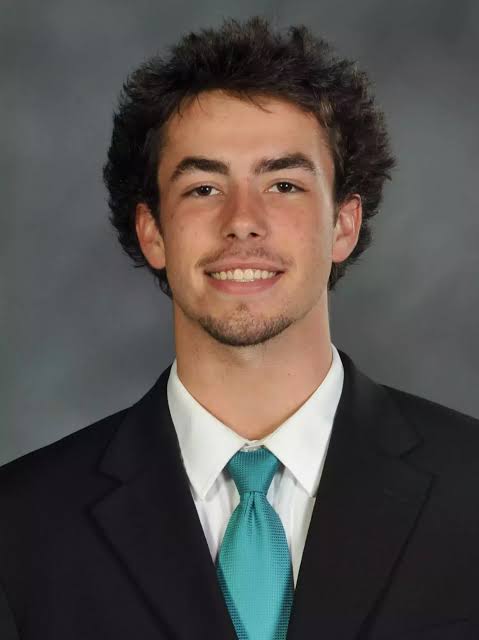
Parker is still developing. His command numbers need polish, and the jump from Sun Belt to SEC will be the stiffest test of his career. But with three years of eligibility, the backing of a coaching staff that recruited and developed him, and a legitimate high school pedigree to build on, the ceiling here is genuinely exciting.
The Schnall era in Columbia is barely 24 hours old — and already, the shape of something promising is beginning to emerge.
About The Author