Agot Makeer vs Jazzy Davidson: What Stood Out in South Carolina’s 101-61 Demolition of Southern Cal
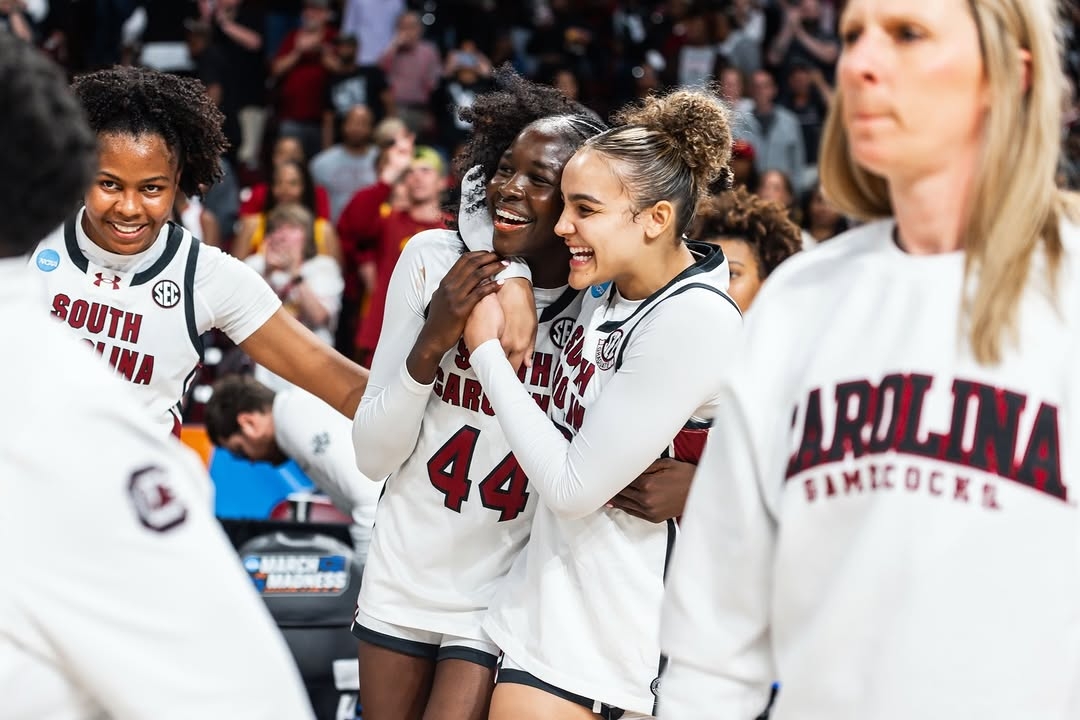
Box scores tell part of the story. The details inside them — the matchups, the moments, the coaching adjustments visible in real time — tell the rest. South Carolina’s 101-61 destruction of Southern Cal was not just a dominant win. It was a game full of subplots worth examining closely, from a freshman duel that lived up to its billing, to a star guard redefining her identity, to a sideline exchange between a coach and her center that revealed exactly how high Dawn Staley’s standards reach even inside a blowout.
The Freshman Duel Nobody Will Forget
Before a single tip-off this season, the 2025 recruiting class had two names that commanded national attention. Jazzy Davidson entered as the No. 1 ranked recruit in the country. Agot Makeer came in at No. 4 — before her commitment to South Carolina mysteriously dropped her to sixth on certain boards, a slight that said more about the evaluators than the player.
Their seasons unfolded in vastly different directions, through no fault of Makeer’s own. Davidson stepped into a starring role immediately at Southern Cal, leading the Trojans in points, rebounds, assists, blocks, and steals — a statistical sweep that is almost unheard of for a freshman and put her firmly in the conversation for National Freshman of the Year. Makeer, by contrast, was never going to see Davidson’s minutes in a Gamecocks rotation loaded with experienced talent. Then injuries arrived and disrupted her development further, pushing back the timeline on a player whose ceiling was never in question.
Monday night was the reckoning — and Makeer won it.
The matchup was deliberate. Dawn Staley put length on length, frequently deploying Makeer directly against Davidson, and in the first half it was not close. At halftime, both players had six points. But the details underneath that surface equality told a very different story. Davidson had scored her six on 2-for-8 shooting across 16 minutes, had accumulated three fouls, and was visibly uncomfortable operating in space she normally owns. Makeer had scored her six in just 13 minutes, added two rebounds, and produced a career-high four steals — the fingerprint of a defender who doesn’t just contain, but actively hunts.
Davidson finished with 16 points to Makeer’s 15, a single point separating them in the final box score. But points were the least interesting metric of this particular matchup. Davidson shot 5-for-15. Makeer was a physical and psychological presence every time Davidson tried to operate, forcing her into contested looks, early foul trouble, and a level of difficulty that her 31-point first-round explosion against Clemson had not foreshadowed.
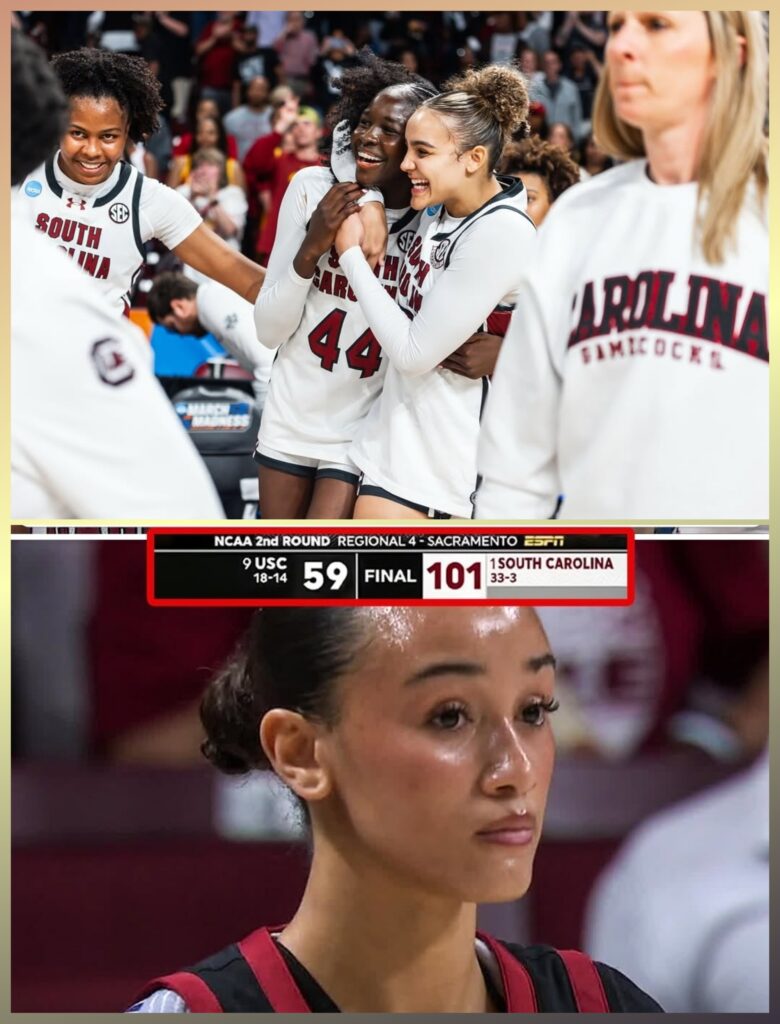
For one game, on the biggest stage either player had occupied in her college career, Agot Makeer was clearly the better player. That is not a small thing. And given that she is still recovering developmental time lost to injury, the implications for what comes next are genuinely exciting.
Latson’s Defense: The Part of Her Game the World Is Finally Seeing
Ta’Niya Latson is one of the most gifted offensive players in the country. That part of her game has never required an argument. What has been less discussed — and what this tournament weekend brought into sharp focus — is the defensive commitment she has made since arriving at South Carolina, and what it reveals about the kind of player she is determined to become.
In both first and second-round games, Staley gave Latson the assignment of guarding the opposing team’s second-best perimeter player — the No. 2 threat, freed up precisely because Raven Johnson was monopolizing the primary scorer’s attention. It is not a glamorous role. It does not generate highlight clips or stat line recognition. And yet Latson executed it with the kind of tenacity that would have surprised people who only know her from the scoring column.
She passed, emphatically, in both games.
The reason she is here, she explained, is precisely because she wanted to be challenged in ways that comfort-zone programs would never demand of her.
“Defense wins championships,” Latson said. “I wanted to come here to become a better defender and I wanted to show the world that I can be a two-way player.”
That statement is worth sitting with. Latson is a player who could have gone anywhere, prioritized shot volume, and built a personal brand entirely around scoring. She chose South Carolina specifically because it would not let her do that. The result is a player advancing to the Sweet 16 for the first time in her career, fully formed on both ends, capable of doing whatever the moment requires. In a tournament that rewards completeness over flash, that decision is already paying dividends.
Staley’s Sideline Lesson: Standards Don’t Take Nights Off
The most quietly revealing moment of Monday’s game had nothing to do with the scoreboard. With South Carolina leading comfortably in the first half, Madina Okot caught a pass near the rim, executed a pump fake, drew the foul, and did exactly what most players are taught to do in that situation. It was a smart, disciplined play by almost any standard.
Dawn Staley disagreed.
From the opposite end of the court, Staley was immediately visible — arms raised straight above her head, voice carrying across the building, message unmistakable even to observers who couldn’t make out the words. She wanted Okot tall. She wanted the catch, the rise, and the finish — not the pump fake, not the contraction of her body to draw contact. The standard is not to get to the line. The standard is to score.
Okot confirmed it afterward with the kind of candid self-awareness that defines how Staley’s players communicate.
“I’ve been working on a couple of things, and she was just reminding me of the things I’m supposed to do,” Okot said. “I need to start bringing them to the games.”
There is something important in that exchange that extends far beyond the play itself. South Carolina was up by 30-plus points in an NCAA Tournament game, and Staley was still coaching — not managing, not celebrating, not allowing the margin to create complacency. She was holding a 6-6 center to a standard that has nothing to do with the opponent and everything to do with the player’s own ceiling.
That is what separates programs that win one title from programs that keep winning. The standard does not flex based on the score. It does not relax because the bracket looks favorable. It holds, in every possession, in every timeout, in every moment visible to the players who are watching and learning what it actually means to be coached at the highest level.
South Carolina is in the Sweet 16. And if the details of Monday night are any indication, the Gamecocks are nowhere close to being finished.
About The Author